Researchers combine nanobiotechnology, neutrophils and nucleic acid to combat lupus

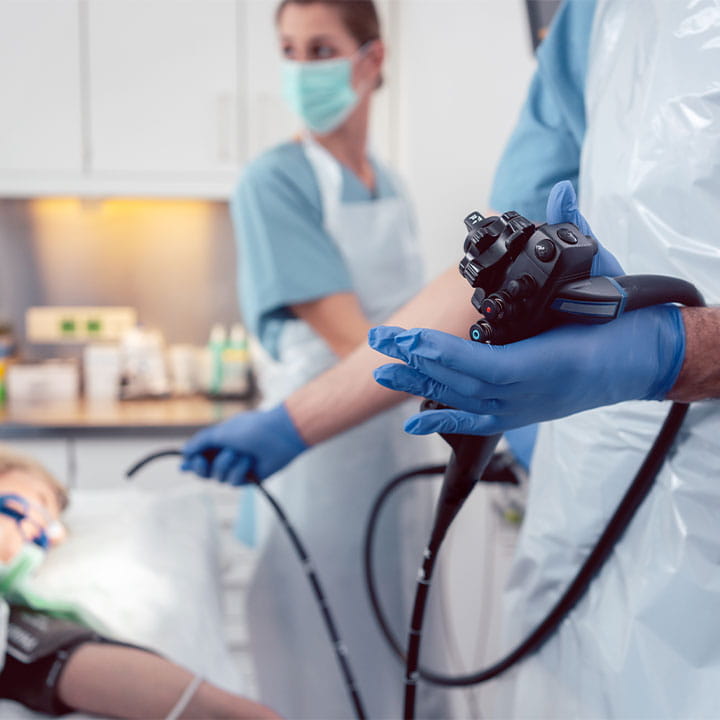 Third space endoscopy offers many patients an alternative to surgery for symptom relief in gastric diseases like gastroparesis and achalasia. The Division of Gastroenterology, Hepatology and Nutrition at The Ohio State University Wexner Medical Center is the only place in central Ohio — and among few in the Midwest— to offer this significantly less invasive option.
These procedures access the targeted site through dissection and tunneling through the submucosal layer of the GI tract, between the mucosa and muscularis propria. In the most common applications, the gastroenterologist’s aim is to cut muscle, relieving obstruction in the esophagus and pyloric valve in patients with symptoms refractory to medications.
“We have gone from zero to over 70 third space procedures in one year,” says gastroenterologist Jordan Burlen, MD, a pioneer in growing the applications of this approach. “The refinement and expansion of these procedures is positioning advanced endoscopists at the forefront of minimally invasive innovation.”
One very important expansion is for curative resection of neoplasms and early cancers, excising luminal lesions anywhere from the esophagus to the rectum.
In 2008, Haruhiro Inoue, MD, introduced the first third space procedure — the peroral endoscopic myotomy (POEM) — complementing the surgical Heller myotomy for achalasia and spastic esophageal motility disorders.
“Heller myotomy is minimally invasive, but it is still surgery,” Dr. Burlen says. “The question was, what if we could cut this muscle layer without having to open up the patient? Dr. Inoue provided the first answer, and more applications quickly followed.”
The original POEM aptly illustrates the techniques in third space endoscopy. In this procedure, the gastroenterologist makes an incision into the mucosa layer of the distal or mid-esophagus, dissecting the submucosal layer and then advancing the scope in between the mucosa and muscle layers. They then move the scope down and across to the esophageal connection with the stomach. Once they have tunneled past that point, they loop back to cut the muscle of the esophagus and proximal stomach. Incisions are typically about one centimeter.
“In most cases, the muscles have become hypertrophied and unresponsive to the neurological stimulant for relaxation. Our procedure offers a symptom fix or improvement, not a cure. But for most patients, releasing those muscle layers at the narrowing allows things to pass more normally,” Dr. Burlen says. “We have a re-intervention rate of under 10% with this procedure.”
Dr. Burlen and his colleagues also perform two other POEM procedures:
Dr. Burlen and colleagues have also introduced the third space endoscopy approach at the Ohio State Wexner Medical Center for early gastrointestinal cancers, particularly esophageal, gastric or rectal.
“Third space endoscopy can enable us to avoid very morbid surgeries, like esophagectomy, gastrectomy or proctectomy,” Dr. Burlen says. “Some of these surgeries can be very difficult to manage post-procedurally.”
They use this to perform the Endoscopic Submucosal Dissection (ESD) for removal of early gastrointestinal neoplasia. For subepithelial or difficult-to-reach lesions, they perform an Endoscopic Full-Thickness Resection (EFTR). For intramural tumors such as gastrointestinal stromal tumors, they perform a Peroral Endoscopic Tumor Resection (POET).
Each of these procedures leverages the submucosal tunnel for precise, targeted therapy while minimizing disruption to surrounding tissues.
“Particularly important for removal of cancers or precancers is the ability to directly visualize lesions from the submucosal space, allowing for more meticulous dissection and better margins,” Dr. Burlen says.
Compared to surgery, he says that third space endoscopic procedures are associated with lower rates of infection, bleeding and anesthesia-related risks.
“A broader population of patients may qualify for these procedures, and there is a faster recovery, lower infection risk and less postoperative pain. Typically, patients are discharged the following day,” he says.
Georgios Papachristou, MD, PhD, division director for Gastroenterology, Hepatology and Nutrition, and Somashekar Krishna, MD, director of Advanced Endoscopy, have led the initiative for implementing, improving and exploring new applications for third space endoscopy.
“Together, we’re doing clinical research, looking at novel ways to mitigate or reduce the risk of complications associated with these procedures, both inter-procedurally and after,” Dr. Burlen says.
He says the POEM procedure that once took two hours now lasts 45 minutes, and some of the endoscopic submucosal dissections that were taking seven-to-eight hours now lasts under two hours.
“Our goal is to put Ohio State at the forefront of gastroenterology and interventional endoscopy and to be participants in future endeavors, so that we are not just keeping up, but also propelling the capabilities forward,” Dr. Burlen says.