
October 7, 2026
Key Takeaways
- Tiny incisions, big impact: Ultra-minimally invasive spine surgery performed at The Ohio State University Wexner Medical Center uses small incisions, specialized cameras and narrow surgical tools to take pressure off of spinal nerves.
- Faster recovery: Most patients are walking very shortly after surgery and return home the same day.
- No hardware required: Unlike spinal fusion, which permanently joins bones in the spine, endoscopic surgery often avoids the need for screws, rods and cages.
COLUMBUS, Ohio – When Elaine Drumm, 54, of Mount Victory, Ohio, learned that a damaged disc in her mid back could leave her unable to walk, she worried she would miss her son’s wedding.
For Drumm, traditional surgery would have involved a much larger incision and the need for hardware to fuse bones in her spine, followed by several months of recovery. Instead, a second opinion at The Ohio State University Wexner Medical Center led her to a different option: endoscopic spine surgery.
The procedure, which is not widely available, can treat damaged discs, arthritis, narrowing around the spinal cord and nerve roots (stenosis), and other conditions that put pressure on nerves.
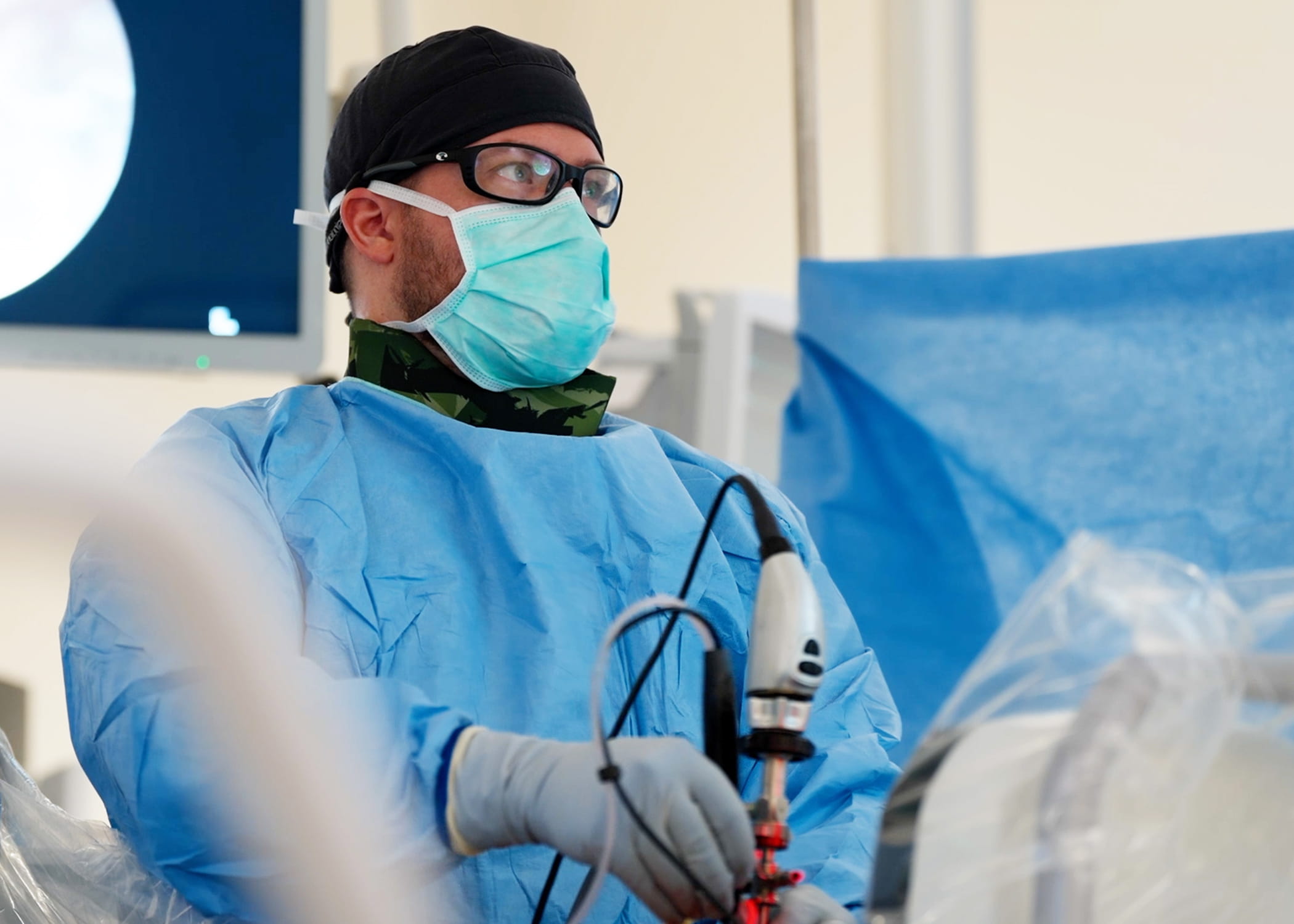 Through a small incision, surgeons use a high-definition camera and narrow surgical tools to remove bone, ligament, or damaged disc tissue that is pressing on nerves.
“Because it's less invasive, we're creating less disruption and less scarring to the normal healthy tissues,” said Phillip Glivar, MD, orthopedic spine surgeon at Ohio State Wexner Medical Center.
Most patients stand up and walk shortly after surgery and return home the same day, said Glivar, who is an assistant professor of orthopedic surgery at The Ohio State University College of Medicine. He trains doctors and other spine surgeons to perform these procedures, which will help expand access to less invasive spine care.
Seeking a second opinion
For months, Drumm managed numbness and painful muscle cramps in her legs. But when doctors discovered the severity of her spinal condition, they recommended surgery.
Doctors initially recommended traditional spinal fusion, which they told her could require up to eight months of recovery. Drumm sought a second opinion from Glivar.
“This is the least invasive option available that we have today,” Glivar told Drumm after reviewing her case.
He performed the surgery through a small incision to relieve pressure on the nerves in her mid back. The procedure did not require the screws, rods or cages commonly used in spinal fusion.
Spinal fusion procedures change how the spine moves, which affects the segments above and below the fusion site. Glivar said endoscopic surgery may preserve more natural movement because it does not permanently join sections of the spine.
“We are not affecting the way that the body moves and the stress that's affecting the levels above and below the surgery site,” he said.
Surgery is still a last resort for back pain
 Glivar emphasized that surgery is not the first treatment option for most patients with back pain.
Before recommending surgery, Ohio State specialists consider nonsurgical treatments, including physical therapy, medications, and injections for patients.
When the decision is made for surgery, endoscopic techniques offer a less invasive alternative for many patients.
“It's important for people to know that this option is available,” Glivar said. “Even if you've been offered surgery before, you may be a candidate for a less invasive procedure.”
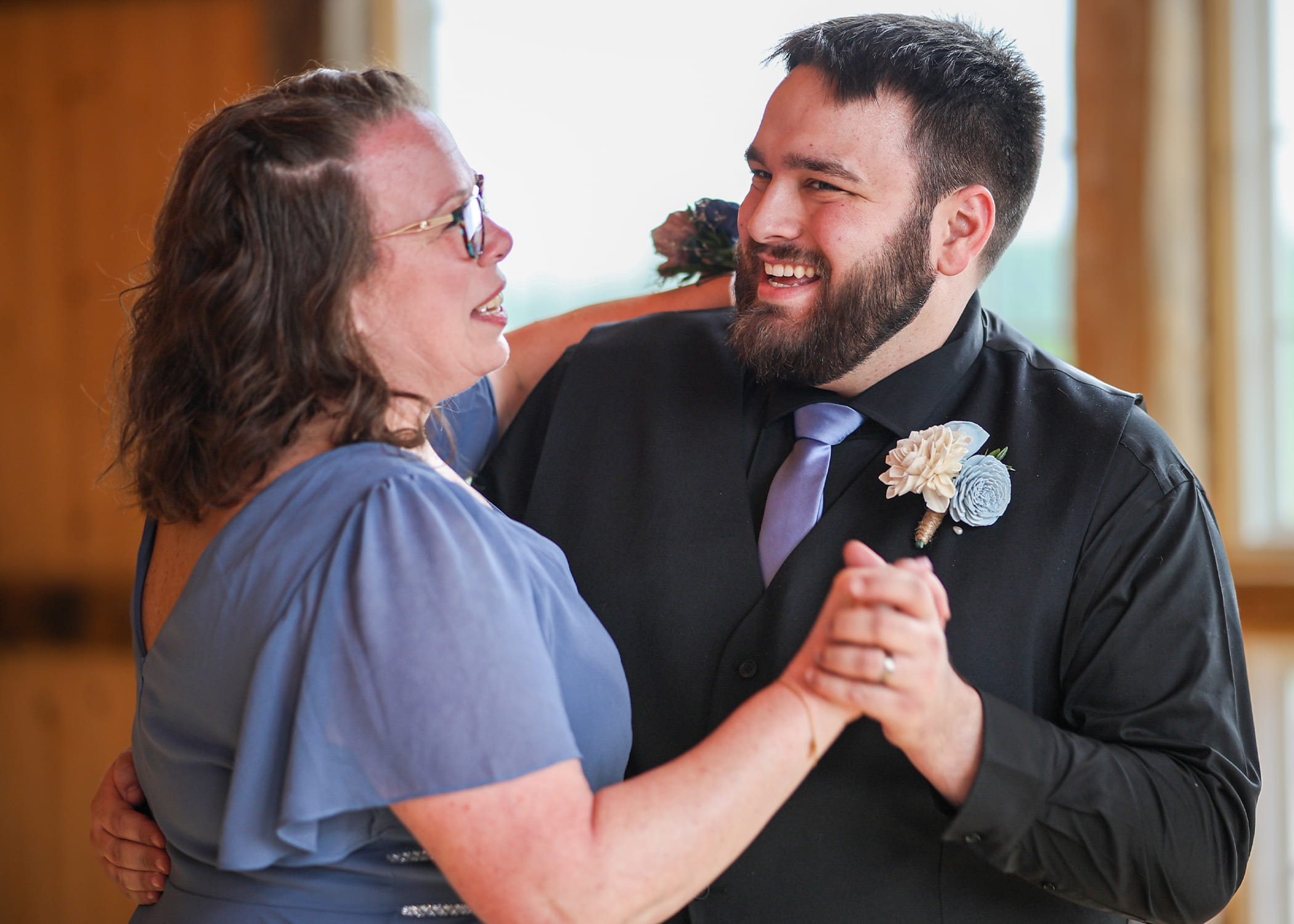
Drumm underwent endoscopic spine surgery in February. By May, she was back on her feet and dancing with her son Ryker at his wedding.
She said her numbness was gone, her daily pain had improved significantly, and she could once again do activities that had become difficult.
“Just being able to wake up every day and know that it is solved,” Drumm said. “It's not something that looms over my head for the rest of my life.”
Media Contact
Eileen Scahill, Ohio State Wexner Medical Center Media Relations, Eileen.Scahill@osumc.edu
```