
Online price list gives you clarity for your healthcare
Online hospital charge lists can give you clarity for your healthcare costs, but like our medical care – we want to personalize it to you.

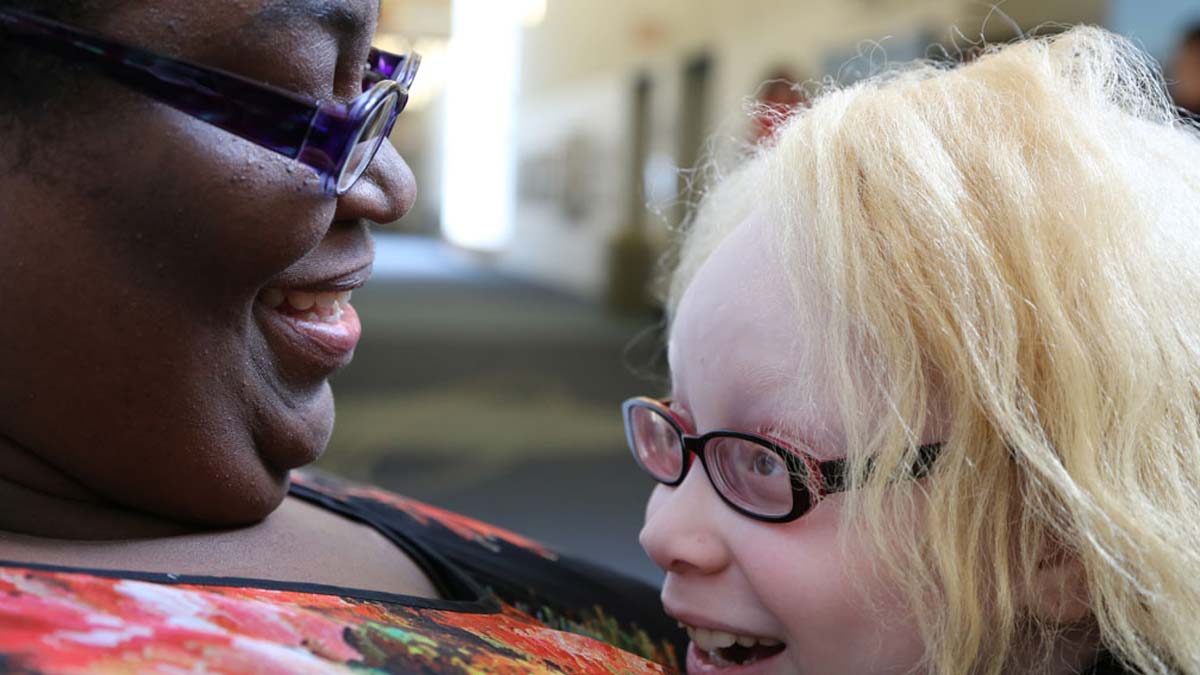 Image above: Credit POSITIVEEXPOSURE | Photograph copyright © Rick Guidotti. Used with permission.
When examining both healthcare and healthcare curriculum, recent studies show that much of the U.S. healthcare system simply hasn’t been prepared to meet the needs of the largest minority population in the country: people with disabilities.
It’s a group that includes one out of every five Ohioans.
“People with disabilities have high rates of chronic health conditions, yet poorer access to healthcare compared to people without disabilities,” says Susan Havercamp, PhD, director of Health Promotion and Healthcare Parity at The Ohio State University Nisonger Center.
“They report high rates of unmet healthcare needs, barriers to accessing healthcare and dissatisfaction with the healthcare they receive compared to people without disabilities.”
But disability training for healthcare professionals, she says, can reduce the health inequities for this population.
“Disability training can challenge negative attitudes and assumptions that limit quality healthcare for people with disabilities. Giving students the opportunity to learn from people with disabilities helps them feel more comfortable and competent providing healthcare to patients with disabilities.”
This is why The Ohio State University is committed to supporting more equitable healthcare, both locally and across the nation, for people with disabilities. And many of Ohio State’s efforts to solve this problem start with specialized training through Ohio State’s Nisonger Center, which is part of the Ohio State Wexner Medical Center, the Ohio State College of Medicine and Ohio State’s Neurological Institute.
Founded in 1966 among the first group of federally funded University Centers for Excellence in Developmental Disabilities (UCEDD), Nisonger Center is dedicated not only to clinical care for people with neurodevelopmental disorders, but also to robust research and interdisciplinary teaching and training programs.
The Ohio Disability and Health Program (ODHP), led by Dr. Havercamp, aims to improve the health and quality of life for more than 2 million Ohioans with disabilities, most directly by reducing disparities in physical and mental health as well as access to preventive healthcare in this group.
In September 2021, the Centers for Disease Control and Prevention (CDC) awarded The Ohio State University Nisonger Center a $2.8 million, five-year grant to support this programming, which Ohio State produces in partnership with the Ohio Department of Health, the University of Cincinnati University Center for Excellence in Developmental Disabilities and the Ohio Colleges of Medicine Government Resource Center.
ODHP is one of 10 Disability and Health Programs funded by the CDC designed to improve health equity for people with disabilities.
The program is helping adapt and implement evidence-based health promotion programs, increase the community capacity to provide quality healthcare to patients with disabilities, link health resources to Ohioans with intellectual disability, and create a compendium of accessible healthcare resources for Ohioans with disabilities.
ODHP also currently offers free, online continuing education trainings for health professionals, first responders and emergency planners.
Specialized disability-competency training can help healthcare providers see disability not as an illness to be prevented or treated, but as a functional limitation that may or may not limit the person’s health status or quality of life. It can help providers develop more accurate expectations for their patients with disabilities, and improve communication, enabling providers to give more accessible, holistic treatment.
“Quality of care will improve when providers learn to function as members of an interdisciplinary team in which the person with a disability drives treatment decisions,” Dr. Havercamp says.
Before creating an ideal disability-competency training system, she says, it’s important to understand what healthcare providers really must know to provide quality healthcare to people with disabilities. So the ODHP recruited a national disability stakeholder group to establish a national consensus on essential disability learning objectives for healthcare providers.
Published in the Disability and Health Journal, the resulting Core Competencies on Disability for Healthcare Education provide detailed, measurable goals that show future health professionals how best to care for patients with disabilities across their lifespans.
Developing this agreed-upon list is just the first step in a set of milestones on the road to more equitable, disability-competent care, Dr. Havercamp says.
As detailed by a paper Dr. Havercamp co-authored in Disability and Health Journal in October 2020, public health leaders must invest by:
“This road map is a guide to ensure that people with disabilities receive disability competent care; that is, greater access to care that is person-centered, team-based, and provides more appropriate health screening and follow-up” Dr. Havercamp says.
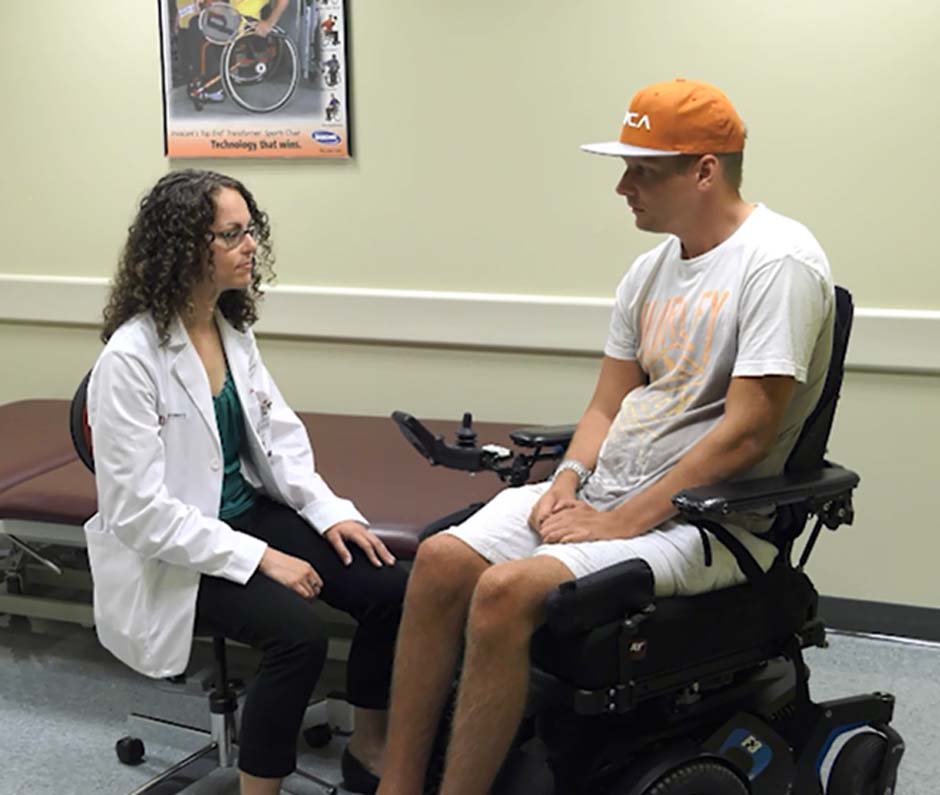
It’s not enough to educate just clinicians in these concepts. Community and public health community leaders must be involved, too, to address health promotion and health equity at every step of the continuum for people with disabilities.
Leadership Education in Neurodevelopmental Disabilities (LEND) creates training opportunities for graduate students, postdoctoral fellows and community leaders.
The yearlong interdisciplinary LEND curriculum through Nisonger Center is focused on improving the health of children and adults with developmental disabilities, along with their families. Faculty from both Ohio State and Nationwide Children’s Hospital provide individualized mentoring to participants through an integrated curriculum of clinical training, didactic coursework and public health projects.
Funded by the federal government agency Maternal and Child Health Bureau (MCHB), LEND:
The research and training involved in moving healthcare toward equity rely on partnerships at every level of the healthcare system.
Nisonger Center partners with many organizations, including the Ohio State College of Medicine and Nationwide Children’s Hospital, people with disabilities and their families to improve disability training for future healthcare providers.
“Our work is made possible and enriched by our partnerships with the Ohio Department of Health, the Ohio Developmental Disabilities Council, the Ohio Department of Developmental Disabilities and the many people with disabilities who generously give their time to train health professional students,” Dr. Havercamp says. “We’re grateful for our partners in the College of Medicine and other health science colleges for their commitment to health equity by including disability training in interprofessional health education.”
Online hospital charge lists can give you clarity for your healthcare costs, but like our medical care – we want to personalize it to you.
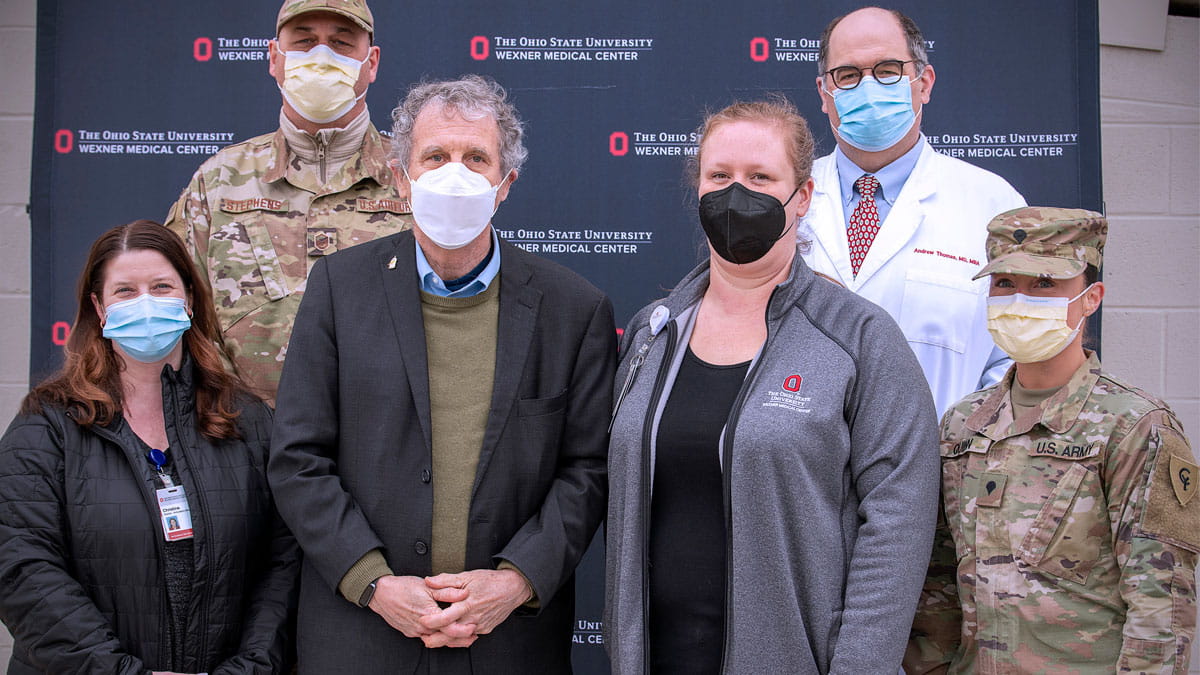
Sen. Brown talks with members of the Ohio National Guard who’ve joined healthcare workers across the state on the front lines in the battle against COVID-19.
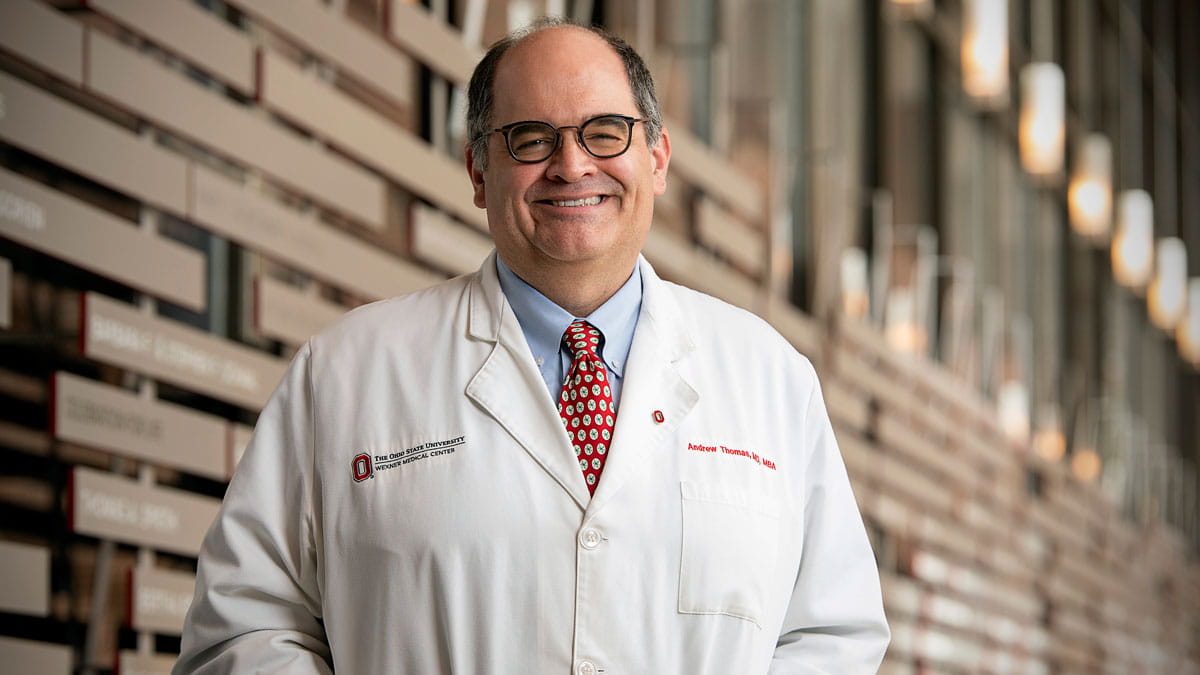
Dr. Andrew Thomas and his decades of leadership experience at The Ohio State University Wexner Medical Center have been vital in the state’s fight against COVID-19.
