
Online price list gives you clarity for your health care
Online hospital charge lists can give you clarity for your healthcare costs, but like our medical care – we want to personalize it to you.


An injury that non-diabetics fight off could spiral out of control quickly for people with diabetes.
At the Comprehensive Wound Center, I often sees patients whose ulcers have grown severe, with skin that won’t heal or is black which can lead to amputation. But many ulcers can be avoided with proper monitoring and care.
A podiatrist’s foot-care guide to prevent ulcers:
It’s all about the footwear
Try prescription shoes that have a combination of features you can’t find in the most comfortable shoes at a store – extra depth and width to accommodate shifting toes and bones, custom inserts, mesh for breathability and soft material and soles.
Break in new shoes slowly and wear white socks, typically cotton, to detect any blood or seepage. Get a doctor’s advice about treating corns and callouses if your relative has neuropathy. Filing or shaving can lead to injury.
Moisturize as part of bathing routine
Wash feet with antibacterial soap and put lotion on them to keep skin from cracking. Don’t apply lotion between the toes. During winter, feet might need moisturized a couple times a day.
Don’t skip putting eyes on the feet
If your loved one is at the point of needing help to care for himself or herself, you or another caregiver must take on the responsibility of a daily look at their feet.
Tag along to your loved one’s doctor appointment
Some people don’t tell family about a worsening foot wound because they don’t want to trouble them. And some people don’t relay care guidelines or treatment details to relatives or caregivers.
If you’re in this situation with a family member, accompany him or her to an office visit to make sure you’re getting all needed information.
Bring a podiatrist into your life!
Just like people with diabetes get their eyes screened regularly for related damage, a doctor should examine their feet annually, no matter how well controlled their disease is.
Don’t hesitate to get a wound checked out
When people have diabetic foot problems, waiting days or even a week to see a doctor for an open wound is too long. A primary care doctor, endocrinologist or podiatrist could examine the foot. Tell the office when you call for an appointment about the wound to try to get in sooner.
If a quick appointment isn’t possible, go to urgent care or an emergency department in case antibiotics are needed. Before getting to a doctor, limit pressure on feet and clean the wound with antibacterial soap. Skip peroxide or alcohol because they kill good tissue.
Said Atway, DPM, is a podiatrist at The Ohio State University Comprehensive Wound Center who specializes in general podiatric care and wound care for the foot and ankle.
Online hospital charge lists can give you clarity for your healthcare costs, but like our medical care – we want to personalize it to you.
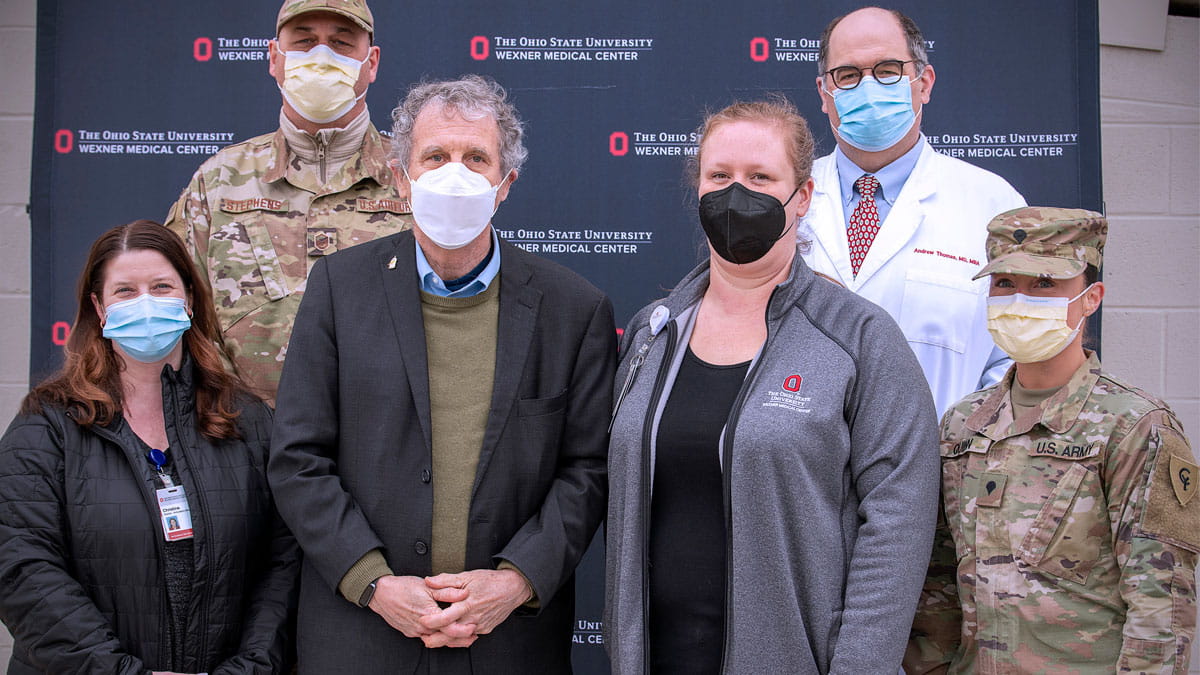
Sen. Brown talks with members of the Ohio National Guard who’ve joined health care workers across the state on the front lines in the battle against COVID-19.

Dr. Andrew Thomas and his decades of leadership experience at The Ohio State University Wexner Medical Center have been vital in the state’s fight against COVID-19.
