
Wael Jarjour, MD
Physician, Professor
Rheumatology

Conditions and expertise
- Rheumatology
- Sjogren's Syndrome
- Vasculitis
- Psoriatic Arthritis
- Ankylosing Spondylitis
- Systemic Lupus Erythematosus
Locations
- University Hospital
Academics and research
Department: Internal Medicine
About
- Gender
- Male
- Additional languages
- Arabic
Biography
I’m a board-certified rheumatologist at The Ohio State University Wexner Medical Center. I specialize in diagnosing and treating autoimmune and inflammatory conditions such as rheumatoid arthritis, lupus, vasculitis, dermatomyositis, and spondyloarthritis. My goal is to help patients manage chronic conditions with personalized care plans that improve quality of life and long-term health.
Patients can expect compassionate, expert care in every visit. I take time to listen, explain conditions clearly, and work closely with everyone to find the most effective treatment options. I also collaborate with a team of specialists to ensure that care is comprehensive and tailored to your needs.
In addition to my clinical work, I serve as director of the Division of Rheumatology and Immunology at Ohio State. I’m actively involved in research to improve therapies for hard-to-treat autoimmune diseases and to better understand the role of autoantibodies in inflammation and tissue repair.
I’m honored to have been recognized among the top 10% of physicians nationwide for patient satisfaction and named to Castle Connolly’s Regional Top Doctors list.
Highlights
- Rated in the top 10 percent of physicians in the nation for patient satisfaction, 2015, 2016, 2017
- Named to Castle Connolly's Regional Top Doctors list
- Best Doctor in America, 2017
Conditions and expertise
- Ankylosing Spondylitis
- Arthritis, Rheumatoid
- Dermatomyositis
- Mixed Connective Tissue Disease
- Psoriatic Arthritis
- Rheumatology
- Sjogren's Syndrome
- Systemic Lupus Erythematosus
- Vasculitis
Locations
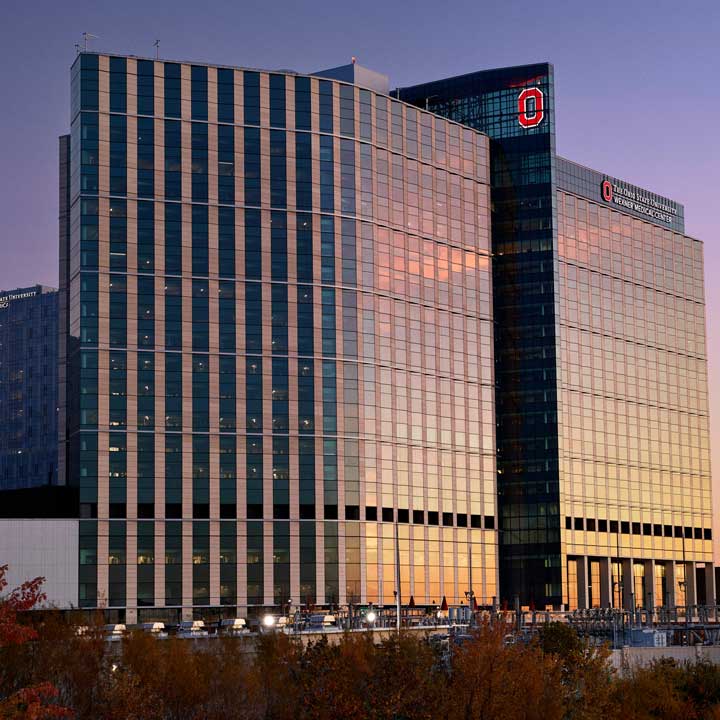
Please note: Not all physicians schedule patients at each listed location.
Credentials
Education
- Fellowship - Rheumatology
- UNC Hospitals, Chapel Hill, NC, United States
7/1/1988 - 6/30/1990 - Residency - Internal Medicine
- Pennsylvania State University, University Park, PA, USA
7/1/1986 - 6/30/1988 - Internship - Internal Medicine
- Pennsylvania State University, University Park, PA, USA
7/1/1985 - 6/30/1986 - Other - Allergy & Immunology
- National Institute of Health, Bethesda, MD
1/1/1984 - 6/30/1985 - Doctor of Medicine (MD)
- University of Damascus School of Medicine, Damascus, Syria
9/1/1976 - 9/30/1982
Certifications
-
American Board of Internal Medicine/Rheumatology
11/6/1990 -
American Board of Internal Medicine
9/15/1988
Academics and research
My specialty interests include rheumatoid arthritis, vasculitis, Lupus, connective tissue diseases and osteoarthritis with research focused on autoimmunity.
Research interests
- Rheumatoid Arthritis
- Vasculitis
- Lupus
- Connective Tissue Diseases
- Osteoarthritis
Our Lab's Research
Systemic Lupus Erythematosus (SLE)
Therapeutic Targeting using neutrophils and microvesicles in SLE
The Jarjour lab in collaboration with the Lee laboratory is testing novel biochip to transform neutrophils into microscopic vehicles that deliver therapeutic agents to the site of inflammation throughout the body. The study examines the Transfection of Nucleic acids such as microRNA (miRNA) to target inflammatory pathways in lupus nephritis. We recently reported that the use of an anti-MiRNA cocktail (miR-21, mir-29a, and miR-29b) significantly reduced proinflammatory cytokines and histopathological infiltrates in a chimeric model pf SLE. (Inhibition of miRNA)
Myocarditis is detected in NZM2410 mice independent of glomerulonephritis
Our lab has described for the first time myocarditis in a lupus mouse model (NZM2410). We established echocardiography and cMRI with T2 mapping as a method to determine lupus-mediated disease progression in these mice. Disease manifestation by histology was observed prior to kidney disease. Finally, this is the first study to successfully capture cMRI with quantitative T2 imaging in a mouse model. (Pathological manifestation)
Gut Dysbiosis is Associated with Acceleration of Lupus Nephritis
The gut microbiota (GM) exerts a strong influence over the host immune system and dysbiosis of this microbial community can affect the clinical phenotype in chronic inflammatory conditions. We explored the effects of Segmented Filamentous Bacteria (SFB) on the lupus disease manifestation in NZM2410. SFB colonization was associated with worsening glomerulonephritis, glomerular and tubular immune complex deposition, and interstitial inflammation. This study has significant implications for human disease. (Gut dysbiosis)
HMGB-1 High Molecular Weight Complexes in SLE
The Jarjour lab has discovered that proinflammatory protein HMGB1 is a substrate of transglutaminase-2 and forms high-molecular-weight complexes with autoantigens. Ongoing work is investigating the composition as well as the formation of this form of HMGB1 in SLE and their contribution to lupus pathogenesis. (HMGB-1 High Molecular Weight Complexes in SLE)
Myositis
Another area of active investigation in the lab concentrates on weakened muscle conditions known as inflammatory myopathies. This group of autoimmune diseases is marked by chronic inflammation of muscle tissue. These inflammatory myopathies are part of a heterogeneous group of diseases with diverse etiologies and clinical manifestations. We have demonstrated the role of Tregs in the development of muscle tissue inflammation through the use and development of novel animal models of these diseases (Large functional repertoire). Moreover, our laboratory has developed a myositis mouse model that combines synaptotagmin VII null with FoxP3 mutations, resulting in a mouse with impaired membrane resealing and regulatory T-cell deficiency. This mouse displays robust inflammatory myositis that recapitulate, in part, the human disease (Aberrant Muscle Antigen). Working in collaboration with the Weisleder Laboratory the group has identified antibodies to TRIM72 in patients in myositis patients that compromises cell membrane resealing. This observation lays the ground work for testing if improving membrane resealing could dampen the immune response to muscle proteins in myositis. (Autoantibodies targeting TRIM72).
Rheumatoid Arthritis (RA)
The Jarjour lab in collaboration with Das and Ostrowski labs has been studying various regulators of the inflammatory response in RA (Enhancer variants reveal and Myeloid Krüppel). Moreover, the Jarjour lab (in collaboration with Washington University Roberson lab) is exploring other pathways that can be targeted therapeutically through RNAseq of microRNA, in exosomes isolated from plasma and synovial fluid of patients with RA. Ongoing research focuses on the development of new therapeutic strategies using mesenchymal stem cells (The therapeutic effects). We are studying the role of several genes on the development, maintenance, function of regulatory T cell subpopulation in collage-induced arthritis model.
Sex Bias in Systemic Autoimmune diseases
Our laboratory studies sex bias in systemic autoimmune disorders with focus on Systemic Lupus Erythematosus (SLE). In investigating the role of estrogen receptors and estrogen in SLE and other autoimmune diseases, our team has identified novel targets of estrogen that are significantly up-regulated in SLE patients and play a critical role in regulating inflammation. The long-term goal of this project is to elucidate the role of estrogen and its receptors in the pathogenesis of SLE and identify biomarkers that will define women who are at high risk of developing lupus. Read our ZAS3, TLR8, Estrogen-regulated STAT1, and Inhibition of miRNA papers. Ongoing research is examining the role of a novel estrogen receptor-beta agonist as a therapeutic in lupus.

Academic information
- Department:
- Internal Medicine
- Division:
- Rheumatology - Immunology
Leadership titles
- Director of the Division of Rheumatology and Immunology
- Martha Morehouse Chair in Arthritis and Immunology Research
More about my research
News and media
My news coverage
Consulting and related relationships
At The Ohio State University Wexner Medical Center, we support a faculty member’s research and consulting in collaboration with medical device, research and/or drug companies because a faculty member’s expertise can guide important advancements in the practice of medicine and improve patient care. In order to provide effective management of these relationships, the University requires annual disclosures from all faculty members with external interests related to their University responsibilities.
As of 11/3/2025 Wael Jarjour has reported relationships with the companies or entities listed below. If you have questions about the relationships listed below, please ask the faculty member. If you have questions about how these relationships are monitored by The Ohio State University Wexner Medical Center, please contact our Compliance Office.
- International Myositis Assessment & Clinical Studies Group
- International Myositis Society
- University of Pittsburgh