
Justin Baker, PhD
Psychologist, Associate Professor
Psychology
Conditions and expertise
- Mental Health
- Psychology
- Depression
- Anxiety
- Post-Traumatic Stress Disorders
Locations
- University Hospital
Academics and research
Department: Psychiatry
About
- Gender
- Male
Biography
As a clinical psychologist, I primarily work to support mental health patients with a military background, and have a special emphasis on treating and researching trauma and suicide. I want to help those suffering from a trauma-related disorder get their life back. Trauma often impacts people’s social relationships, causing them to withdraw from others and isolate. I use evidence-based care that specifically targets their symptoms to bring rapid relief and positive change to their lives. I’m certified in both cognitive processing therapy and prolonged exposure, two evidence-based treatments for post-traumatic stress disorder (PTSD).
I’m passionate about serving those who have been willing to make the ultimate sacrifice for our country. I myself served on active duty for four years with the Navy as a clinical psychologist and continue to do so as an active reservist. Following separation from the Navy in 2018, I joined the National Center for Veterans Studies (NCVS) at University of Utah as a research assistant professor. I also served as the director for training within the center. By joining the NCVS I was able to continue working on the research efforts I had initiated while in the Navy. Now I get to continue this work at The Ohio State University.
My research interests center around applied interventions for the reduction of suicide in a military population as well as improving upon current treatments for PTSD.
When I’m not at work, I enjoy spending time with family outdoors, including camping, hiking and skiing.
Highlights
- Member of APA Division 19, Military Psychology
- Member of APA Division 56, Trauma Psychology
- Certified as a consultant for prolonged exposure
- Director of Training, National Center for Veterans Studies, 2019 - 2020
- Interim Clinical Investigations Department Head, Naval Medical Center Camp Lejeune, 2018
- Recipient, Navy and Marine Corps Commendation Medal, Naval Medical Center Camp Lejeune, 2018
Conditions and expertise
- Anxiety
- Depression
- Mental Health
- Post-Traumatic Stress Disorders
- Psychology
Locations
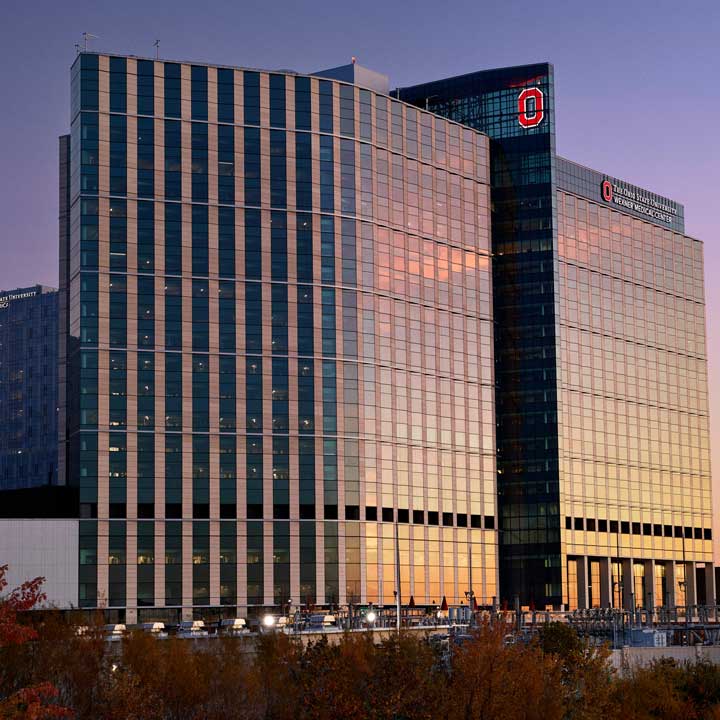
Please note: Not all physicians schedule patients at each listed location.
Credentials
Education
- Doctor of Philosophy - Clinical Psychology
- Rosemead School of Psychology, Biola University, La Mirada, CA
8/1/2008 - 8/31/2014
Academics and research
My research interests center on applied interventions for the reduction of suicide in a military population as well as improving upon current treatments for PTSD. In collaboration with my colleagues, I have helped to translate proven suicide prevention interventions to a military population as well as improve the early identification of suicidal individuals in military primary care settings.
In the first study, the effectiveness of text messaging as a form of Caring Contacts was examined as a suicide prevention intervention in an at-risk clinical population. Caring Contacts is one of only two interventions shown to prevent death by suicide in randomized controlled trials, is cost-effective, and supported by the Joint Commission. In this study, military personnel at high risk of suicide received text messages over a 12-month period or outpatient treatment as usual. Those receiving the caring contacts endorsed reductions in suicidal ideation (80% vs 88%) and reduced odds of making a suicide attempt (9% vs 15%). This study demonstrated an effective adaptation of the Caring Contacts intervention that is cost-effective and easily scalable within a military population.
The second study assessed the effectiveness of the Suicide Cognitions Scale (SCS) as an indirect measure of suicide risk that could function as an alert algorithm for primary care providers helping to more accurately identify at-risk individuals. This study enrolled 2,690 patients across six primary care clinics and included participants from all five military branches. Ongoing follow up is still occurring, but preliminary results have established the SCS as having excellent unidimensionality and similar factor loading structures across subgroups of gender, race, history of military service, and branch of military service.
Research interests
- PTSD
- Depression
- Trauma
- Suicide
- Anxiety
- Adjustment Disorders
- Personality Disorders
- Relationship Concerns
- Identity Issues
- Phase of Life Problems
Professional Positions
- Prolonged Exposure Certified Consultant, 2019-present
- Brief Cognitive Behavioral Therapy Certified Trainer and Consultant, 2019-present
- Director of Training, National Center for Veterans, 2019-2020
- Research Assistant Professor, University of Utah, 2018-2020
- Clinical Investigations Department Head, Naval Medical Center Camp Lejeune, 2018
- Suicide Prevention Coordinator, Naval Medical Center Camp Lejeune, 2016-2017
Awards and Honors
Being relatively new to academia, most of his honors and achievements have been within the military. Of note, he received the Navy and Marine Corps Commendation Medal in 2018. This was awarded in recognition of meritorious service while serving as staff clinical psychologist, Department of Mental Health, Naval Medical Center Camp Lejeune, North Carolina from November 2015 to November 2018.
Professional Membership
- APA Division 19, Military Psychology
- APA Division 56, Trauma Psychology
- American Association of Suicidology

Academic information
- Department:
- Psychiatry
- Division:
- Health Psychology
More about my research
News and media
My news coverage
Consulting and related relationships
At The Ohio State University Wexner Medical Center, we support a faculty member’s research and consulting in collaboration with medical device, research and/or drug companies because a faculty member’s expertise can guide important advancements in the practice of medicine and improve patient care. In order to provide effective management of these relationships, the University requires annual disclosures from all faculty members with external interests related to their University responsibilities.
As of 11/3/2025, Justin Baker has reported no relationships with companies or entities.