

The Dorothy M. Davis Heart & Lung Research Institute (DHLRI) opened 25 years ago. From the start, we were one of the largest and most comprehensive institutes in the country devoted to cardiovascular, pulmonary, renal and metabolic disease. Thanks to you, our growth has been exponential. On this quarter-century anniversary, as we celebrate the DHLRI’s impact we also celebrate yours. Because you made it all possible.

This report includes a few highlights of the people, work and places you have supported, and how they have contributed to improving patient lives.

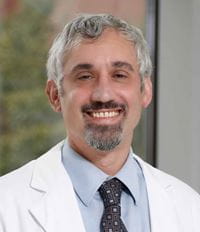
Headshot of Dr. Hund

“Thanks to you who have so generously supported the DHLRI, we are building research momentum and advancing discoveries that will outlast all of us and will continue to have lifesaving impact for many years to come.”

–Thomas Hund, PhD
William D. and Jacquelyn L. Wells Chair 
The Dorothy M. Davis Heart and Lung Research Institute

Red and white icon of a magnifying glass and bar graph

By the Numbers, then and now

   Fiscal Year 2001 Fiscal Year 2024 Increase
 Total funding  $20 million  $76 million $56 million  280%
 NHLBI* funding  $7.6 million  $40 million  $32.4 million  426%
 Member faculty  60 233 173 288%

*National Heart, Lung, and Blood Institute (Part of the National Institutes of Health)


icon of a research test tube and a hand

Research Breakthroughs,
improving outcomes

Research saves lives. It provides the foundation for understanding diseases and developing diagnostics and treatments that improve patient outcomes. It enhances personalized interventions and care as well as public health. These are a few examples of the breakthroughs you have helped advance in the last 25 years.

Red and white icon of a magnifying glass and bar graph

By the Numbers, the DHLRI today

~250,000 sq. ft. of space in six campus buildings

~1,000 faculty, staff and trainees

8 colleges and 36 departments with collaborators' areas

800+ ongoing research studies

Red and white icon of a handshake

Collaborative Impact
living proof

The DHLRI thrives on interdisciplinary innovation. By having physician-scientists next to engineers next to molecular cell biologists and trauma surgeon-scientists who share a common interest, we are solving complex health challenges faster and more effectively. Still, translating discoveries to the bedside takes time. Fortunately, we can count on generous supporters like you who understand stories like the following are worth our collective investment of time and resources.

Red and white icon of interconnected circles

Future,
relentless innovation

There is something uniquely transcendent about research — every breakthrough leads to another one, every question we answer raises others. Being part of a ceaseless discovery journey to improve lives is a privilege, one all of us at the DHLRI are fortunate to embark on with you. Together, we are creating a better future by strategically seizing opportunities, such as artificial intelligence, and addressing urgent needs.


Red and white icon of a magnifying glass and bar graph

By the Numbers, your generosity

10,500+ gifts since 2000

10,000+ individual donors

200+ supporting organizations

$111 million in donations

Thank You

Some of our donors care most deeply about helping find disease-specific treatments. Others are passionate about the development of diagnostics that detect illness earlier and more accurately. Many hope an increased understanding of disease processes may help prevent illness all together.

What all our donors have in common is the vision to imagine a better future and the impulse and generosity to invest in it. Thank you.

Make a Gift

The breakthroughs that are made each day at The Dorothy M. Davis Heart & Lung Research Institute are in large part made possible by donor support.

Make a Gift

More Research Stories

Accelerating the pace of heart and lung research and discovery
Thomas Hund, PhD, removes barriers and makes research partnerships easier.

The heart disease puzzle: Why don’t all patients fare the same? 
Richard Gumina, MD, PhD, studies genetic differences to personalize treatment.

Monitoring pulmonary artery pressure to reduce hospitalizations
A study co-led by William Abraham, MD, shows the value of implanted wireless monitor.

The scientific wonders of zebrafish for biomedical research
How Ohio State researchers study life processes via these translucent living laboratories. 

Subscribe. Get just the right amount of health and wellness in your inbox.