
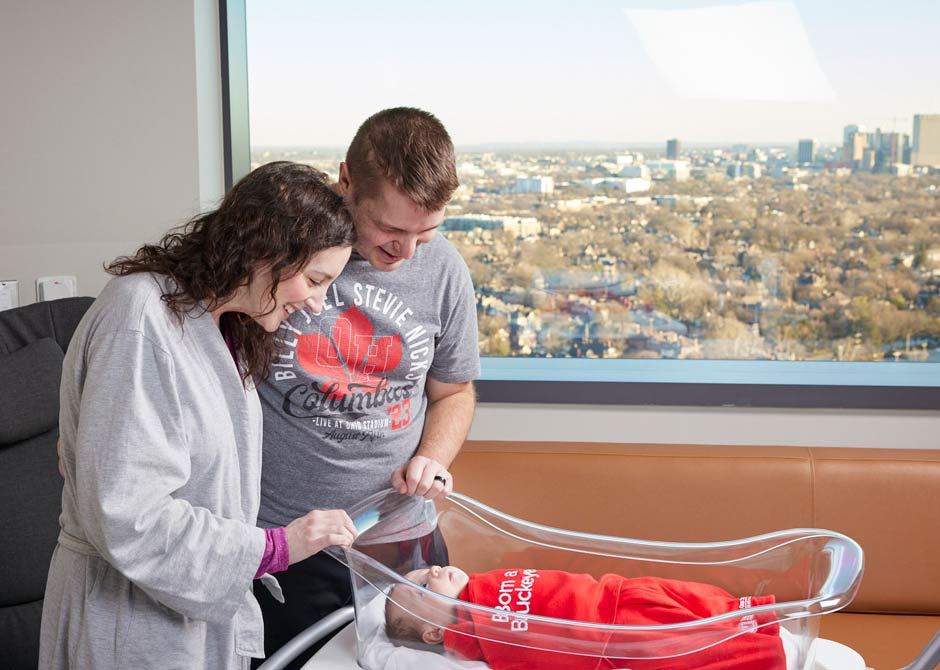
 The hours and days following the birth of your child can be some of the most joyous as you get to know your new baby, but they can also be challenging as you begin the healing process and navigate life with a newborn – whether it’s your first baby or fifth child.
At the new Maternity Center at The Ohio State University Wexner Medical Center in Columbus, Ohio, our pregnancy experts recognize how important the early postpartum period is in determining your physical and mental well-being after childbirth. That’s why we strive to provide you with the highest level of postpartum care backed by research and steeped in empathy and thoughtfulness, during the several days you’ll spend with your baby in our Postpartum Unit.
Not only will your baby receive all necessary checkups, but we’ll help you jumpstart the healing process and ensure that you and your support person feel confident to take your newborn home. We look forward to helping you welcome this next chapter in your life.
What is postpartum care?
The time after someone goes through childbirth is known as the postpartum period. It begins with delivery and lasts until your body has healed. Generally, it refers to a time period of about six to eight weeks, but many people find it takes more time to return to their pre-pregnancy state.
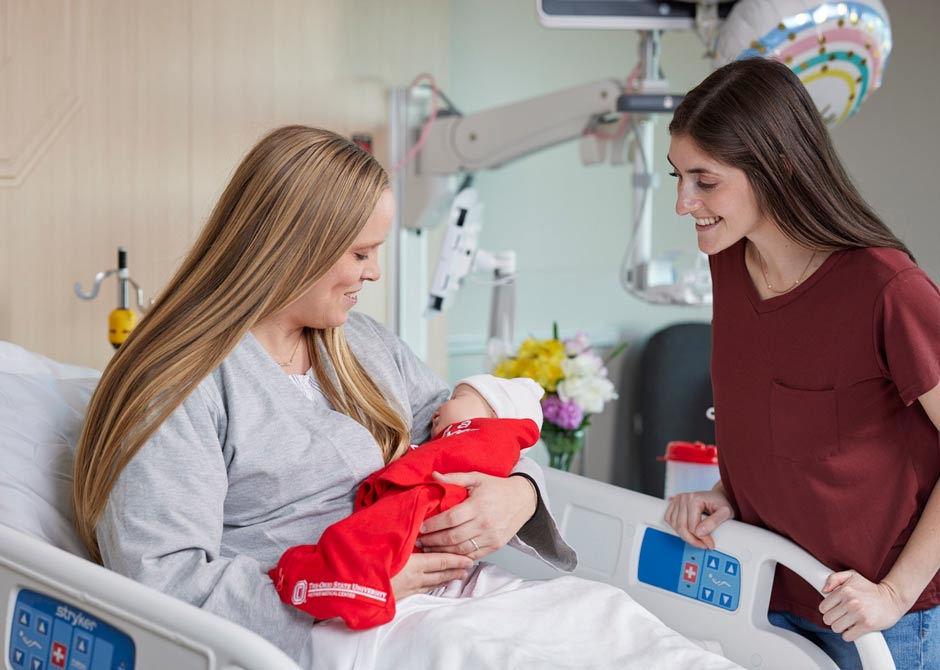
In our Postpartum Unit, we focus on the acute phase of postpartum, meaning we care for you from 24 to 72 hours following birth, to ensure you’re healing properly, and your baby is meeting necessary milestones. Postpartum care at the Ohio State Wexner Medical Center involves a dedicated nursing team helping you every step of the way, managing your comfort level and caring for your new baby – everything from helping you with feeding schedules to learning how to diaper and burp your baby. This is called inpatient postpartum care.
Outpatient postpartum care
Outpatient care is treatment that happens outside of a hospital stay. While you’ll be in our Postpartum Unit only for a few days, Ohio State’s postpartum care will continue in the weeks and months following your labor and delivery. Healthcare providers you may see throughout your postpartum journey include:
- Your obstetrician for obstetric follow-up
- Your primary care physician for general care
- Mental health professionals who specialize in postpartum and women’s behavioral health
- Your baby’s pediatrician
We understand the postpartum period can be challenging physically and mentally and looks different for each person and family. No matter when you need us during the days, weeks and months following delivery, we’ll be there to help.
Why choose Ohio State for your postpartum care?
Choosing to deliver your baby at the Ohio State Wexner Medical Center also means choosing how you’ll spend your first few days recovering. Our postpartum care now resides in our new University Hospital on floor 24, one floor above Labor and Delivery. We provide a healing environment with world-class amenities and the most advanced technology.
Highlights of our postpartum care include:
- Private, spacious rooms – Each of our 49 postpartum rooms feature large windows that provide healing natural light, 75-inch digital footwall screens, and a pullout couch so your support person can stay comfortable too. These rooms allow for ample space to spread out, get to know your baby and welcome family visitors.
- Family-centered care – You and your family are an important part of the decision-making process. It’s important to involve your support person in the baby’s care, including baby’s feedings, diaper changing and bathing. That’s why our rooms are designed to offer space for learning this type of care with a nurse or patient care associate nearby to help.
- Lactation support – If you’re planning to breastfeed, our postpartum care offers many valuable resources to facilitate that goal. Dedicated lactation consultants will visit you multiple times throughout your stay, and our bedside nurses are trained to provide lactation support. We work hard to make sure you’re comfortable breastfeeding before you go home.
- Truly collaborative care – Your team while in our postpartum care involves many specialists all working toward helping you heal and prepare to take your new baby home. During your stay, you may meet with obstetricians doing their general rounding, Maternal Fetal Medicine specialists for any complications, pediatricians from Nationwide Children’s Hospital to check on your baby, and any mental health professionals, social workers and other providers you may need.

Why choose Ohio State for pregnancy and postpartum care?
Nicole Hollingshead, PhD, a psychologist, explains why you should choose Ohio State for pregnancy and postpartum care. With a comprehensive team of obstetricians, lactation specialists, mental health professionals and physical therapists, we provide you with a range of services for all your postpartum needs.
What to expect during your postpartum stay
Our staff works hard to help your stay be as restful and pleasant as possible – and that you leave here feeling confident and safe that you can care for your newborn adequately at home. A dedicated nursing team will help guide you through what to expect during your stay, including:
- Frequent check-ups from your nurses and doctors to gauge comfort
- Regular meals and snacks delivered to your room using our unique Dining on Demand meal service, where you’ll custom-build each meal and order it on a tablet
- Routine testing for your baby, including visits by a pediatrician, an audiology (hearing) test and a metabolic screening (PKU)
- Bathing the baby
- Lactation support, including regular visits by a lactation consultant
- An opportunity for newborn photography
- Paperwork to complete baby’s birth certificate and Social Security number applications
- Patient education on how to diaper, feed and care for your baby
Throughout your stay, we encourage you and your partner to keep your baby with you as much as possible to better prepare you for caring for them at home. Our new rooms feature comfortable recliners to allow you to practice skin-to-skin care and breastfeeding as well as bond with your infant.
Also, one of the main goals of the postpartum team is to ensure you’re managing any postpartum symptoms, whether they’re physical or emotional.
 Physical postpartum symptoms
Acute, meaning short-term, physical symptoms include:
- Vaginal bleeding and discharge (lochia)
- Perineal (the area surrounding the vagina and the anus) discomfort or soreness
- Uterine cramping as the uterus shrinks
- Breast engorgement or tenderness as milk production begins
- Swelling in the legs or feet
- Constipation
- Fatigue as the body recovers from labor and delivery
- Incision pain or discomfort (for cesarean births)
Emotional postpartum symptoms
Emotional postpartum symptoms include:
- Mood swings
- Feelings of sadness or crying spells
- Anxiety or irritability
- Difficulty sleeping
- Feeling overwhelmed
How long will I be in postpartum recovery?
Typically, people spend one to three days in our Postpartum Unit: one to two days for a vaginal birth, and two to three days for a cesarean birth. Your discharge from the hospital will depend on a variety of factors, including how you and your baby are recovering.
Going home
We recognize that the postpartum period doesn’t end when you go home. For most people, postpartum lasts for six to eight weeks, and for some even longer. That’s why the postpartum care you receive from the Ohio State Maternity Center doesn’t stop when you and your baby leave the hospital. Your nurse will help prepare you for the trip home, including answering any remaining questions you have and talking to you about what to expect as you navigate the stages of postpartum.
What are the three postpartum stages?
While you’re only in the hospital for the beginning stage, our providers are here to help you all throughout your postpartum recovery. The three stages of postpartum are:
- Acute phase – the first six to 12 hours after delivery, when most emergencies occur
- Subacute phase – 24 hours after delivery through six weeks later, when your body is still changing and adjusting
- Delayed phase – six weeks through six months postpartum, when changes are more gradual and consist of muscles and tissues returning to normal

A quick guide to post-pregnancy body changes
A healthy pregnancy is 40 weeks, and the body continues to change even after the baby is born. The postpartum period, also known as the “fourth trimester,” constitutes the 12 weeks after delivery.
Resources for new parents
 As you get settled at home, you may have additional questions about caring for yourself or your baby. We’ll provide you with a detailed booklet that outlines daily care and feeding routines as well as important health and safety measures. We also encourage you to watch the Newborn Channel during your maternity stay, where you’ll find many helpful topics on caring for your baby. Here are some other resources we recommend:
Car seat installation
Before you leave the hospital with your baby, you must have a car seat properly installed in your vehicle. For information about how to install a car seat, visit buckleup.osu.edu for more information.
Pediatricians and family medicine doctors
Your baby will be seen by a pediatrician in the hospital. If you need a pediatrician after you leave the hospital, your nurse or obstetrician can provide you with a list of pediatricians and family doctors in your area. You can also visit the Primary Care site.
Lactation assistance
For even experienced moms, breastfeeding can bring many questions. Our lactation experts have decades of experience to help you successfully start and continue breastfeeding. You can reach the helpline by calling 614-293-8910. If calling after business hours, leave a message for the consultant, who will return your call the following business day.
Postpartum depression and anxiety support
In the weeks and months after your delivery, it’s important to be aware of the signs of postpartum anxiety and depression, which are common, treatable illnesses. Contact your family physician or obstetrician should you notice any signs of postpartum mental health conditions.