
What is vestibular therapy?
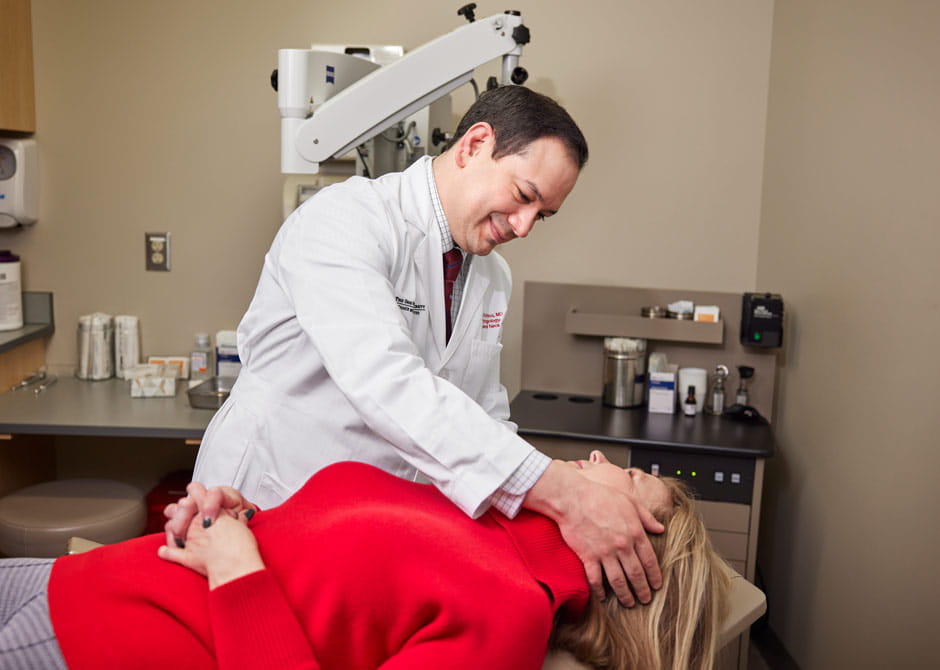 A vestibular disorder is any condition that affects the inner ear or areas near it. The inner ear is home to the vestibular system, which is a sensory system that controls your balance and spatial awareness.
When your vestibular system becomes infected or damaged, you may experience dizziness, imbalance or vertigo (sensation of the room spinning). These symptoms and conditions can be alarming and negatively impact your quality of life. The Ohio State University Wexner Medical Center in Columbus, Ohio, offers vestibular therapy, along with other ear, nose and throat (ENT) services, to help you manage your condition.
Vestibular therapy can provide balance retraining and teach you exercises to cope with dizziness and vertigo in your daily life. When problems of the inner ear make it difficult to complete everyday tasks and enjoy life, our collaborative approach to treating vestibular conditions involves otolaryngologists (ENT physicians), neurologists, audiologists, physical medicine and rehabilitation physicians, rehabilitation psychologists, and physical and occupational therapists.
Benefits of vestibular therapy
While therapy may seem like an unlikely treatment option for inner ear issues, it’s quite effective. Dizziness and balance go hand in hand, relating to your spatial awareness and how your nervous system and sensory system (inner ear, vision and joints, muscles and skin) work together. Benefits of vestibular therapy include:
- Reduction in symptoms
- Improved overall stability for daily activities
- Decreased risk and prevention of falls
- Enhanced walking ability and safety
- Decreased motion sensitivity
- Improved visual focus, leading to better spatial awareness
- Increased participation in work, social and recreational activities
- Improved confidence in moving about your environment
Who might benefit from vestibular therapy?
Anyone who has problems with balance or dizziness, no matter the cause, can be a candidate for vestibular therapy. People who come to our vestibular rehabilitation program experience symptoms such as:
- Dizziness
- Vertigo
- Difficulty with balance
- Double vision
- Neck pain with dizziness
- Vision sensitivity
- Motion sensitivity
These symptoms can be caused by a variety of conditions. In vestibular rehabilitation at the Ohio State Wexner Medical Center, we often treat people with:
- Dysfunctions of the inner ear, including benign paroxysmal positional vertigo (BPPV), Meniere's disease, migraine-related dizziness, labyrinthitis or neuronitis
- Cervicogenic (originating from the neck) dizziness and pain
- Neurological disorders, specifically diseases of the brain, spinal cord and nerves, that cause dizziness or balance issues
- Parkinson’s disease
- Brain tumors that have been surgically removed
- Traumatic and nontraumatic brain injuries
Even if your condition isn’t listed above, you may still benefit from vestibular rehabilitation to treat your dizziness or imbalance.
How to make an appointment for vestibular rehabilitation
You’ll need a referral to access vestibular therapy services at Ohio State, but this referral can come from any physician, including your primary care doctor or ENT, and even while you’re admitted to the hospital.
Once we’ve received your referral, you can schedule online using MyChart or by calling our therapy central scheduling number at 614-293-2001.
Vestibular therapy services at Ohio State
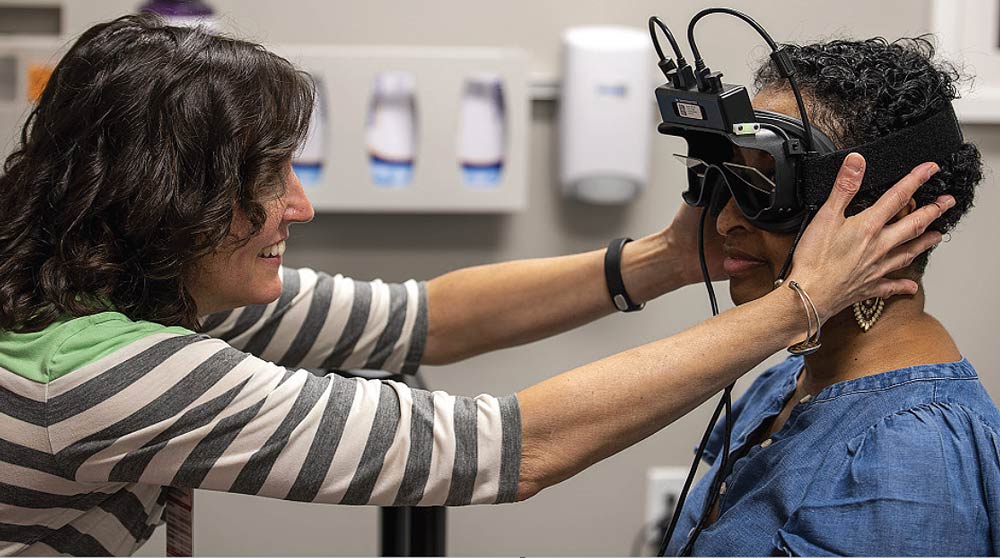 During your first appointment, we’ll do a full evaluation and determine what treatments may benefit your condition. Steps to this process include:
- Video recording of eye movements, through Frenzel goggles and liquid-crystal display (LCD) video, to assist in evaluation and treatment of your condition
- A personalized plan of care that’s developed by our clinical team along with your help and reviewed on an ongoing basis
- Exercise programs that improve range of motion and flexibility, increase strength, improve walking ability and tolerance, improve balance, and decrease dizziness
- Patient and family education and counseling
- Stress management and emotional support
We recognize that everyone’s treatment plan will look different for a variety of reasons, including overall health, goals and the condition that’s causing your dizziness. Some therapy options include:
- Canalith repositioning maneuvers, a series of specific head and body movements, to aid in the improvement of BPPV
- Manual techniques
- Dry needling
- Vestibular-ocular reflex (VOR) training to improve balance and gaze stability
- Bertec Vision Advantage for the testing and treatment of gaze stabilization impairments
- Exercises to improve balance, visual sensitivity, spatial awareness and other issues
- Occupational therapy vision services
These are just some of the many rehabilitation options we have to help you treat and live with vestibular problems.
Ohio State Vestibular Support Group
The Ohio State Vestibular Support Group is for individuals who are living with and seeking support for dizziness and balance issues related to a diagnosed vestibular system problem. We provide an environment of support and encouragement where individuals can interact with others who are dealing with the challenges of chronic dizziness and imbalance.
Meetings will include educational presentations to better understand how to live and cope with symptoms, as well as identifying resources to aid in ongoing management. Caregivers or family members providing support for loved ones living with vestibular disorders are also invited to attend.
When: Second Tuesday of every month, 7-8 p.m.
Where: Meetings are held virtually via an online video-conferencing site.
Please contact Chaundra Catrone PT, MPT, at chaundra.catrone@osumc.edu for information about joining this virtual meeting.
Why choose Ohio State for vestibular rehabilitation?
Ohio State’s vestibular therapy services can help you overcome dizziness and balance difficulties. Here are reasons why people choose us for treatment of vestibular disorders:
- Collaborative care – We truly offer interdisciplinary care for the treatment of dizziness and imbalance, creating a team of providers, including ENTs, neurologists, audiologists, rehabilitation specialists and other therapists, to ensure you receive the treatment you need.
- Unique services – Our therapists are specially trained to evaluate, treat and manage disorders related to vestibular dysfunction. That allows them to provide services not always available elsewhere, such as canalith repositioning, gaze stabilization (VOR) training, OT vision therapy and even rehabilitation psychology.
- Accurate technology – We use the latest technological advancements in the testing and treatment of vestibular disorders, including the video recording of eye movements.
- Lifelong support and treatment – We see all severity levels of conditions that cause dizziness and imbalance, from a traumatic brain injury to an inner ear infection. You can feel comfortable coming here, whether your symptoms started yesterday or are related to a concussion you had 10 years ago. We’re here to help with your unique situation.