
You’re not in therapy for life, but in therapy to get back to life.
That’s why we begin making plans for how to quickly and safely return you home or to a home-like setting, from the moment you’re admitted to Dodd Rehabilitation Hospital. Your dedicated care team of physical medicine and rehabilitation experts at The Ohio State University Wexner Medical Center in Columbus, Ohio, understands how important a smooth transition home is to meeting your recovery goals following an accident, illness or surgery.
While your desire to be back in your own home will be a motivating factor in your recovery, it’s common for people to feel apprehensive about leaving inpatient rehabilitation. Our passionate therapists, social workers and other specialists work diligently to prepare you and your family to go home with confidence and renewed strength, knowing that when you leave Dodd, we’ll still be with you every step of the way on your healing journey.
Preparing for life after leaving inpatient rehabilitation
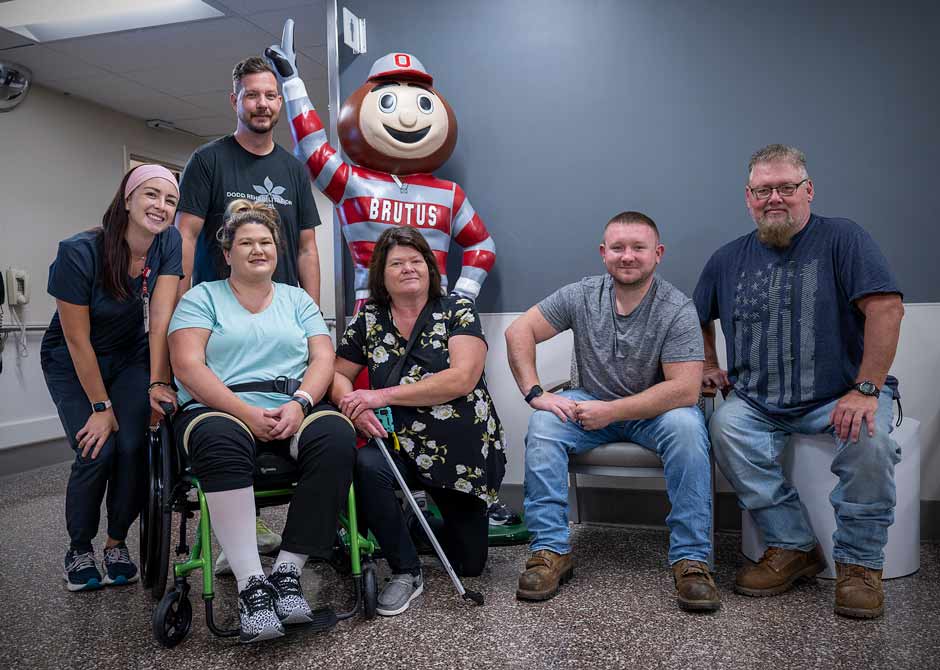
A major focus of inpatient rehabilitation is to prepare you and your family for what life might look like after leaving the hospital. We want to maximize your health and well-being, while helping you to function as independently as possible in your home, work or school environment.
Your care team at Dodd begins developing a personalized and effective plan for your discharge as soon as you arrive. Some areas they’ll help you address leading up to going home include:
- Promoting independence
- Adapting to living with a disability
- Determining what a safe and accessible environment is
Early on in your hospital stay, we’ll identify barriers you might have to going home and provide resources to remedy these issues. You’ll be assigned a case manager who will help manage any obstacles to your or your family member’s transition from inpatient rehabilitation.
Home evaluations
Before you return home, our experts may visit the residence and identify any changes that may need to be made to accommodate your progress. These modifications may include installing wheelchair ramps, raised toilet seats or handrails on stairwells, as well as removing tripping hazards.
Medical devices
Our Outpatient Rehabilitation Assistive Technology helps people regain function and achieve a higher level of independence at home, work, school and play through the improved use of technologies, such as wheelchairs, alternative communication devices and vehicle modifications. For further customization, the Wheelchair Seating and Mobility Clinic provides positioning and cushion evaluations to help with comfort and protection.
Ongoing therapy
All your follow-up and outpatient therapy appointments will be coordinated and managed by your team at the Ohio State Wexner Medical Center. Your physiatrist (a physical medicine and rehabilitation physician) will continue to see you regularly as your therapies continue on an outpatient basis.
Hands-on training and support for family
We offer ongoing training and support to loved ones and caregivers of the people we treat. They’re an integral member of the care team, especially when it comes to ensuring a positive transition home.
Services to help you transition to home safely and smoothly
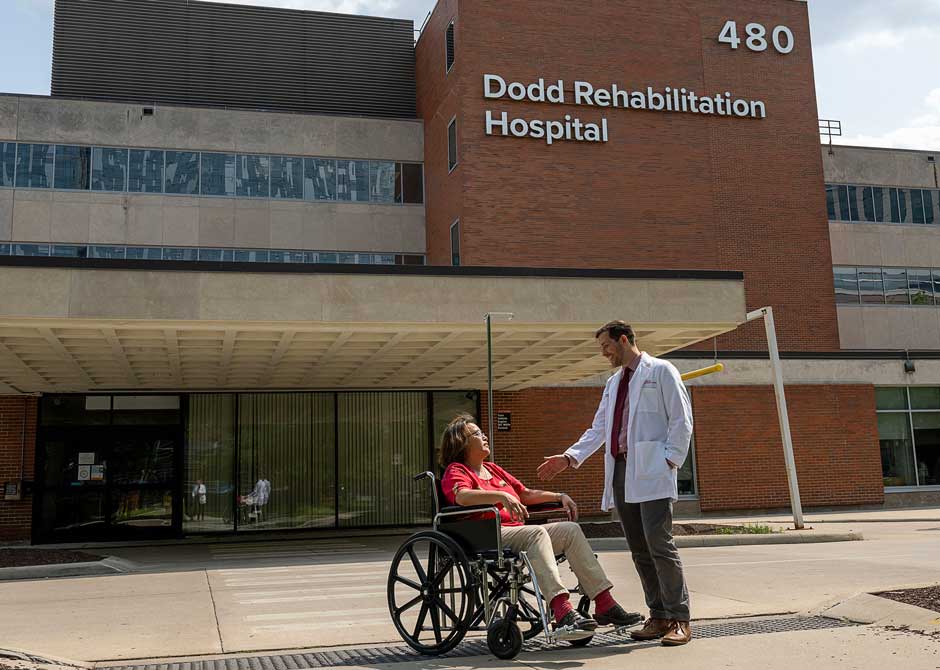 Our transition-to-home program, sometimes referred to as the Community Re-Entry Program, is comprised of services to help in each phase of your rehabilitation — from services offered while you’re still in the hospital to those offered after returning home. These services help you achieve your highest level of recovery.
Services include:
- Community outings – You will visit banks, restaurants, parks and stores to apply learned coping techniques in real-life situations, under the guidance of therapists.
- Practice in simulated environments – Our inpatient facility features a fully functional kitchen, bathroom and living space, including a washer and dryer, where you can practice cooking, cleaning and other activities.
- Independent living apartment – Before being discharged, you may also spend a night in this simulated environment with a family member, to determine your ability to cope in a home environment, under the safety net of having trained experts nearby.
- Re-entry to work or school – Working with employers and schools, we design highly effective therapy programs to assist you with returning to work or school, if that’s a goal.
- Transportation and driving rehabilitation – We can help you identify transportation to your various follow-up appointments and other daily errands. If you’re able to drive, we also provide many services in the Occupational Therapy Driver Rehabilitation Program to get you back behind the wheel.
- Volunteering – We work with various agencies, including Ohio State's Volunteer Services, to help you determine volunteer readiness and appropriateness.
A continuum of rehabilitation care after going home
One of the many reasons why Dodd is unique is our ability to continue to follow and guide you even long after you leave. Not only will we coordinate your care in outpatient settings, including our gyms and rehab clinics conveniently located around the Columbus area, but your physical medicine and rehabilitation doctor will treat you at follow-up appointments in the months and even years after your discharge from the inpatient hospital.
Tips for a smoother, safer transition to home
Though our experts will do everything possible to ease your return home, here are some other helpful tips for success after inpatient rehabilitation:
- Set realistic goals and expectations to stay motivated and focused, but with a reminder to pace yourself on this difficult journey.
- Seek out nutrition advice to maintain a healthy weight and overall sense of well-being, which are both important to recovery.
- Follow doctor’s orders, including what to eat and drink, medication management or physical activity requirements.
- Establish a routine, especially around taking medications diligently and following therapy exercise plans.
- Take care of your emotional well-being (especially caregivers) by joining support groups, being social, getting outside the house and accepting help.