
Comprehensive Stroke Center

At The Ohio State University Wexner Medical Center in Columbus, Ohio, our goal is to help you reach the best possible outcomes after a stroke. From the moment a person experiencing a stroke arrives in our Emergency Department and throughout recovery, every step is designed to improve your outcome and support long-term health.
We are recognized as an American Heart Association Gold Plus Comprehensive Stroke Center, which means we have specific abilities to receive and treat complex stroke cases that other area hospitals might not be able to manage. We’ve also received multiple Get With The Guidelines® Stroke Gold Plus awards for quality in 2025, further underscoring our expertise in stroke care. These designations include:
But don’t just take our word for it. Our performance across the best outcome measures for a stroke speaks for itself.
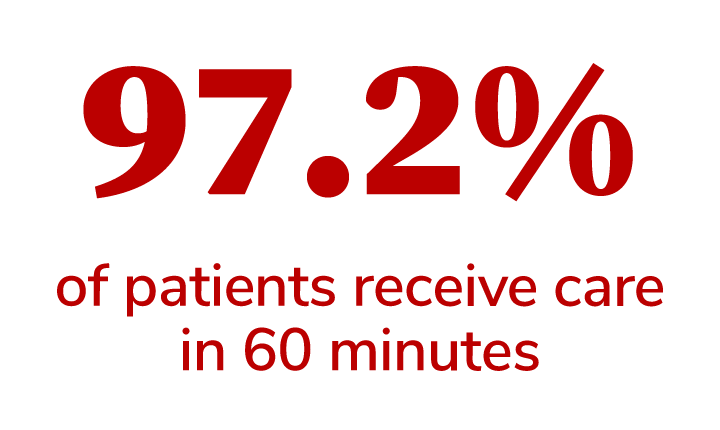 When a stroke occurs, the time it takes to get treatment directly affects brain function and long-term recovery. Intravenous thrombolytic therapy is a clot-dissolving treatment that must be given quickly to improve the outcomes of stroke. We track how fast treatment begins after arrival to ensure that stroke patients receive care without delay.
National goals call for treatment within 60 minutes for at least 85% of eligible patients. We consistently exceed national benchmarks for treatment speed and continue to improve year-over-year.
Treatment window adherence, which measures whether patients arrive within 3.5 hours and receive treatment within 4.5 hours, increased from 88.9% in 2023 to 92.9% in 2024. This shows elite coordination from first contact through treatment.
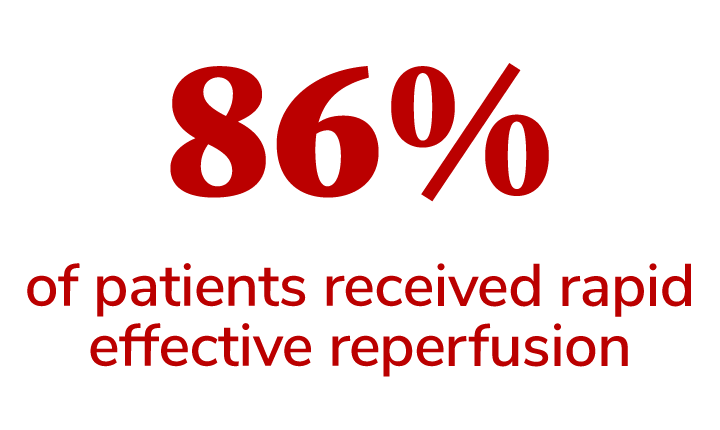 Restoring blood flow to the brain (reperfusion) is a primary measure of successful stroke treatment. This metric reflects how effectively care teams reopen blocked vessels after a stroke.
Our rate of rapid and effective reperfusion improved by nearly 4% from 2023 to 2024, reaching 86%. While speed is critical, this metric shows the success of treatment itself. High performance is closely tied to better neurological recovery and improved long-term stroke outcomes.
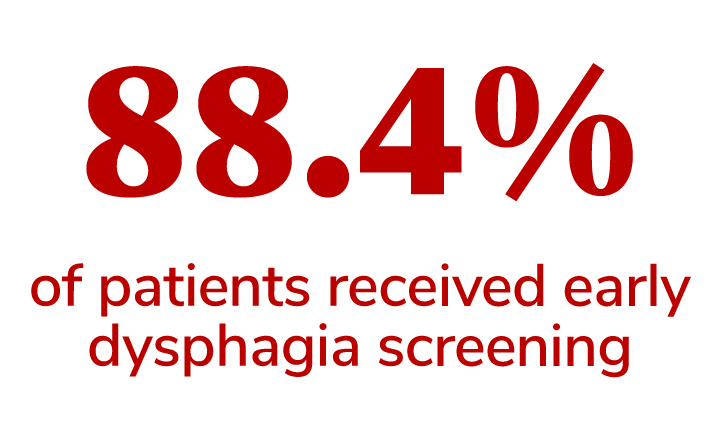 After a stroke, some people experience difficulty swallowing (dysphagia), which can lead to complications like aspiration or pneumonia. Early screening helps care teams identify and manage this risk.
Our rate of dysphagia screening among stroke patients remained consistently high in 2024, with 88.4% of people screened. This measure supports recovery and can help guide next steps in rehabilitation for stroke recovery.
As a certified comprehensive stroke center, we treat the most complex stroke types with around-the-clock access to advanced imaging and specialized procedures. From surgical and emergency care to minimally invasive procedures and stroke rehabilitation, we tailor treatment to your specific diagnosis and individual needs.
Recognition through the American Heart Association’s Get With The Guidelines® stroke program highlights that we follow national standards for stroke care and track outcomes closely. In most cases, our results far exceed national goals.
Ohio state experts explain how their advanced treatment and recovery care for all types of strokes leads to better outcomes. Watch videos about stroke symptoms, emergency treatment and other stroke-related topics.
The best stroke outcomes depend on speed, technology, coordination and access to the best treatment at the right time. At Ohio State, our Comprehensive Stroke Center sets itself apart in several ways, including:
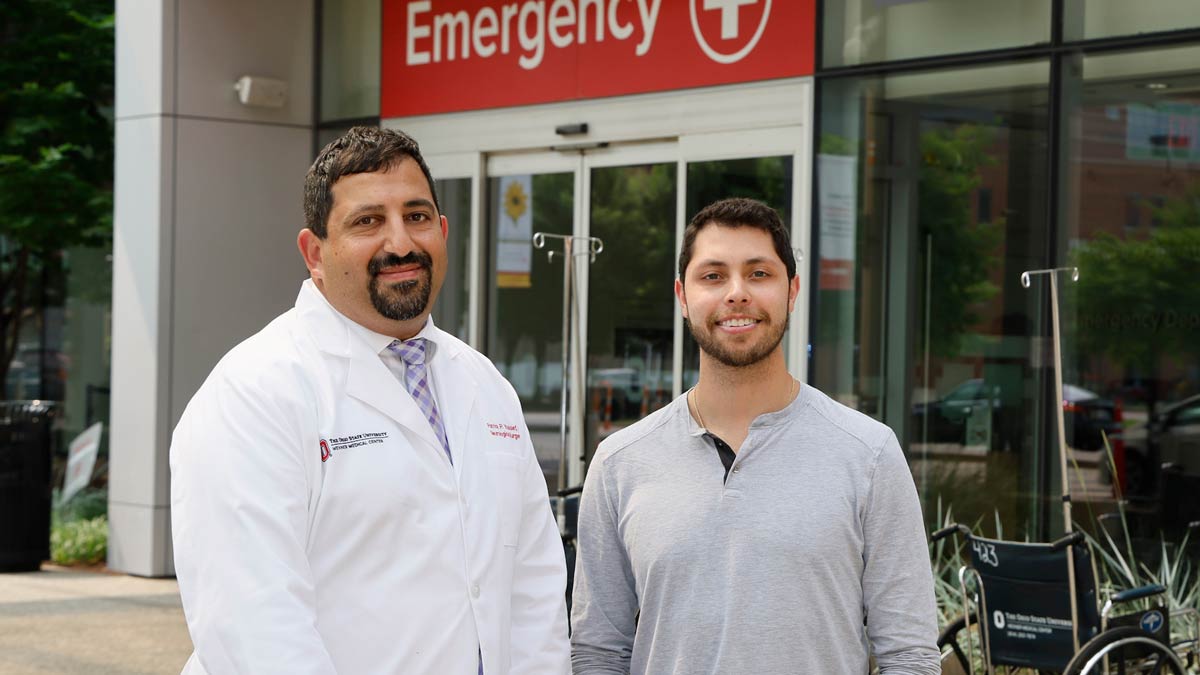
A neuroscience graduate student makes a full recovery after suffering a stroke across the street from Ohio State’s emergency department.


