
Advanced and compassionate care for babies who need it most
 Giving birth to a sick or premature baby can be unexpected. And even if you anticipate that your baby will need extra care after birth, it can still be distressing and overwhelming to think about going home without your baby.
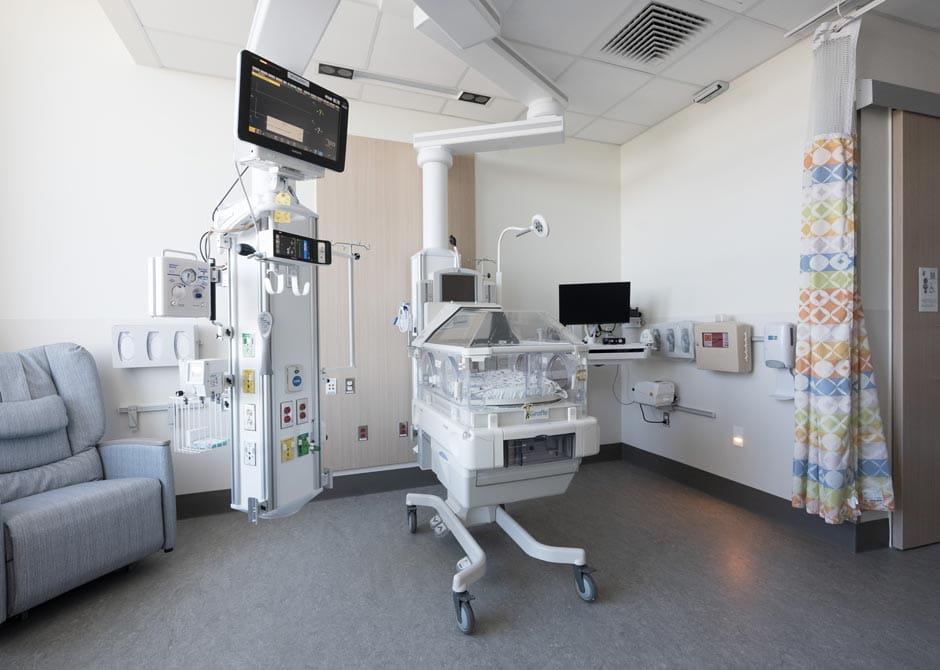
However, you can rest easier knowing there’s a dedicated, compassionate team of experts caring for your baby 24/7 while in the new, 51-bed Nationwide Children’s Hospital Neonatal Intensive Care Unit (NICU) at The Ohio State University Wexner Medical Center in Columbus, Ohio. We designed this state-of-the-art space to match our family-centered approach to care, creating a warm and inviting environment to foster healing for both babies and families.
Modern, comforting amenities and the most advanced technology enhance the high-level, expert care we’ve always provided as a Level III NICU. Along with our partners at Nationwide Children’s, your baby is in good hands until they’re ready to go home.
What is the neonatal intensive care unit (NICU)?
A NICU is a special area of the hospital for babies who need intensive care after they’re born. Our NICU serves babies born prematurely, those whose mothers experienced a complicated pregnancy and delivery, or those with infections, illnesses or birth defects.
Newborns in need of intensive medical attention are admitted directly to our on-site NICU, which is one floor below Labor and Delivery in Ohio State’s Maternity Center. There, infants are immediately evaluated by expert neonatologists and cared for by specially trained staff around the clock.
What does a Level III NICU do?
A Level III NICU provides advanced care for critically ill infants born at all gestational ages and birth weights. We’re specially equipped and trained to care for infants born before 32 weeks and weighing less than 3 ½ pounds. Being a Level III NICU also means we provide:
- Comprehensive care for the most complex illness, including those requiring life support
- Low nurse-to-baby ratios, at least 1:3 and, for the sickest babies, 1:2 or 1:1
- Advanced respiratory support and monitoring
- Specialized treatments and surgeries
- A care team that includes neonatologists, pediatric surgeons, specialized nursing staff, respiratory therapists and other subspecialists
A Level III designation is the second-highest level in NICU care. The only Level IV NICU in central Ohio is at Nationwide Children’s, whom we partner with to provide care at the Ohio State Wexner Medical Center.
Highlights of Ohio State’s NICU
 Our commitment to babies and their families is to provide the highest-quality care with empathy and compassion. Our treatments are supported by innovative research, advanced medical expertise and the latest technologies and techniques. Here are some other benefits of Ohio State’s new NICU:
- Large, private rooms with 9-foot windows – These state-of-the-art rooms feature large picture windows with shades to promote day and night cycles and provide appropriate lighting for restful sleep. The rooms also have a pullout couch and private bathroom for overnight stays.
- Rooms for multiples – The NICU has five larger rooms for multiple births, including three rooms equipped for twins and two rooms equipped for triplets.
- Parent Advisor Program – The Parent Advisor is a mother who previously had a baby that was in the NICU. Though not medically trained, she is part of the NICU team and serves as an important resource for families.
- Milk bank – For breastfeeding parents, this offers an easy drop-off window and designated milk-drop-off parking for quick delivery when you’re unable to stay with your baby.
- Family lounge – This new space offers a refrigerator, freezer, coffee machine and microwave in a central, daylit space. The area will be used for special events provided by our Parent Advisor.
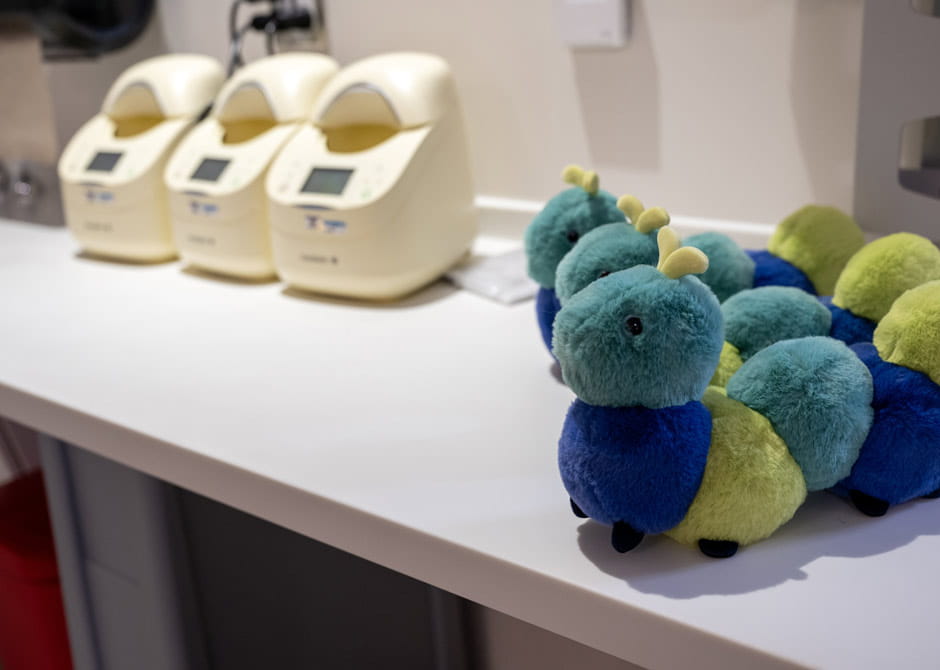
- Lactation support – Each room has an electric breast pump, and the unit has a full-time lactation consultant who understands the unique challenges a NICU parent might face.
- Small-baby protocols – We have a strict set of protocols we follow to care for the tiniest of babies, typically those born between 22 and 27 weeks of pregnancy.
- Skin-to-skin care promotion – We know how important skin-to-skin (kangaroo) care is to these babies, so we offer various amenities, including comfortable recliners in each room, to encourage this.
- Coordinated care with Nationwide Children’s Hospital – For those in need of specialty care, including from a pediatric cardiologist or neurologist, for example, we coordinate the baby’s prompt transfer to Nationwide Children’s.
Why might my baby need to stay in the NICU?
There are many reasons why your baby might need extra care in the NICU. Sometimes, you’ll know ahead of childbirth that your newborn might require a NICU stay, and for other parents, it’s unexpected that their baby was born sick or prematurely. Here are some risk factors that increase your infant’s chance of needing the NICU.
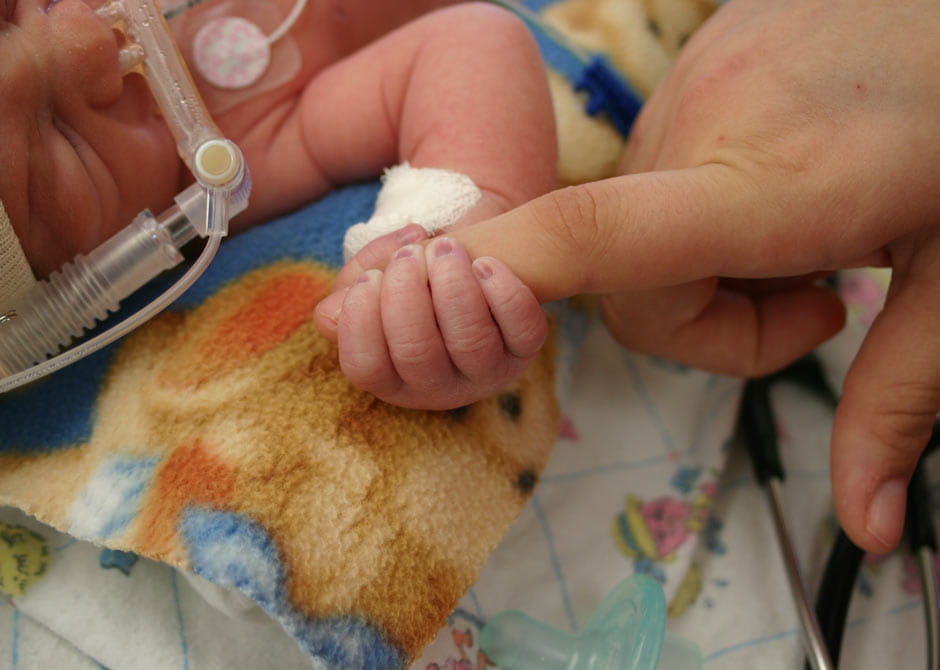 Baby risk factors include:
- Born before 37 weeks or after 42 weeks
- A birth weight below 5 pounds, 8 ounces; or above 8 pounds, 13 ounces
- Birth defects
- Difficulty breathing, rapid breathing or other signs of respiratory distress
- Low blood sugar (hypoglycemia)
- Seizures
- An infection, such as herpes or group B streptococcus
- Need for special treatments, such as IV medication or a blood transfusion
Delivery complications include:
- Fetal distress or birth asphyxia (baby doesn’t get enough oxygen) impacts the baby’s organs.
- Baby’s first stool (meconium) happens before birth and is passed in the amniotic fluid.
- Baby is born breech or in another position besides headfirst with face up.
- The umbilical cord is wrapped around baby’s neck at birth.
- Baby needed medicine or resuscitation immediately after delivery.
- Having to use forceps or a vacuum during birth, or having a cesarean delivery, increases the risk.
Birth parent risk factors include:
- Diabetes
- High blood pressure or preeclampsia
- Alcohol or drug use during pregnancy
- Bleeding
- Birthing multiples, such as twins or triplets
- Too little or too much amniotic fluid
- Premature rupture of membranes (water breaks early)
- Sexually transmitted infections
- Being younger than 16 or older than 40
It’s important to remember that just because you or your baby have certain risk factors, or there are complications during delivery, does not automatically mean your infant will need care in the NICU. Your expert care team will advise you when the NICU is necessary.

Car seat tests for newborn babies
For babies of a certain age, size or who might have breathing issues, a car seat test measures whether a baby can safely travel home in their car seat, and it’s a standard evaluation in many NICUs. An Ohio State postpartum nurse explains what to expect and what to do if a baby doesn’t pass their evaluation.
Who will care for my baby in the NICU?
 As a Level III nursery, the NICU at the Ohio State Wexner Medical Center is staffed with a team of experts who specialize in caring for the smallest and sickest babies. These specialists include:
- Neonatologists – These are pediatricians who have additional training in newborn care. At least one neonatologist is always present in the NICU.
- Neonatal nurse practitioners – Our neonatal nurses are advanced practice nurses who specialize in newborn care. They can answer your questions, provide advice and help meet any special needs your baby may have.
- Respiratory therapists – Respiratory therapists manage our advanced mechanical respiratory equipment and provide breathing treatments.
- Occupational and physical therapists – Occupational and physical therapists help with developmental care and address feeding issues.
- Lactation consultants – NICU babies bring with them special breastfeeding challenges that our lactation team can help you overcome. If your baby remains in the hospital after you are discharged, you can call 614-293-8910 to schedule a meeting with one of our lactation consultants.
NICU visitor policy
Parents may visit at any time, and since our rooms are private now with the opening of our new NICU, two people (parents, guardians, support people) are able to stay overnight in the room with the baby. Other visitor policies include:
- Grandparents can have 24-hour access with your permission.
- Visitors should be 12 years and older. Siblings under 12 can visit during unrestricted times.
- Visiting hours are 8 a.m. to 8 p.m.
- Up to two family members or friends at a time can visit with your permission, as long as the healthcare team can get to your baby. The developmental needs of your baby must not be disturbed.
- If parents, siblings, family or friends have the flu or fever, they may not visit the unit.
- Visitor restrictions will be in place during flu and respiratory syncytial virus (RSV) season. Ask your social worker about this policy.