
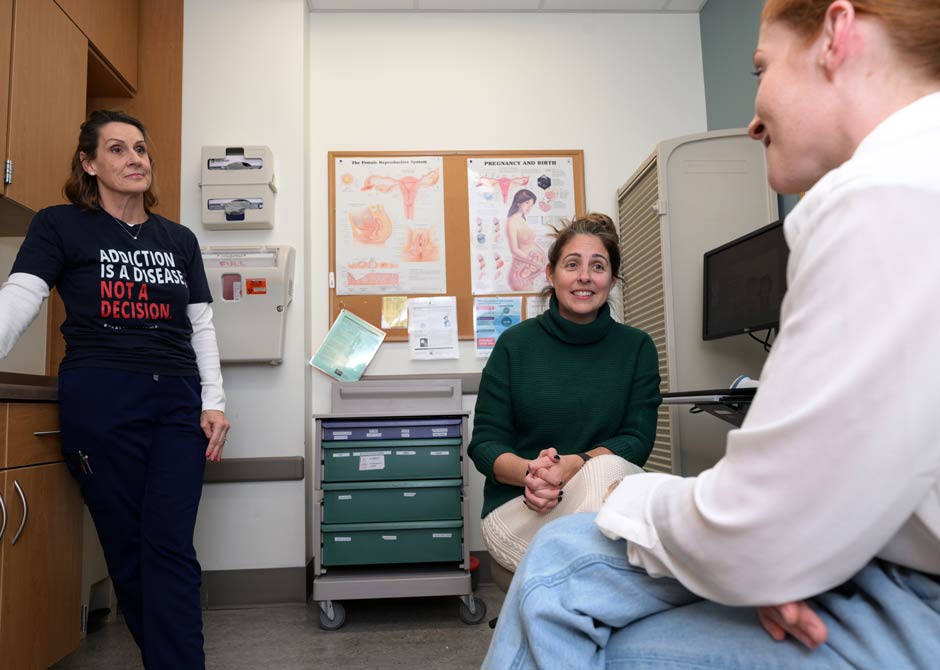
 If you’re pregnant and have a history of opioid or other substance use, you’ll find non-judgmental prenatal care that treats the whole person, not only with evidence-based medicine but also with compassion. The Ohio State University Wexner Medical Center in Columbus, Ohio, can be that partner to help you and your baby on your journey to recovery.
Our Substance Treatment Education and Prevention Program (STEPP) within our Maternal Fetal Medicine practice offers high-risk pregnancy care, addiction treatment and counseling – all in one convenient location. Our specially trained physicians and nurses understand how difficult accessing care when you’re pregnant and struggling with substance use disorder can be, so we’ll take the time to get to know you, build trust over time and help you become part of a supportive community. Our goal is for you and your baby to be able to go home together safely, knowing that you have continual support from STEPP.
What is the Substance Treatment Education and Prevention Program?
Expectant mothers with chronic disease of addiction to drugs or alcohol come to STEPP for prenatal care that works alongside their treatment for substance use disorder.
The STEPP Program provides prenatal care, postpartum services, and whole-person care on a weekly basis. You can join the program at any time during pregnancy, although most reach out before 24 weeks, and continue through one year postpartum. Participants typically meet each week on Wednesday mornings for obstetric care, counseling and parenting classes.
STEPP supports several hundred pregnant people each year, and one of the biggest benefits to being a part of our program is that in the majority of cases, we’re able to keep mothers with their babies after they deliver. We also help participants transition to community providers for support and long-term healthcare.
Because of our unique approach to working with pregnant people with substance use disorders, participants in STEPP experience the following:
- Decreased rates of premature births
- Increased rates of breastfeeding
- Decreased admissions to the neonatal intensive care unit (NICU) for withdrawal symptoms in infants
- Improved rates of babies discharged home to their mothers
- Increased rates of participants staying on prescribed medication for opiate use disorder
- Increased rates of treatment for hepatitis C during pregnancy
Who we help
Most people in STEPP have a diagnosed opioid use disorder or other substance use disorder, and participate in a treatment program (either inpatient or outpatient, aligned with the Ohio State Wexner Medical Center or through outside programs) as they work toward recovery. They have a history of substance use, including alcohol, narcotic pain medication, opioids, heroin, fentanyl, morphine, codeine, OxyContin®, Dilaudid® or methadone.
Additionally, our clinic cares for expectant mothers with other healthcare needs, including infectious diseases, which are frequently but not always associated with drug use.
Our services
Whether you’re in your sixth week of pregnancy or your 36th, providers at STEPP can help you and your baby get the best care possible to treat addiction, meet your prenatal and overall health needs and ensure you have the safest delivery possible.
You’ll continue to get support from STEPP after you have your baby and throughout that crucial first year of development. We provide these services:
High-risk obstetrics
You’ll receive weekly prenatal care, including obstetric exams, ultrasounds, any other necessary prenatal screening tests and lab tests. You’ll have discussions about medications, life stressors and other concerns. If needed, we’ll refer you to counselors and social workers. We’ll monitor your baby’s progress, size, position and development with state-of-the-art screening technology.
Addiction treatment during pregnancy
Because withdrawal from substances – especially opiates – can be severe, we know you’ll need as much supportive care as possible. If you’re dependent on opiates, including heroin, morphine, codeine, OxyContin, Dilaudid, methadone, fentanyl and others, we can prescribe Suboxone® and monitor its effects on you and your baby.
This medication may help you have less severe withdrawal symptoms and make it easier for you to taper off as part of recovery. It also reduces some of the risks that acute withdrawal may pose to your baby. Visiting your prescribing physician weekly will help you get additional support for substance use treatment.
Infectious disease treatment
Infectious diseases like hepatitis C and HIV are sometimes associated with substance use. We collaborate with a team of Ohio State’s infectious disease physicians to coordinate any special care you may need during pregnancy. We also participate in National Institutes of Health–funded research in collaboration with Nationwide Children’s Hospital to better understand hepatitis C and its effects on pregnancy.
Counseling
It’s common for those who struggle with substance use to also have a history of trauma and emotional and mental health challenges. Mental health experts at STEPP are trained to address addiction and experiences that lead to it.
If your care includes prescription-based medication stabilization, this includes weekly, hour-long group counseling sessions guided by a certified substance abuse counselor. We cover topics like preparing for birth while working toward recovery, empowerment, self-esteem and relationships. Many participants who are at first hesitant to join group sessions end up finding trust, support and friendship.
Newborn care planning
Together with neonatologists from our NICU, we coordinate care to meet your baby’s special needs. If your baby experiences a period of withdrawal, we provide care and treatment and are prepared for any complications that may arise.
Babies exposed to opiates in utero are observed in the hospital for five to seven days after delivery. If you’re discharged before your baby, we offer a comfortable space for you to stay with your baby 24/7. We also help new parents navigate any issues that may arise from Child Protective Services (CPS).
Community
Many participants on their journey toward recovery find they need to separate from friends and family who are still in active addiction. STEPP offers a sense of community as individuals bond over shared experiences, form friendships and support one another throughout pregnancy and the first year of parenting.
Postpartum care and parenting classes
STEPP includes the option to continue for a full year after your baby is born, providing postpartum support, parenting education, community and care. With a curriculum based on participant feedback, we cover topics like baby development and milestones, managing a household on a budget and nutrition.
Support for basic needs
We partner with organizations throughout central Ohio to ensure STEPP participants have access to basic needs. From housing and transportation to diapers and food, providers work closely with you to give you and your baby the best possible chance to thrive.
Why choose Ohio State for substance use treatment in pregnancy?
For more than a decade, providers at the STEPP clinic have helped hundreds of people successfully navigate pregnancy and substance use treatment. Other reasons to choose Ohio State include:
- Unparalleled expertise – The clinic is managed by Maternal Fetal Medicine specialists who are experts in high-risk pregnancies and have dual training in addiction medicine. The team of physicians, nurses, therapists and pharmacists is specifically trained to support you and your baby.
- Care across disciplines – We have dedicated professionals, such as psychologists and social workers, from other specialties who serve our program with their knowledge and passion. For example, we have a social worker with extensive knowledge of CPS, who helps program participants navigate that system.
- Compassion over judgment – This program is designed to see you safely through pregnancy, delivery and postpartum, including recommendations for continued rehabilitation or maintenance medication programs. We want you to be successful in not only your recovery but also in parenthood and as a member of the community.
Newborn care for babies with NOWS
Though most babies born in our program aren’t born addicted to substances, there’s still a chance your baby could have withdrawal signs after birth, also called neonatal opioid withdrawal syndrome (NOWS). Most babies who do show signs, show them in the first 48 to 72 hours after birth, but signs may last for weeks or months.
Symptoms of withdrawal for a baby
Some of the main symptoms of withdrawal:
- Body shakes (tremors), seizures, overactive reflexes (twitching) and tight muscle tone
- Fussiness, excessive crying or having a high-pitched cry
- Poor feeding, poor sucking or slow weight gain
- Fast breathing
- Fever, sweating or blotchy skin
- Trouble sleeping, lots of yawning
- Diarrhea or throwing up
- Stuffy nose or sneezing
Planning before delivery
Because your baby will be at the hospital for further treatment after you are discharged, you may want to consider:
How to answer questions: What will you tell family and friends when asked why the baby is staying in the hospital, especially if they are unaware of your medication or substance use?
Travel: How are you going to get to and from the hospital to visit your baby?
Parking: How to pay for parking? (Garage parking is $3 each visit, but only if you get a discounted pass. Some free parking is available in neighborhoods near the hospital, but pay attention to parking signs, as some areas require a permit.)
Meals: When visiting your baby in the hospital, meals aren’t provided for you. Consider packing food or bringing money to buy food.
Childcare: Who will care for your other children when you visit?
What to expect after delivery
The nurses will check your baby for signs of withdrawal using an assessment tool called Eat, Sleep, Console. Your baby’s score will be checked every few hours until it’s time to go home. If your baby can’t eat, sleep well or be consoled, a neonatologist may recommend treatment to keep your baby comfortable during withdrawal.
How to best help your baby
While medicines and other hospital comfort care are helpful, you are the best treatment for your baby. You can help your baby most by:
- Staying close to your baby
- Continually holding and swaddling your baby
- Making skin-to-skin contact with your baby
- Keeping things quiet and calm around your baby (few visitors, no noise, no bright lights)
- Breastfeeding (if only taking prescribed medicines)
Exposure to cigarette smoke can increase the severity of withdrawal symptoms. Please note, The Ohio State University is a tobacco-free environment.
Your baby's hospital stay
Your baby will be in the hospital for at least five to seven days after delivery. This allows the care team to determine if your baby needs medicine to help with withdrawal. Your baby will be able to leave the hospital when there is little risk of serious problems, or when they no longer need withdrawal medicine. Many babies who need medication for withdrawal stay in the hospital for up to three or four weeks.