
Prenatal tests check for several potential health issues
Finding out you’re pregnant can be an exciting time for you and your family. However, pregnancy can also cause worries about whether your baby will arrive healthy and safely.
Prenatal tests can provide valuable insight into how your baby is doing during pregnancy. Some of these tests are routine and recommended for anyone who is pregnant while others may be recommended only if your pregnancy is high-risk or another, more routine screening identifies a potential issue. Your providers at The Ohio State University Wexner Medical Center in Columbus, Ohio, will walk you through which prenatal tests will be most beneficial for you and your baby.
If complications are identified during pregnancy, prenatal tests allow doctors and specialists to diagnose conditions quickly and give parents and their infants the best possible care. Our Obstetrics and Gynecology team is trained to help you expect the unexpected. Maternal Fetal Medicine (MFM) specialists at Ohio State can handle the most complex cases and devote special attention, ensuring that families receive proper care and support.

What conditions can be detected through prenatal testing?
Some screening tools determine the likelihood that a baby has a specific condition, while others diagnose specific conditions.
Prenatal tests look at these health issues:
- Birth defects
- Genetic or chromosomal conditions
- Risk of premature labor
- Your overall health and your baby’s
What prenatal tests can I expect during my pregnancy?
Some prenatal tests are routine and performed in most pregnancies. Urine and blood pressure checks, for example, are done regularly during doctor visits. However, other tests are done only if a pregnancy is deemed high risk, whether because of a known factor, such as mother’s age or medical history, or if another prenatal test, such as a blood draw or ultrasound, flags a potential issue.
Also, some tests are performed at different times throughout the pregnancy, and others are most appropriate during certain trimesters. Here are some prenatal tests you might have during pregnancy:
First trimester prenatal tests
- Routine first-trimester lab work: Includes blood type and Rh factor, complete blood count and screening for infections such as HIV, hepatitis B and syphilis. The goal is to help ensure a healthy pregnancy from the start.
- Carrier screening: Checks whether you or your partner carries genetic changes that could be passed to your baby, such as cystic fibrosis, spinal muscular atrophy or sickle cell disease. This test can be done before or early in pregnancy.
- Cell-free DNA test: Also referred to as a noninvasive prenatal test (NIPT), this blood test is done after nine weeks of pregnancy to check if a baby has a higher risk for Down syndrome and other genetic or chromosomal disorders. Further testing is needed to definitively determine if the baby does have one of these conditions. It can also determine the biological sex of the baby.
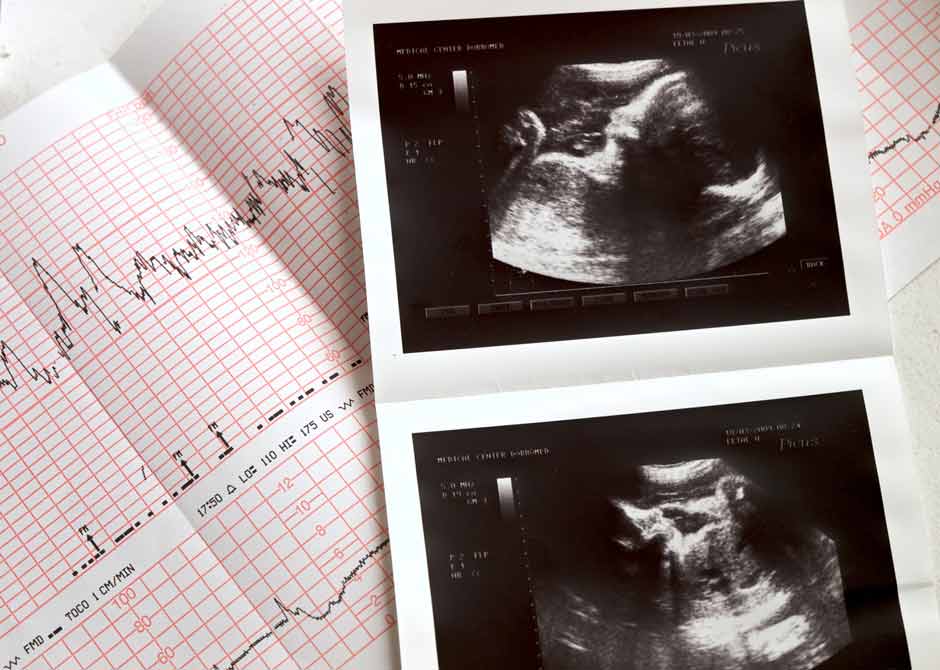
- Ultrasounds: You’ll most likely receive your first ultrasound during the first trimester. This imaging technique uses sound waves to produce images of the baby inside the uterus. Ultrasounds will be performed several times throughout a pregnancy for a variety of reasons, including dating the pregnancy, determining the number of babies and checking the baby's anatomy and growth. For example, they'll count fingers and toes and chambers of the heart, as well as measure the head and certain bones. This also includes an anatomy scan, or anatomy ultrasound, which is performed at the halfway mark of your pregnancy.
- Chorionic villus sampling (CVS): This diagnostic test is usually done at 10-12 weeks by taking a sample of the developing placenta for laboratory analysis to identify or rule out chromosome abnormalities, such as Down syndrome and certain genetic disorders, such as cystic fibrosis.
Second trimester prenatal tests
- Nuchal translucency: This ultrasound examination, performed between 11 and 13 weeks, measures the collection of fluid under the baby’s skin at the back of the neck. An abnormal finding helps detect chromosomal abnormalities, heart defects and other genetic syndromes.
- Amniocentesis: This test, performed on the amniotic fluid, is typically done around week 16 to assess certain genetic conditions. It can also tell the baby’s sex, help find certain neural tube defects and identify an infection in the amniotic fluid.
- Anatomy ultrasound: Performed around 18-22 weeks, this detailed ultrasound checks your baby’s growth and development, examines organs and limbs and evaluates the placenta and amniotic fluid. It can help identify structural abnormalities or markers that may suggest genetic conditions.
- Glucose test: Around 24-28 weeks pregnant, a glucose challenge test is ordered to check whether you have gestational diabetes, which can affect the baby. The test consists of drinking a sugary drink provided by your doctor and having a blood test an hour later to check your blood sugar level.
- Fetal kick counts: During this test, you or your provider will count how long it takes your baby to make eight to 10 movements during the later months of pregnancy. Generally, this should take less than two hours. If your baby isn’t moving that much, it might be worth further testing. This can also be done at home.
- Fetal echocardiogram: A specific ultrasound of your baby’s heart, which allows specialists to diagnose certain heart defects.
Third-trimester screening tests
- Nonstress test (NST): Usually ordered in the third trimester, an NST monitors your baby’s heart rate for about 30 minutes and how your baby responds to its own movements and any contractions happening.
- Biophysical profile: This examination uses ultrasound to provide more information about your baby’s health. It’s generally done in the third trimester only if there are concerns. This test assesses your baby’s movements, breathing and amniotic fluid.
- Group B strep test: You will likely be screened during your 36th to 37th week of pregnancy for Group B strep. You or your provider will swab the vagina and rectum for a sample, and if it is positive, you will receive IV antibiotics during labor to prevent infection for the baby.
Are prenatal genetic tests necessary during pregnancy?
Prenatal genetic testing isn’t required, but it’s an important option to know about if you want more information about your baby’s health before birth. These tests can help identify whether your baby is at increased risk for certain genetic or chromosomal conditions, allowing you and your care team to make informed decisions about your pregnancy and delivery.
Results can offer reassurance and peace of mind. Alternatively, they provide time to prepare emotionally and medically for a baby who may need special care. Your provider will discuss which tests are recommended based on your medical history, family background and personal preferences. Most importantly, you and your care team should ensure that any testing aligns with your values and goals for your pregnancy.
How accurate is prenatal testing?
Prenatal testing today is highly accurate, but you should understand the difference between screening and diagnostic tests.
- Screening tests can detect the likelihood of certain chromosomal or genetic conditions with up to 99% sensitivity for some disorders, but they cannot confirm a diagnosis. A positive result simply means there’s an increased chance your baby may have a specific condition.
- Diagnostic tests analyze your baby’s actual genetic material and can confirm or rule out a condition with near 100% accuracy. These tests are usually offered if screening results indicate a higher risk or if other factors, such as family history or ultrasound findings, raise concern.
Your care team will help you interpret your results and decide whether additional testing is right for you.
When is a pregnancy considered high-risk?
Many factors can lead to a potentially high-risk pregnancy even before receiving prenatal testing results. These might include:
- Age
- Multiple pregnancies, such as twins or triplets
- Preexisting medical conditions, such as diabetes or high blood pressure
- History of pregnancy complications
A pregnancy might also be deemed high-risk if a routine test identifies potential issues with you or the baby. Also, there are a number of additional prenatal tests that might be performed if your pregnancy is potentially high-risk that will allow our providers to best serve both mother and baby.
If your provider thinks your pregnancy might have complications, you could be referred to high-risk pregnancy experts like the Maternal Fetal Medicine specialists at the Ohio State Wexner Medical Center. Here, you’ll have access to genetic counselors, the latest testing resources, and the most advanced fetal treatments for any conditions these tests might identify.
What happens if my prenatal test results are abnormal?
If you have questions about prenatal testing results or your family history, a genetic counselor can help guide your next steps, such as additional testing, specialist referrals or care planning. Our genetic counselors are experts at walking you through complicated genetic diagnoses and helping you to make decisions about what’s best for you and your family.
How much do prenatal tests cost?
Most screening tests are covered by insurance, but coverage can vary. Your care team or billing department can help you verify your benefits before testing.
Prenatal testing services offered at Ohio State
-
Amniocentesis This test uses amniotic fluid to diagnose genetic conditions, neural tube defects and infections.
-
Biophysical profile Can be done with or without a nonstress test, this test can give you vital information about your baby later in pregnancy.
-
Small pieces of genetic material (DNA) from the pregnancy are in a mother’s blood and are tested to check if a baby is at higher risk for Down syndrome and other genetic chromosomal conditions. This is a screening test and does not give a definite answer. Further testing may be done if cell‐free DNA screening indicates a pregnancy is at high risk.
-
Chorionic villus sampling During this first trimester test, we take a sample of a developing placenta to identify or rule out chromosome abnormalities.
-
This ultrasound is provided in partnership with Nationwide Children’s Hospital. It’s performed here are Ohio State and read by a pediatric cardiologist. If a heart defect is found, the pediatric cardiologist will determine its significance and whether the defect will affect your baby prior to birth, will require immediate transfer after birth to Nationwide Children’s or will require heart surgery after birth.
-
During this test, you’ll count how long it takes your baby to make eight to 10 movements – a kick, flutter, burp, included – in the third trimester. Generally, this should take about an hour. If your baby isn’t moving this much, it might be worth further testing.
-
Glucose challenge test Around the sixth or seventh month of pregnancy, you’ll be tested for gestational diabetes.
-
You’ll be screened for this during the 36thor 37th week of pregnancy. This test involves swabbing the vagina and rectum and if you test positive, you’ll receive IV antibiotics during labor to prevent infection for the baby.
-
Nonstress test A noninvasive test, this monitors the baby’s heart rate and how it responds to movements and contractions.
-
An abnormal finding during the first trimester can help detect chromosomal abnormalities, heart defects and other genetic syndromes.
-
Ultrasound This is an imaging technique that uses sound waves to produce images of the baby inside the uterus.

New blood test may accurately predict preterm birth risk
A new blood test developed at The Ohio State University College of Nursing – in collaboration with The Ohio State University Wexner Medical Center – is the first of its kind to potentially predict the risk for preterm birth in early pregnancy, one of the leading causes of childhood death worldwide.