
 What is a glucose test during pregnancy?
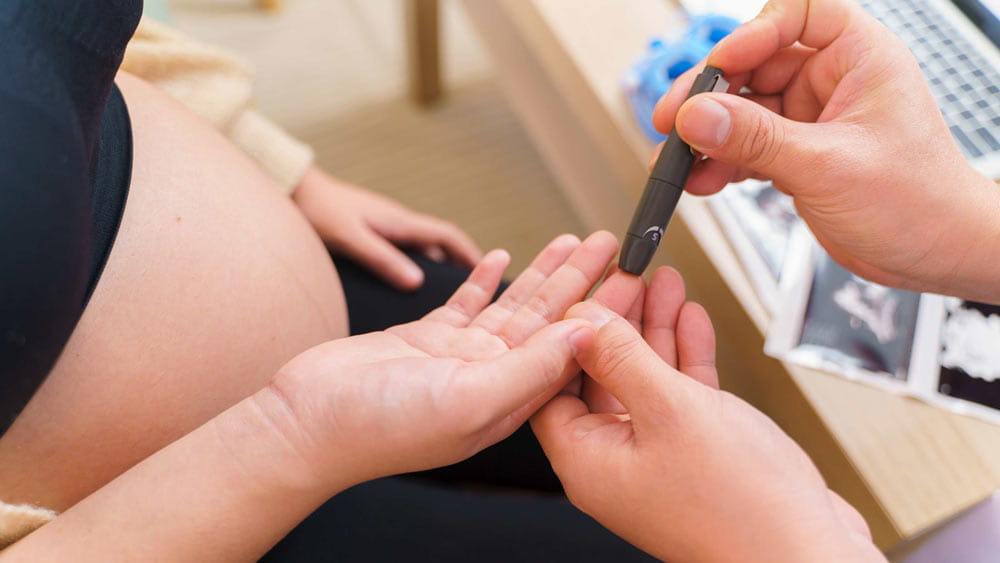
A glucose screening test during pregnancy, also known as a glucose challenge or tolerance test, screens for gestational diabetes, a condition that requires management to keep you and your baby safe.
Gestational diabetes is a common condition that affects around 8% of pregnancies a year. As your body changes hormonally and physically during pregnancy, you may use insulin less effectively, leading to higher blood sugar levels. Some increase in glucose levels is expected during this time. However, if they rise too much, you may be diagnosed with gestational diabetes, and your pregnancy is at a higher risk of complications.
You can still have a healthy pregnancy with gestational diabetes, especially when it’s monitored and treated. The condition typically goes away after pregnancy.
Why is a glucose test performed?
A glucose test is a prenatal test that helps detect gestational diabetes. Diagnosing gestational diabetes early allows you and your provider to effectively manage it through healthy eating, regular activity, and in some cases, medication. The glucose blood test gives your care team the necessary information to help you and your baby stay healthy throughout your pregnancy.
The American College of Obstetricians and Gynecologists recommends a glucose test for anyone who is pregnant. It’s generally performed between 24 and 28 weeks of pregnancy.
Risk factors that increase your chance of gestational diabetes
While certain conditions do increase your risk of developing gestational diabetes, it can happen during any pregnancy. Roughly 8% of expectant mothers will develop gestational diabetes during their pregnancy.
The following are factors that can contribute to gestational diabetes:
- Having diabetes during a previous pregnancy
- Family history of diabetes
- Obesity
- Advanced maternal age (35 or older during pregnancy)
- Certain medical conditions, like polyendocrine metabolic ovarian syndrome (PMOS) or metabolic syndrome
- Some ethnic and racial groups are at higher risk, including those with Black, Hispanic, American Indian and Pacific Islander backgrounds
If you have these risk factors, your provider may administer a different test, called a hemoglobin A1c, with your initial prenatal labs to screen for type 2 diabetes. It’s important to note that up to half of all women who develop gestational diabetes lack any risk factors at all.
Changing the narrative for diabetes in pregnancy
Since 1987, Ohio State’s Diabetes in Pregnancy Program has pioneered advancements to improve outcomes for thousands with type 1, type 2 and gestational diabetes.
Why is it important to diagnose and manage gestational diabetes?
It’s very important to diagnose gestational diabetes early and set up a treatment plan with your care team to manage the condition. This can help you avoid issues such as:
- High blood pressure, or preeclampsia, during pregnancy, which can decrease blood flow to the placenta
- Premature birth
- Cesarean birth, due to a larger baby
- Increased risk of developing type 2 diabetes or hypertension later in life
Because gestational diabetes can cause many issues later in pregnancy, it’s important to work with your provider to diagnose the condition early and manage it through healthy eating habits, glucose monitoring and medication. You might even be referred to a high-risk specialist, like the ones in our Maternal Fetal Medicine Program, to monitor the rest of your pregnancy.
Although blood sugar typically returns to normal after the birth, gestational diabetes can have lingering effects, such as a higher risk for diabetes for both you and your child as you and your baby get older.
 Risks of a glucose test
The glucose challenge test is a safe, routine and noninvasive screening with no risk to you or your baby.
What happens during a glucose test?
This is a simple, routine test. Consider wearing loose sleeves for the blood draw and bring a snack for after the appointment. Typically, the test will follow these steps:
- First, you’ll drink a sugary liquid from your provider.
- Don’t eat or drink anything else (including chewing gum) for an hour.
- Then, we’ll draw your blood to check your sugar level.
If your sugar level is too high, you may be asked to complete the three-hour glucose tolerance test to confirm whether you have gestational diabetes.
Results of a glucose challenge test
Results from the blood test should be available within a few days. Results are measured in milligrams per deciliter (mg/dL) of blood. Your provider will review your blood sugar levels and explain what they mean for your pregnancy.
This screening test identifies who may be at risk but does not diagnose gestational diabetes on its own. Results may look like this:
- Normal: Less than 135 mg/dL
- Borderline or elevated: 135-179 mg/dL. Your provider will recommend a follow-up, three-hour glucose tolerance test for confirmation.
- High: 180 mg/dL or higher. Your provider may diagnose you with gestational diabetes without the need for further testing or may talk to you about the three-hour glucose test.
Three-hour glucose tolerance test
This three-hour test is the follow-up diagnostic test if the first screening results are elevated. This test measures how your body processes glucose over time. Steps for this test include:
- You’ll need to fast overnight to test your fasting blood sugar.
- You’ll drink another glucose solution.
- You’ll have your blood drawn at one-hour intervals for three hours.
Your provider will compare your results to standard values to determine whether you have gestational diabetes.
What happens if my glucose test results are high?
One abnormal result typically is not enough to diagnose gestational diabetes. If your blood sugar level is high on any two or more values of the three-hour test, you’ll be diagnosed with gestational diabetes.
It’s important to remember the condition is very manageable, and the management starts with changes to your diet and physical activity. Your provider may recommend medication if needed. You will need to monitor your blood sugar levels at home for the duration of your pregnancy.
Specialists in our Maternal Fetal Medicine Program are uniquely trained to help you manage gestational diabetes, to ensure that your baby arrives safely and you remain healthy throughout the rest of your pregnancy.
How do I prepare for a glucose test?
Preparing for your glucose test is simple, and your care team will give you clear instructions in advance.
For the one-hour glucose challenge test (screening):
- No fasting is required. You can eat and drink as you normally would before your appointment, but try to avoid anything extremely sugary right before your test because it may affect your results.
- Wear a short-sleeved or loose-fitting shirt for easy access to your arm.
- Bring a light snack for after the test if you tend to feel faint or lightheaded after blood draws.
For the three-hour glucose tolerance test (diagnostic):
- Fasting is required. You’ll need to avoid eating or drinking (other than water) for eight to 12 hours before your test.
- You may want to schedule the test early in the morning so you can fast overnight.
- You’ll have your blood drawn four times – before drinking the glucose solution, and then one, two, and three hours afterward.
- Bring something to read or listen to, as you’ll be seated comfortably for about three hours.
Consider arranging a ride home afterward, especially if fasting or multiple blood draws make you feel tired or dizzy. Your care team will review your results and next steps after the test.
Helpful Links
Get an estimate for this and other services
Get an instant estimate for your out-of-pocket costs. Learn more.
Login to MyChart
As a MyChart user, you can pre-populate an estimate with your existing insurance information, receive personalized estimates and save your estimates for later.
Don't have a MyChart account? Create an account