
Our Maternal Fetal Medicine specialists are here to help
When planning to have a baby, you hope your pregnancy and delivery will be as smooth as possible – but sometimes the unexpected happens.
If you’re facing a high-risk pregnancy, the Maternal Fetal Medicine experts at The Ohio State University Wexner Medical Center in Columbus, Ohio, provide personalized care in addressing pregnancy complications. They work alongside your obstetrician or midwife to offer compassionate and coordinated care that’s backed by research, a depth of medical expertise and leading technologies. In other words, they help you take control of the unexpected.
As part of an academic medical center and as the only Level IV Maternity Center in central Ohio, we have access to clinical expertise, resources, equipment and support that make certain treatments possible only at Ohio State. The new maternity center in our new University Hospital tower has the latest amenities and private rooms. No matter if your pregnancy is high-risk or free of complications, Ohio State strives to provide the safest and most comfortable environment to care for you and your baby.

Our high-risk pregnancy specialty services and programs
What is a high-risk pregnancy?
While all pregnancies carry some risk, a high-risk pregnancy is one in which you or your baby may be more likely to develop certain health problems before, during or after delivery. Sometimes you go into pregnancy knowing you’re at an increased risk for complications, and other times, your pregnancy might become high-risk if prenatal tests identify potential issues.
Having a high-risk pregnancy can bring about a lot of emotions and fear. However, nearly 10% of all pregnancies in the United States are considered high-risk each year, and many of these pregnant people go on to have healthy outcomes.
A high-risk pregnancy typically means you’ll have extra monitoring and testing throughout your pregnancy to ensure complications don’t occur or that identified issues remain stable. You’ll most likely be referred to our Maternal Fetal Medicine team, which specializes in caring for high-risk pregnancies, including the most complex cases, so you can rest assured, we’ll talk you through every step of the way.

Patient testimonial
Specialty maternity care for high-risk MoMo twin pregnancy
Madison Feinberg and her husband, Chad, had a rare high-risk pregnancy. Their twins shared the same amniotic sac and placenta, which could cause the babies to develop at different rates among other dangers. At the Ohio State Wexner Medical Center Feinberg and the identical twins were closely monitored by physicians who specialize in high-risk pregnancies.
What causes a high-risk pregnancy?
There are many reasons why a pregnancy might be considered high-risk. Sometimes it’s the result of a preexisting maternal condition, a factor of familial history, or in other cases it’s because something occurs over the course of the pregnancy. Some of the most common causes of a high-risk pregnancy include:
Preexisting maternal conditions
- Maternal age (35 years and older or younger than 20 years)
- Multiple miscarriages or pregnancy losses, including stillbirths
- Diabetes or gestational diabetes
- Heart conditions
- History of blood clots or stroke
- Chronic high blood pressure
- History of premature birth
- Organ transplant
- Certain genetic disorders that can be passed to the baby
- Infectious diseases (such as HIV or viral hepatitis)
- Mental and behavioral health disorders
- Substance use disorder and other lifestyle factors
Fetal conditions
- Birth defects, such as a congenital heart defect or cleft palate
- Issues with chromosomes, such as Down syndrome
- Genetic disorders, such cystic fibrosis
- Growth restriction
- Fetal anemia
- A twin or triplet pregnancy, including complications such as twin-to-twin transfusion syndrome
Pregnancy-related conditions
Sometimes complications arise during pregnancy. These can include:
- Preeclampsia or HELPP syndrome
- Placental abruption or other placental disorders
- Infections
- Too much or too little amniotic fluid
- Ruptured membranes or water breaking too early
These are just some of the conditions our Maternal Fetal Medicine physicians and advanced practice providers manage. We’re equipped to handle any high-risk complications as well as manage multiple complications at once.
What are signs and symptoms of a high-risk pregnancy?
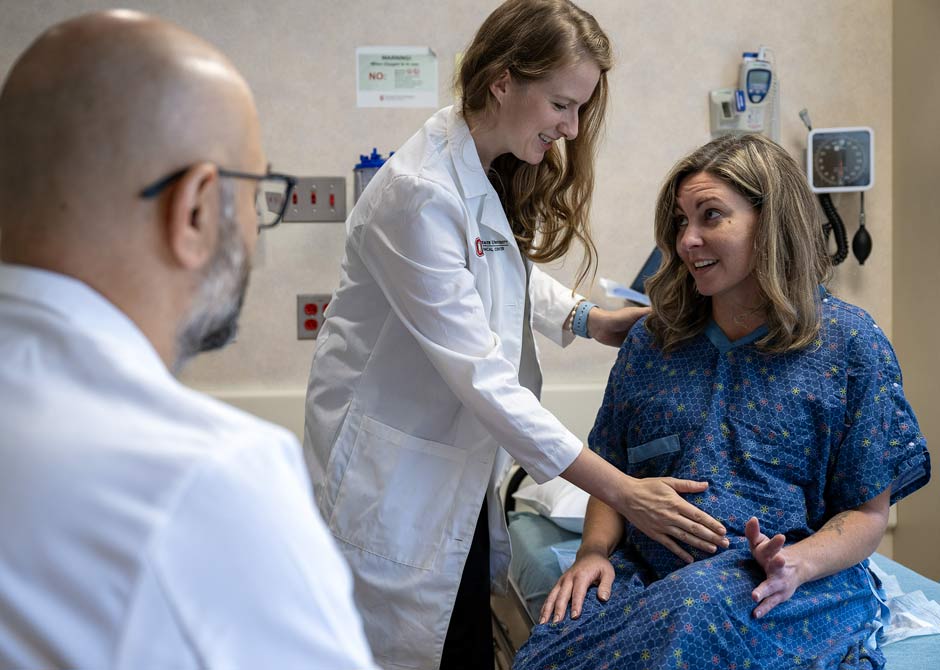 While there aren’t always noticeable signs that you’re experiencing a pregnancy complication, sometimes certain symptoms could mean you’re at an increased risk of a problem. Some of those symptoms include:
- Vaginal bleeding
- Lack of fetal movement
- Headaches, blurred vision or dizziness
- Pain or cramping in stomach or pelvic area
- Heart palpitations
- Vomiting or nausea that won’t go away
- Fever
- Sudden swelling in hands, feet or face
- Overwhelming sadness or nervousness that makes it difficult to complete daily tasks
- Thoughts of harming yourself or your baby
You should contact your primary obstetrician or Certified Nurse-Midwife if you have any of the above symptoms. You can also visit our Obstetric Emergency Department if you require immediate attention.
What to expect after a high-risk pregnancy diagnosis
It’s important to remember that high-risk pregnancies happen on a spectrum, meaning that for some people pregnancy is dangerous, and others just need some extra monitoring. Though our treatment plan for each high-risk pregnancy will be customized to your personal situation, here are few things you can expect:
- You’ll have some extra attention during your pregnancy. This could mean more frequent appointments and ultrasounds or more prenatal testing, such as an amniocentesis or nonstress tests.
- You’ll have a whole care team working on your behalf. Most people with a high-risk pregnancy will see a Maternal Fetal Medicine physician, who specializes in high-risk pregnancies, alongside the care they receive from their obstetrician or Certified Nurse-Midwife. If your baby has a condition, you may also be referred to see a fetal therapy specialist and a neonatologist.
- You may need to deliver your baby earlier. Depending on your diagnosis and your health, you may have to deliver your baby early. We’ll do everything possible to get you to full term, but sometimes complications can outweigh the risks of premature birth. Deciding to deliver early will follow our shared decision-making process, allowing input from you, your family, your primary provider and other physicians.
- You may need to adjust your plans for labor and birth. For example, your doctor may recommend a cesarean delivery, or you may need special care after birth. Your baby may spend time in the neonatal intensive care unit (NICU). We’ll make sure you remain informed of changes and give you as much time as we can for you to process those changes. Again, you will participate in making these decisions.
- You should build a support system. Leaning on family and friends during this time is important. Your care team can also recommend online or local support groups of other families facing similar situations. It can also help to speak with mental health professionals or genetic counselors who specialize in pregnancy-related issues.
- Focusing on self-care and prioritizing your health can help. Trying to eat healthy, getting enough sleep and doing activities you enjoy are all things you have some control over – and they can go a long way in helping you manage your pregnancy.
Why choose Ohio State’s Maternal Fetal Medicine experts for your high-risk pregnancy?
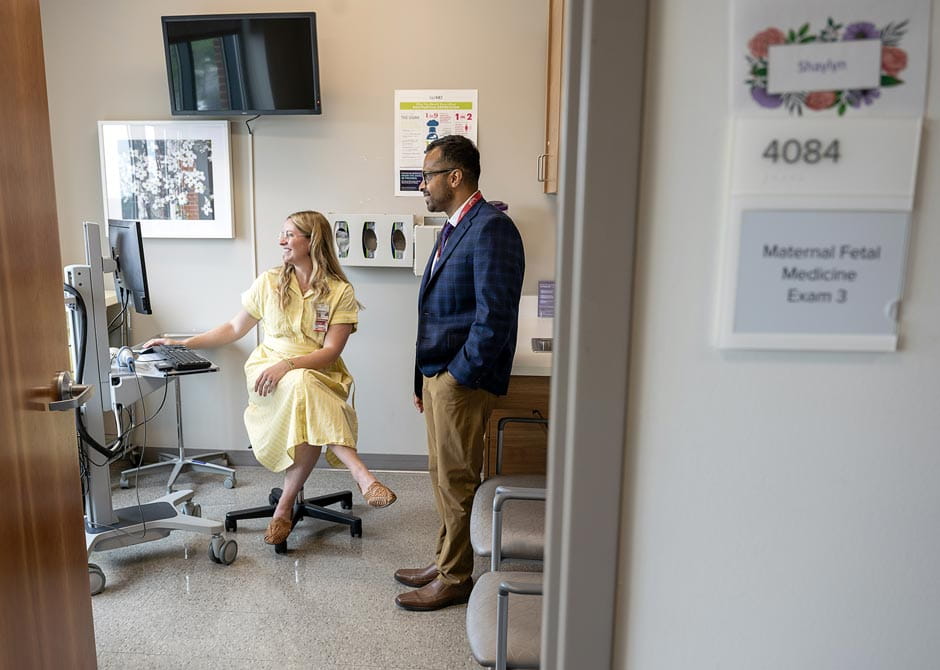
The Ohio State Wexner Medical Center is a national leader in providing care for high-risk pregnancies. Some reasons why families choose Ohio State for their high-risk pregnancy include:
- Unparalleled expertise and resources – Ohio State is the only Level IV Maternity Center, as designated by the American College of Obstetricians & Gynecologists, in central Ohio. That means we provide medical and surgical care for the most complex conditions throughout pregnancy and postpartum.
- Diagnostic tools and treatments not readily available other places – We perform tests and procedures not always available at other hospitals in the region – and we do them regularly. Our Maternal Fetal Medicine physicians routinely offer the latest, most advanced treatment options.
- Treating the whole patient – Since we’re part of the Ohio State Wexner Medical Center, we can collaborate with the foremost experts in many medical or surgical disciplines. This allows us to provide any type of care you might need throughout your pregnancy, whether that’s mental health, cardiology or nutrition services.
- Setting the standard – As an academic medical center, we’re constantly innovating and researching better ways to diagnose and treat conditions related to high-risk pregnancy. The research and clinical trials our physicians participate in directly influence the way other hospitals across the country manage high-risk pregnancies.