
Central Ohio’s largest Certified Nurse-Midwife practice
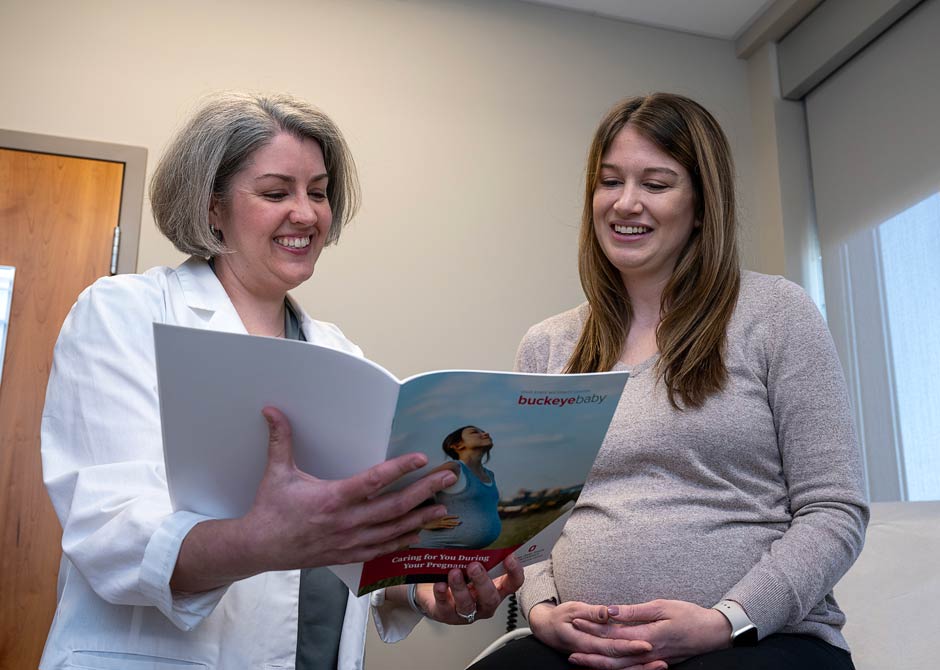 If you’re pregnant, you may want more natural and holistic care during your prenatal visits and labor and delivery. At The Ohio State University Wexner Medical Center in Columbus, Ohio, we recognize this as an important and evidence-driven choice, and we’re proud to offer this type of care at a quality level unmatched in the region.
The Midwifery Program at the Ohio State Wexner Medical Center is the largest midwife practice in central Ohio, and the only practice operating independently as part of a health system. Our practice has grown to 17 Certified Nurse-Midwives (CNMs), who attend roughly 15% of the babies delivered annually at the medical center.
Studies show that choosing midwife care can lead to fewer hospitalizations during pregnancy and fewer episiotomies during delivery – and people feel more in control during childbirth. In addition to supporting you throughout pregnancy, our Certified Nurse-Midwives care for women during other phases of life, providing exams, Pap smears, contraception, preventive care and help managing perimenopause and menopause.
All babies cared for in our Midwifery Program are delivered in our state-of-the-art maternity center with access to the latest equipment and resources for every type of pregnancy and delivery.
What is a Certified Nurse-Midwife?
Certified Nurse-Midwives (CNMs) are advanced practice providers who specialize in pregnancy, delivery and the continuity of gynecological care. Some facts about CNMs include:
- Certified Nurse-Midwives are advanced practice registered nurses who also completed graduate-level education and training in midwifery and have high-level knowledge of obstetrics and gynecology.
- They’re nationally certified by the American Midwifery Certification Board and licensed by the state of Ohio to provide a lifetime of care for women, including routine gynecologic care, birth control options, and pregnancy, delivery and postpartum care.
- They can prescribe medications.
- Many people see a Certified Nurse-Midwife as their sole provider throughout pregnancy, delivery and their need for gynecological care.
- In Ohio, CNMs work with physicians in a collaborative agreement.
In short, Certified Nurse-Midwives are experts in normal, healthy pregnancies, whereas physicians are experts in pregnancy complications. Midwives and physicians have a highly collaborative relationship in those complex or high-risk pregnancies.
Certified Nurse-Midwives tend to have more time to spend with you during prenatal appointments and for patient education. Being present throughout active labor and during the pushing stage of delivery is a hallmark of midwifery care.
What care can Ohio State Certified Nurse-Midwives provide?
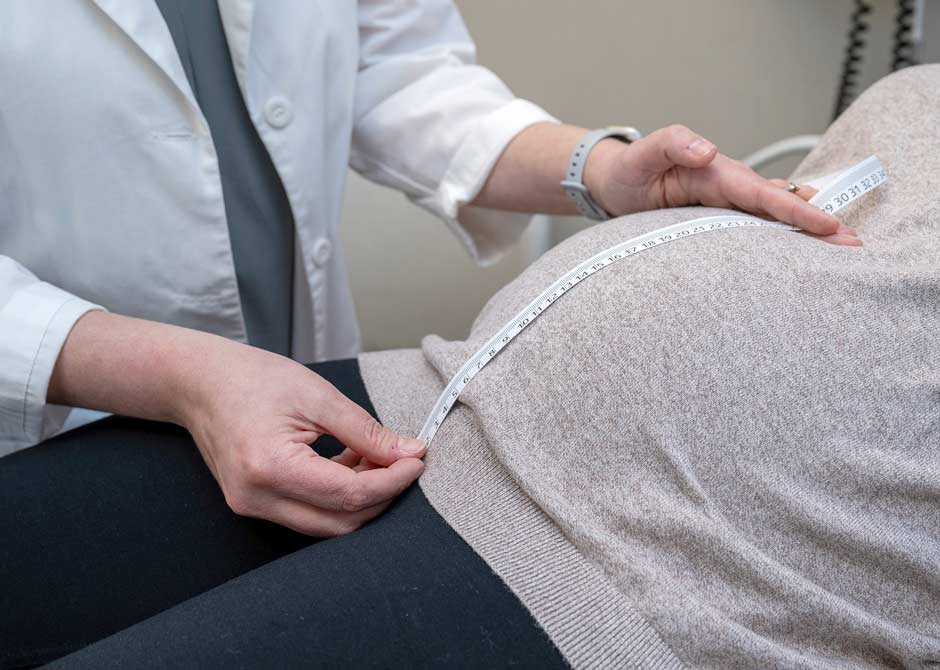 Ohio State’s Midwifery Program offers comprehensive care in obstetrics and gynecology for women of all ages. Our midwives provide a compassionate approach to all aspects of women’s healthcare. We currently offer midwifery care at four office locations – Upper Arlington, Dublin, Worthington and Gahanna – while performing deliveries at the main hospital’s maternity center. Ohio State's CNMs offer a variety of care, including:
- Annual well-woman exams
- Methods of contraception
- Prenatal care and labor and delivery
- Prescriptions
- Treatment for common infections
- Perimenopause and menopause management
In addition, if you develop a medical condition that requires more specialized treatment, our midwives refer you to an obstetrician or other specialist to assist in your care.
When it comes to pregnancy and labor and delivery care specifically, our expert midwives have experience with:
- Unmedicated births
- Changing positions during birth
- Hypnobirthing and the Bradley Method
- Water births and hydrotherapy
- Working alongside doulas
- Delayed cord clamping
- Alternative pain management options
Why choose Ohio State nurse-midwives?
Our comprehensive Midwifery Program provides the care you want, when you want it. Here are some reasons expectant mothers choose our midwives:
- We focus on providing personalized, hands-on care throughout labor and birth. You can expect a special kind of care when you choose a midwife. We are present during the labor and birth process.
- We are committed to your birth choices and incorporating your individual needs into your care plan. We’ll be a dedicated partner in helping you make important decisions about your health and the health of your baby, and we’ll ensure you have an active voice in your care and birth experience.
- Our state-of-the-art facility includes private rooms and the latest equipment and resources, including tubs for hydrotherapy during labor and for water births.
- We have access to Ob/Gyn physicians in our offices and on the labor and delivery unit. We collaborate with perinatologists, anesthesiologists and the neonatal intensive care unit (NICU) specialists when needed, to ensure you and your baby remain safe if complications arise.
- We are experts at empowering women to take an active role in their healthcare. Our philosophy is that life events such as puberty, birth and menopause are normal experiences – not something that needs to be treated like an emergency. Our goal is to educate you and provide support so you can make the best choices for you and your family.
Will insurance cover a midwife?
We accept OSU Health Plan, BCBS, United, Caresource, Molina, Medicaid and some Tricare plans. Please call the office to inquire about insurance coverage. Billing is the same for midwifery care as obstetrical care.

What are common misconceptions about midwives?
Lily Zimmermann, APRN-CNM, a Certified Nurse-Midwife at the Ohio State Wexner Medical Center, explains some misconceptions about the work midwives do. While a lot of their medical practice centers on pregnancy and labor and delivery, they also provide gynecological care across the life span.

What is the difference between midwifery care and OB care?
Midwives are experts in low-risk births, and obstetricians (OBs) are specialists in caring for complications in birth or high-risk cases. OBs do, however, care for many low-risk pregnancies, too. Some complications that might need to be managed by an OB include diabetes (type 1, type 2 and gestational), preexisting heart conditions, preeclampsia and fetal conditions that may need further prenatal testing and treatment, explains Zimmermann.

How do OBs and midwives collaborate if an issue arises?
Zimmermann describes how midwives at Ohio State have direct access to both generalist obstetricians and high-risk obstetricians (maternal fetal medicine physicians) whenever mothers or babies require advanced care to proceed with their pregnancy or deliver safely.
Frequently asked questions
-
We attend deliveries exclusively at the Ohio State Wexner Medical Center.
-
No. While we support a woman's right to give birth where and with whom she chooses, we do not attend home births.
-
No. We believe in informed choice. If, given accurate information, a woman believes an epidural or pain medication is the correct choice for her, we will support her in that decision. You’ll have access to IV pain medications, nitrous oxide gas and epidurals, if you desire.
-
If you are experiencing an uncomplicated pregnancy, then most likely you will only have visits with the midwives. If complications arise during your pregnancy, you may have a visit with one of the physicians in our practice. During labor, if an emergency arises, one of the staff physicians will be immediately available.
-
Yes. We are familiar with each option and have worked successfully with women who are using them in their childbirth. This is another decision we will support you when you decide what is best for you.
-
We welcome doulas at your birth.
-
Absolutely. Not only are we fine with changing position, we strongly encourage it. We find that keeping mothers moving throughout labor is helpful for pain relief, as well as for correctly positioning baby. We are familiar with most birthing positions and will help find the one that feels best for you at that moment.
-
If the pregnancy is normal and full-term, most women are generally not on the monitor the entire time. Upon arrival to labor and delivery, you’ll be placed on the monitor for 20 minutes to evaluate baby and ensure that baby is handling labor just fine. If all is well and you fit the criteria, we follow the intermittent monitoring guidelines. This entails listening to baby every 30 minutes before, during and after a contraction during active labor, and every 15 minutes during the pushing stage. We’re happy to discuss this policy with you further.
-
No, but we prefer our patients to have an IV port placed in case of emergency. This would not be attached to anything, and you would still have the freedom to move around.
-
Yes. Both water for labor (hydrotherapy) and water birth are options for midwifery patients. There are many benefits, including pain relief. In the new University Hospital inpatient tower, we’ll have two labor and delivery rooms with permanent tubs for water births as well as Aquadoula tubs available to use in any room. Water birth is an option for low-risk patients. If you are interested in water birth, we recommend that you discuss this with your midwife.
-
The recommendation for women who are GBS-positive is to be treated with IV antibiotics while in labor. This generally does not restrict your freedom to move around or labor and/or birth in the water if you choose.
-
We do not cut episiotomies routinely. If a baby is intolerant of labor and needs to be born immediately, the decision to cut an episiotomy might be made, though this rarely happens. Our current rate of episiotomy is approximately 1.7%.
-
Waiting for the cord to stop pulsating before clamping and cutting is a practice we are very familiar with and routinely engage in.
-
Absolutely. If all is well with your birth and baby, we are happy to allow your partner to cut the cord. We understand that the birth of a baby means the birth of an entire family, so partner involvement is very important.
-
In deciding to decline medication or treatment, we ask, as in everything else, that you are educated in your decision. For this reason, we recommend discussing this option with your pediatrician. If you decide that declining one or the other is the best option for your family, you’ll be asked by the nursing staff to sign a waiver at admission.
-
Most people generally do great after childbirth. An early discharge at 24 hours is something we support as long as the mother is stable. More concerning is how baby is doing in the first 24 hours. We recommend speaking with your pediatrician about his/her policy on early discharge.
-
Yes. We are happy to offer this option to women who are delivering their babies at the Ohio State Wexner Medical Center.
-
We understand that C-section is major surgery. Because of that, we work very hard to ensure that when it is needed, it is absolutely medically necessary. Our current rate of C-section is 13%.
-
Resident and medical student involvement in your birth process should be minimal, if at all. If you are sent for evaluation for possible labor or a problem, you may receive care from a resident at that time. However, please know that they are simply evaluating you, and notifying the midwife on call of their findings. The midwife or collaborating physician oversees your care at all times. If you are willing to have a resident or medical student observe your birth, it’s a great experience for them to witness natural childbirth and learn from it. Of course, allowing their presence is always your choice.