
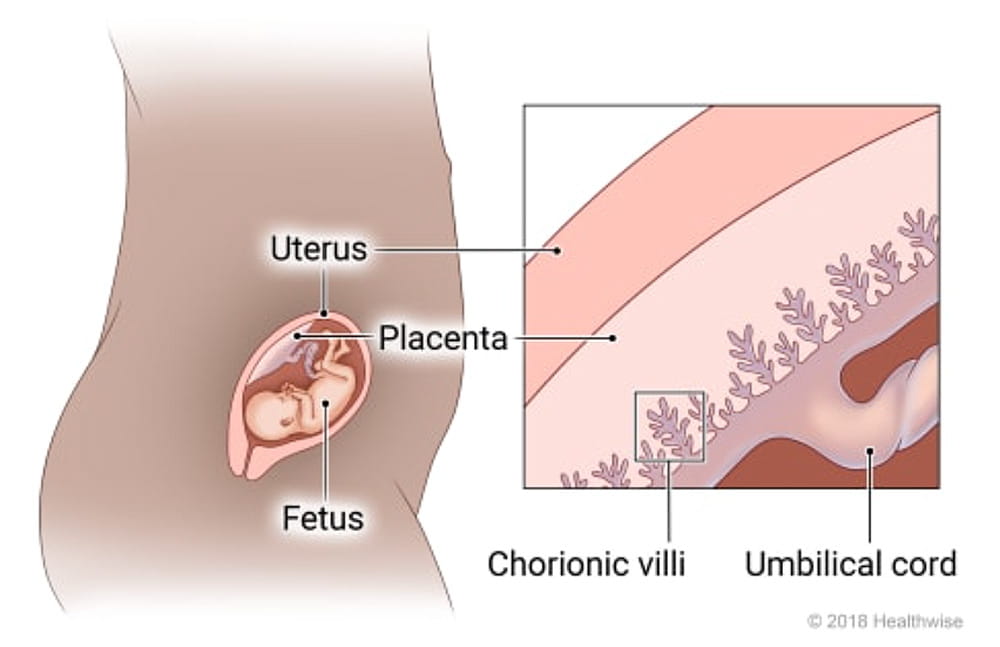
 What is chorionic villus sampling?
Chorionic villus sampling (CVS) is a prenatal test used to diagnose chromosomal abnormalities or other genetic disorders early in pregnancy. During the procedure, your provider will collect a tiny sample of tissue from the placenta, called chorionic villi. The placenta typically has the same genetic makeup as your baby.
Examining these chorionic villus cells from your placenta can help to determine if your baby has genetic conditions that run in families, such as cystic fibrosis or sickle cell disease, or disorders that affect chromosomes, like Down syndrome. Unlike an amniocentesis that’s performed in the second trimester, CVS is usually performed as soon as 10 weeks of pregnancy. The Maternal Fetal Medicine and high-risk pregnancy experts at The Ohio State University Wexner Medical Center in Columbus, Ohio, perform these types of procedures regularly, and will provide you with the personalized care you need
Before having any diagnostic procedure, such as CVS, you will meet with one of our trained genetic counselors to review your family and pregnancy histories, discuss the risks, benefits, and alternatives to the procedure and determine the best course of action for you. Although CVS is a safe procedure, it’s still invasive with a small (1 in 500 to 1 in 900) risk of causing a problem with the pregnancy.
What conditions does chorionic villus sampling test for?
CVS can identify a wide range of genetic or chromosomal conditions, including:
- Down syndrome (trisomy)
- Trisomy 18 (Edward syndrome)
- Trisomy 13 (Patau syndrome)
- Cystic fibrosis
- Sickle cell disease
- Spinal muscular atrophy
Why might I consider a chorionic villus sampling procedure?
The decision to have any type of diagnostic genetic testing is yours alone. Your doctor may recommend genetic counseling with consideration for a CVS for a variety of reasons, including:
- Age: As you get older, you have a greater chance of having a baby with a chromosomal condition, such as Down syndrome.
- Genes: If you or your partner carry an abnormal gene, it could potentially be passed down to your baby. An example of this is cystic fibrosis (CF), where each parent must be a carrier for the abnormal CF gene for the baby to have a risk of inheritance.
- Family history: Genetic disorders that run in your family, like CF or sickle cell disease, could also be passed to the baby. Genetic counseling can help determine the risk for your pregnancy.
- Pregnancy history: If you’ve previously had a child with Down syndrome or another genetic or chromosomal condition, you may be at a higher risk for having another.
- Abnormal genetic screenings: CVS might be considered if one of your earlier prenatal tests determined that your baby has a higher risk of having a genetic issue. One example is if you are found to be a carrier for a disease, such as spinal muscular atrophy.
What can I expect at my chorionic villus sampling procedure?
CVS is performed in one of two ways, through the belly or through the cervix, depending on the placenta’s location. Your provider will use an ultrasound to guide the procedure and to ensure that it’s safe for the baby.
Through the belly (transabdominal)
- First, you’ll receive an injection of numbing medicine. This might sting a bit.
- Then, a needle is inserted through the belly and into the placenta. The needle collects the sample of chorionic villus cells.
- The baby’s vitals will be monitored throughout the test.
Through the cervix (transcervical)
- You will need to have a full bladder.
- After a speculum is inserted into the vagina, your doctor will clean the cervix with an antiseptic.
- Then, the provider will use an ultrasound placed on your abdomen to guide a catheter through the cervix and into the placenta. When the catheter is in the right place, the sample of cells will be collected.
After either version of the procedure, you should refrain from strenuous activity and sexual intercourse for a day or two following the test.
You may experience some slight cramping and some spotting following the procedure, but this is normal and should resolve within a day. It’s normal to feel anxious before a CVS prenatal test.
Chorionic villus sampling results
It typically takes one to two weeks to receive results. You’ll be called with your results as soon as they are available. On rare occasions, the placental cells may not grow correctly, or you may receive inconclusive results that require follow-up testing.
Your provider, as well as genetic counselors, will help you understand the results and recommend next steps, if needed. Depending on the results, you’ll have access to personalized, comprehensive counseling, education and fetal treatment options moving forward.
Why choose Ohio State for your chorionic villus sampling procedure?
At The Ohio State University Wexner Medical Center, our Maternal Fetal Medicine specialists and our genetic counselors provide the highest standard of prenatal diagnostic care. With advanced ultrasound technology and an experienced clinical team, we perform CVS safely and compassionately, giving you accurate information and support early in your pregnancy.