
Scleral Lens Clinic
If you struggle to achieve clear vision with routine contact lenses or glasses, our scleral lens and Advanced Specialty Contact Lens Clinic is here to meet your eye care needs.

For complex vision needs, traditional contact lens evaluation methods based on trial lenses and visual estimation might not be enough. That’s why those with complicated vision needs travel from across the United States to visit the Advanced Specialty Contact Lens Clinic at The Ohio State University Wexner Medical Center. Our expert optometrists use advanced technology available at only few locations to provide evaluation, diagnosis and evaluation of scleral lenses and other advanced specialty contact lenses.
Each day, at our clinic located in Columbus, Ohio, we help those with vision impairment return to driving, work and daily activities with custom-fitted, comfortable contact lenses. For some, scleral lenses even help them avoid surgery. The Ohio State Wexner Medical Center’s is the only eye program in the country to bring together the most advanced contact lens-evaluation and design technology in one convenient location.
For irregular corneas, severe dry eye and other challenging vision conditions, our experts specialize in understanding your complex vision needs and can help you see clearly and comfortably again.
What are scleral lenses and specialty contact lenses?
Scleral lenses and specialty contact lenses each go beyond standard soft or hard contact lenses. Instead of resting on the cornea of your eye like most contact lenses, scleral lenses are larger contact lenses that rest on the white part of your eye, called the sclera.
These contact lenses are custom-made from gas-permeable plastic (which means oxygen passes through them) to fit the exact shape of your eye. Scleral contacts provide increased comfort and improved vision because their outer edges rest on the less sensitive, white part of the eye.
Other specialty contact lens types include scleral lenses, hybrid lenses, custom soft lenses and rigid gas-permeable designs that can all be tailored to your specific vision or eye-surface challenges.
What are the benefits of scleral lenses?
Instead of resting directly on your eye, scleral lenses arch over the cornea to create a saline barrier between the contact lens and your eye. This liquid barrier improves comfort and vision. Scleral lenses don’t shift on the eye or fall out while you're wearing them. They protect the eye while providing clear, stable vision.
Replacing scleral lenses depends on your doctor’s recommendation, changes to your eye health condition and your level of lens care. Scleral lenses typically last between one and three years.
Who are candidates for scleral lenses and advanced specialty lenses?
If you’ve struggled to find contact lenses that fit comfortably or provide clear vision, you may be a candidate for specialty lenses. Issues with fit and vision can include disorders that alter the shape of the front surface of the eye, such as:
- Keratoconus: A condition that causes the normally round, dome-shaped cornea to become thin and bulge outward into a cone shape
- Keratoglobus: A rare, degenerative eye condition causing the cornea to become unusually thin and bulge outward
- Pellucid marginal degeneration: A rare corneal condition that causes progressive thinning along its lower edge
- Refractive surgery patients, such as LASIK®, radial keratotomy (RK) and photorefractive keratectomy (PRK)
- Corneal scarring
- Corneal transplants
- Other forms of irregularity, including high astigmatism
Scleral lenses can also treat conditions that cause dryness or inflammation of the eye, such as:
- Dry eye syndrome
- Sjogren’s syndrome: An autoimmune disease where the immune system attacks the body’s glands that produce moisture
- Rheumatoid arthritis
- Stevens-Johnson syndrome (SJS): Rare, severe inflammation and blistering of the skin and mucous membranes, including the eyes
- Keratitis: A group of conditions that cause extreme dryness of the eye surface including conditions that prevent the eyelid from closing
- Graft-versus-host disease (GVHD): A complication of a bone marrow or stem cell transplant that can cause dry eyes
Signs you might need specialty lenses
Scleral lenses and other types of specialty contact lenses may still be an option, even if you’ve been told you’re not a candidate for contact lenses. Your eye doctor may recommend scleral or specialty contact lenses if standard soft or gas-permeable hard lenses don’t provide you with clear vision or long-term comfort.
You may benefit from a specialty contact lens evaluation if you experience these issues:
- Blurry or distorted vision that glasses or regular contacts can’t entirely correct
- Chronic eye irritation or dryness
- Sensitivity to light or discomfort wearing standard lenses
- Difficulty driving at night with contact lenses
- Frequently feeling your contact lenses don’t “sit right”
- Need for sharper, more stable vision throughout the day, especially if your vision fluctuates with blinking or dryness
What to expect at your visit to be fitted for specialty contact lenses
Patients with vision needs come from across the United States to visit the Ohio State Wexner Medical Center's Advanced Specialty Contact Lens Clinic.
Initial consultation
During your first appointment, we’ll review your medical and vision history, assess your eye health and take baseline measurements of your cornea and sclera using advanced imaging.
Custom lens fitting and evaluation
If your doctor determines you’re a candidate for specialty contact lenses or scleral lenses, they’ll fit you for lenses. All scleral lenses are custom-made for your eyes, using advanced technology and training available at Ohio State. Scleral lenses can be fitted in the office with diagnostic lenses or with eye scanning technology.
Diagnostic contact lenses are manufactured by a lens company with a set design. Your doctor will apply these lenses to your eyes during a fitting appointment and adjust them based on your needs.
Orientation and follow-up
In addition to ensuring the lenses provide clear vision and comfort, we’ll teach you proper application, removal and cleaning.
Our doctors will assess your custom lenses at multiple visits to ensure your vision and eye health are at their best.
Specialty contact lens maintenance
Specialty lenses typically last one to three years with proper care and follow up. We’ll guide you on replacement schedules and ongoing maintenance. Follow-up visits fine-tune your fit and ensure your continued eye health.
Advanced technology we use to make customized contact lenses
We are the only location in the United States to offer five of the most advanced eye-profiling technologies available in one location.
Your doctor will use one or more of these technologies to scan, make an impression of, and measure the curvature and shape of your eyes. A manufacturer will create your custom lenses based on these measurements.
Types of eye profiling offered at the Ohio State Wexner Medical Center include:

IContour™ Eye Profiling
Your doctor will take a series of quick, pain-free scans of your eye to send to the manufacturer to create your scleral lenses. Unlike traditional equipment, your doctor can use this technology to capture over 1 million data points, creating a high-resolution 3D image of your eye. The fitting process is streamlined and efficient, requiring fewer visits and remakes.
Few specialists nationwide have access to this advanced technology and the training required to use it effectively.
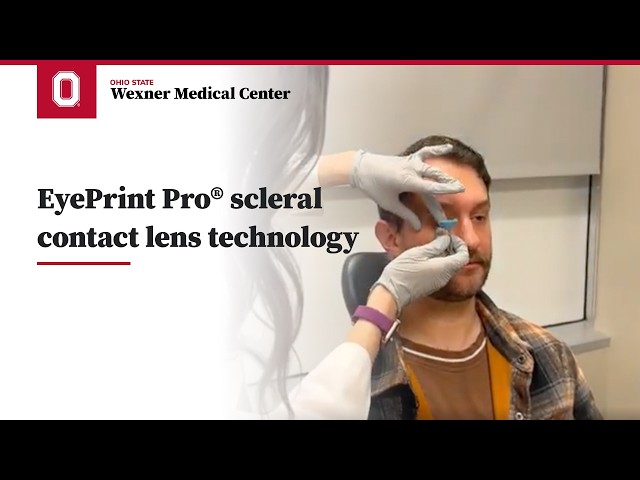
EyePrintPRO® technology
For those with the most complex eye conditions, specialists at Ohio State use the latest molding technology to make an exact impression of the eye. The result is a fully customized lens that matches every ridge, dip and contour of your eye surface.
Many people are apprehensive about getting a mold of the eye made, but the process is fast and painless. Here’s how it works:
- Your doctor will use a soft material to gently make an impression of your eye, and the material captures all irregularities.
- A specialized lab will design a 3D digital model of your eye based on the mold, and a custom lens is designed to precisely fit your eye.
Only a small number of eye care providers across the country are certified to offer this advanced technology. Providers at Ohio State are certified EyePrintPRO® practitioners.
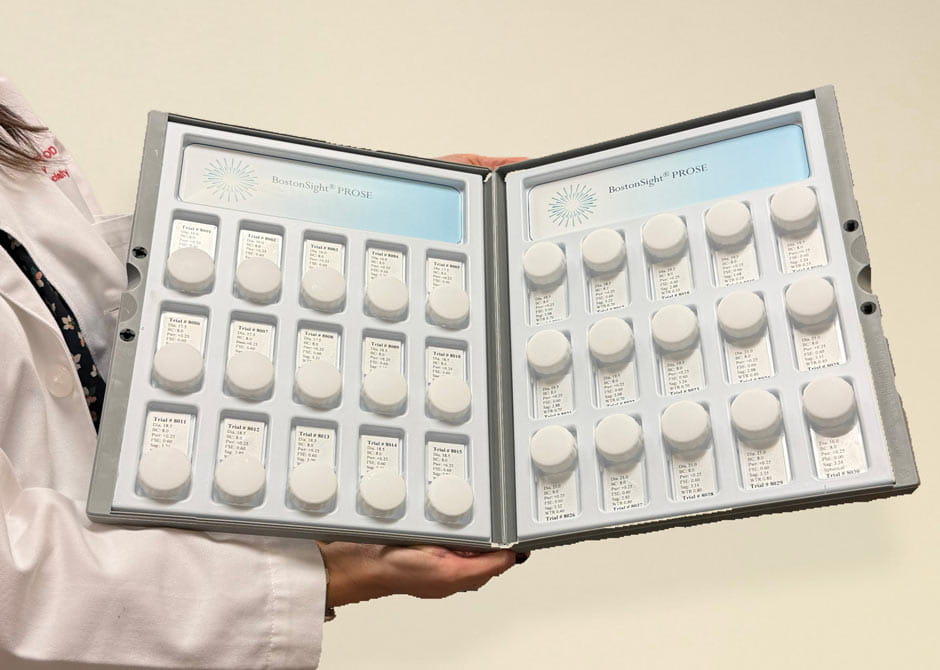
PROSE®
The BostonSight® PROSE® technology is a prosthetic surface to the eye for people with complex corneal disease, such as severe dry eye syndrome and eye damage from:
- Exposure keratitis, which occurs when the eyelids don’t close fully and the eye dries out
- Corneal damage
- Neurotrophic keratitis, where nerve damage prevents normal eye lubrication and healing
The BostonSight® PROSE® technology, which stands for Prosthetic Replacement of the Ocular Surface Ecosystem, allows your doctor to precisely design scleral lenses to regain your vision, protect your eye and keep you comfortable.
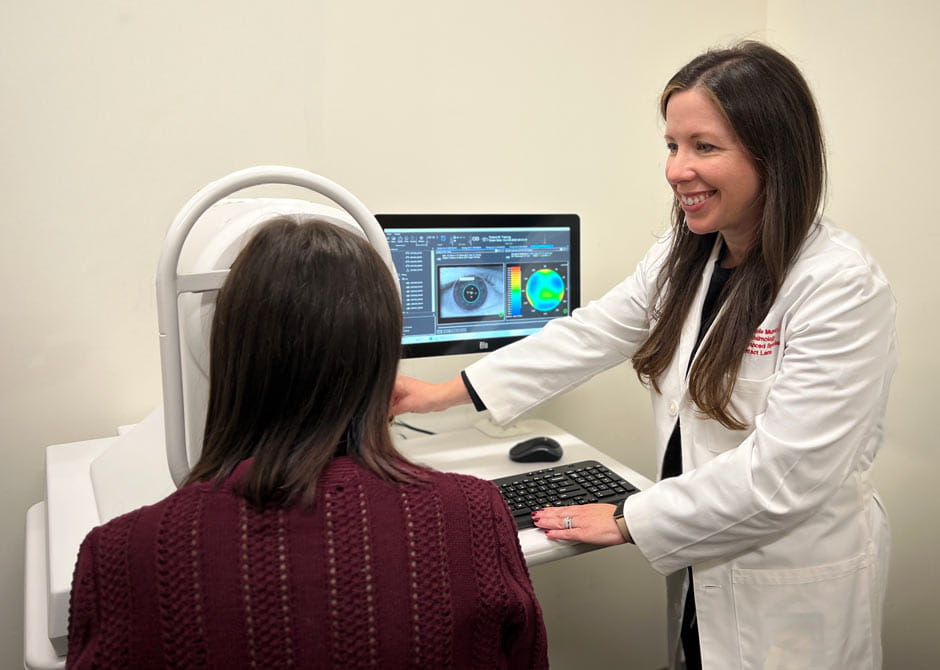
WavDyn® Vision Analyzer
This advanced technology helps your doctor design custom contact lenses that correct even the most complex vision issues, such as keratoconus or other types of irregular cornea. With WavDyn® Vision Analyzer, your provider makes a full optical “fingerprint” using real-time video that captures your eye’s optical system and highly accurate, personalized vision measurements.
Your provider can use this device to identify higher-order aberrations that standard exams often miss. These are complex optical imperfections in the eye’s surface or internal structures that affect how light is bent (refracted). This can cause problems like glare, halos around lights and poor night vision – even when your glasses or regular contact lens prescription seems perfect.
This technology is a hallmark of elite, specialty contact lens care, helping you access contact lenses that give you sharper, more comfortable vision and dramatically improve your quality of life.

Pentacam® CSP
This advanced imaging tool allows eye care professionals to capture a highly detailed 3D map of both the cornea and sclera to design custom scleral lenses. The scan captures more than 250 detailed images of your eye from a single central viewpoint. These images create a precise 3D map of the eye’s surface, showing its exact height and shape. It gives consistent, highly accurate measurements that help your doctor design a comfortable, precise contact lens.
Why choose Ohio State for scleral lenses?
The Advanced Specialty Contact Lens Clinic at the Ohio State Wexner Medical Center offers the latest technologies in scleral contact lens fitting, helping a higher percentage of scleral lens patients than the national average. We're accustomed to evaluating patients with extensive eye care history and advanced conditions requiring scleral lenses. Our experience means better care for you.
The Advanced Specialty Contact Lens Clinic:
- Offers IContour™ technology, one of 85 clinics in the United States with this device
- Is one of 13 sites in the United States offering PROSE® treatment
- Is one of five clinics in Ohio offering EyePrintPRO®
The breadth of fitting technologies at the Advanced Specialty Contact Lens Clinic gives patients who may have been unsuccessfully fitted elsewhere options to be custom-fitted for scleral lenses.
Frequently asked questions about scleral lenses
If you’re considering scleral lenses, you may have questions about how they work and whether you’re a good candidate. Here are answers to common questions that come up in our scleral lens clinic.
-
Scleral lenses rest on the white part of your eye and “vault” over the cornea to create a smooth, surface filled with liquid. This improves vision and comfort for people with irregular corneas, dry eye, or other complex eye conditions.
-
Most people tolerate scleral lenses very well, but some may experience mild side effects such as temporary redness, lens awareness or dryness if the lenses are worn too long. Your provider will monitor your fit to prevent problems and adjust the lens design, if needed.
As with any contact lens, you must properly care, clean, and disinfect lenses to avoid side effects. You will be properly trained on how to care and clean your contact lenses at a training visit.
-
Many people do achieve their best possible vision with scleral lenses, especially when standard glasses or contacts can’t correct their vision fully.
You may need glasses over your scleral lenses to correct for reading if you are over 40 years old. Some options to reduce dependency on bifocals or reading glasses are possible with scleral lenses; your provider will discuss if you are a candidate.
-
Similar to soft contact lenses, most people can comfortably wear scleral lenses for eight to 14 hours a day depending on their eye condition. You may need to build up to that amount over time.
Your provider will guide you on what’s safest for your eyes.
-
Because they provide sharper, more stable vision and reduce glare, scleral lenses often make driving clearer and more comfortable – especially at night.
-
From your initial exam to final lens delivery, most patients complete the process in three to six months. This can vary depending on complexity.
-
Coverage varies. Specialty lenses may be billed as medically necessary when treating eye disease or injury. Our team can help verify benefits.
-
Follow-up evaluations help us update your lens design as your eye health or vision needs evolve.
-
You may be referred for advanced specialty contact lenses by your ophthalmologist or optometrist, or you can schedule an appointment on your own.