
Quality and evidence-based brain injury rehabilitation care
The Brain Injury Rehabilitation Program at The Ohio State University Wexner Medical Center in Columbus, Ohio, helps people recover from nontraumatic and traumatic brain injuries (TBI). Whether your brain injury requires you to stay at our inpatient Dodd Rehabilitation Hospital or your care requires outpatient rehabilitation services, our physical medicine and rehabilitation experts will be there every step of your TBI recovery journey.
At the Ohio State Wexner Medical Center, you’ll receive innovative brain injury rehabilitation care that’s accredited by the Commission on Accreditation of Rehabilitation Facilities (CARF) and recognized nationally for its safety and outcomes.
View all physical medicine and rehabilitation patient outcomes
Inpatient brain injury recovery outcomes
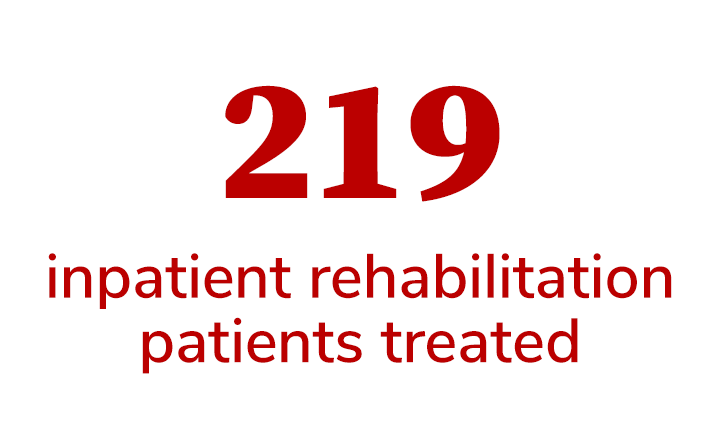 In 2025, our inpatient Brain Injury Rehabilitation Program treated 219 people. Roughly 64% of the brain injury patients were male and 36% were female, and the average age was 51. They stayed an average of 14.5 days at Dodd.
Exceeding rehabilitation expectations, 77.8% of brain injury patients were discharged from Dodd straight to home – 87.5% were back in their own homes within 90 days of their discharge from the hospital. Patients spent 3.1 hours a day in therapy. About 11% of people needed transferred to a medical hospital for unplanned medical care.
Patient satisfaction
How did you feel about your care?
- 97.1% of our brain injury patients were satisfied to very satisfied with their care.
- 87% agreed or strongly agreed that they were involved with decision-making during their recovery.
Functional improvement
What progress have you made?
Higher scores mean increased levels of independence. Our brain injury patients experienced, on average, a 58% increase in the functional areas of self-care and mobility.
- Average score at admission: 57.4
- Average score at discharge: 101.3
Quality of life
Did quality of life improve after your hospital stay?
- 96.1% of our brain injury patients agreed or strongly agreed that the rehabilitation program prepared them for going home.
- 95.6% agreed or strongly agreed that the program improved their quality of life.
Outpatient brain injury recovery outcomes
 We bring the same quality and compassion of our inpatient care to our outpatient brain injury rehabilitation program. Our expert physiatrists and therapists offer these services at locations throughout central Ohio.
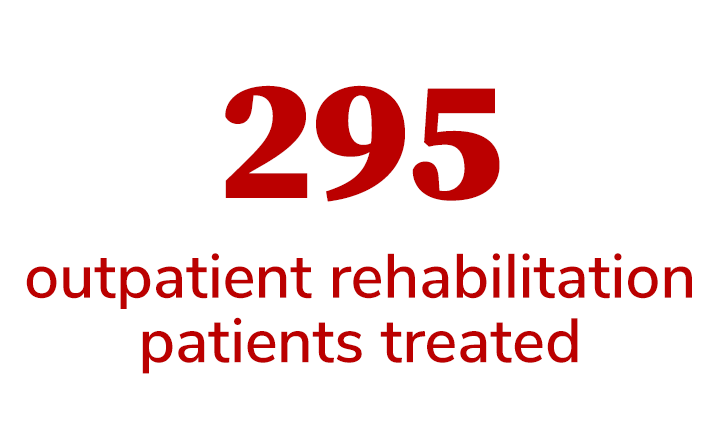
In 2025, we treated 295 patients in our outpatient brain injury rehabilitation program. Patients had an average of 9 visits over the course of 54 days.
Patient satisfaction
How did you feel about your care?
- 100% of brain injury rehabilitation patients felt outpatient therapy provided useful information and helped them reach their goals.
- 5-star rating given by our patients and families.
Quality of life
How are you thriving after therapy?
- 40% report returning to community-based health and wellness programming.
Average length of treatment
How long were you in treatment?
- On average, brain injury patients had 9 therapy visits.
- The average length of brain injury rehabilitation treatment was 54 days.
Disorders of consciousness outcomes
 A disorder of consciousness (DOC) is a condition of altered consciousness in which someone has severely impaired levels of awareness and wakefulness due to a severe brain injury. Our rehabilitation experts help people with disorders of consciousness reconnect with the world around them and improve their quality of life.
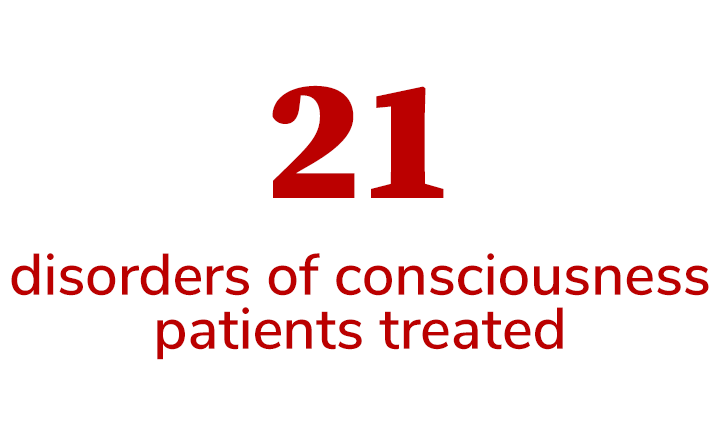
In 2025, our Disorders of Consciousness Program treated 21 patients. Roughly 62% percent of patients were male and 38% were female with an average age of 47.8. Disorders of consciousness patients stayed at Dodd Rehabilitation Hospital for an average of 21.2 days and spent 3.1 hours a day in therapy. About 52% of people needed transferred to a medical hospital for unplanned medical care.
Functional improvement scores
Functional improvement scores measure how much progress patients make in areas, such as self-care and mobility. Higher scores mean increased levels of independence.
- Average score at admission: 22.38
- Average score at discharge: 28.62