
 Experiencing any type of brain injury or watching a loved one struggle in the aftermath of a brain injury can be overwhelming and challenging as you work to regain function and independence and learn to cope with any disabilities.
The Ohio State University Wexner Medical Center in Columbus, Ohio, is home to physical medicine and rehabilitation experts who are dedicated to helping people continue pursuing active and fulfilling lives following a brain injury. Our Brain Injury Rehabilitation Program, including inpatient care at Dodd Rehabilitation Hospital, is a national leader in caring for people with brain injuries.
At Ohio State, we recognize that each brain injury is different – with different symptoms, challenges and important choices – and we tailor our treatment plans to meet your unique needs. With our advanced treatments and therapies, we’re the perfect partner in your rehabilitation journey, and we’ll be with you every step of the way.
What is brain injury rehabilitation at Ohio State?
Our Brain Injury Rehabilitation Program provides comprehensive services and support to maximize your physical, cognitive and psychological recovery and to restore your quality of life following a brain injury. Our program is accredited by the Commission on Accreditation of Rehabilitation Facilities (CARF) for meeting the highest standards of quality, safety and outcomes. Also, we’re one of only 16 Traumatic Brain Injury Model System centers funded in the country, and we’ve held this designation since 1997. This means we have a recognized history of providing multidisciplinary rehabilitation care at all levels and play a pivotal role in building the national capacity for high-quality treatment and research serving people with brain injuries, their families and the communities in which they live.
A brain injury can cause problems with movement, walking, communication, swallowing safely, thinking skills and behavior control. Rehabilitation is crucial to your potential for recovery, which may take weeks or months and can be a lifelong process.
Each brain injury is different, and we treat a wide range of conditions, including traumatic (caused by a blow to the head) and nontraumatic (caused by an illness or lack of oxygen) injuries. The severity of each brain injury may be different, too. For example, the brain injury could be:
- Mild, with a brief change in mental status
- Moderate, with a loss of consciousness
- Severe, causing prolonged coma or other disorders of consciousness
Any brain injury can lead to long-term symptoms and the potential for permanent disability. Traumatic brain injury rehabilitation should begin early in the hospital stay. As your physical condition improves, rehabilitation services can increase and target your particular needs.
While the outcome following a brain injury will depend on many variables, including severity of injury, injury type, your overall health and caregiver support, the quality of your rehabilitation care also matters. At Ohio State, you’ll benefit from the diverse expertise of a multidisciplinary team working together to help you reach your specific goals. Your personalized care plan may include:
- Optimization of your brain’s own healing (plasticity)
- Physical therapy, occupational therapy and speech therapy to improve mobility, strength, swallowing, communication and thinking
- Development of skills and strategies to help you perform daily activities and compensate for changes to your lifestyle
- Rehabilitation psychology, including group therapy and peer support, to improve social skills
- Medications to help with muscle stiffness and other chronic symptoms
- Case management to help you transition through levels of care, find resources, or return to work or school, if possible
Outstanding outcomes for TBI rehabilitation
Unparalleled experience
The Brain Injury Rehabilitation Program served 176 people with inpatient services at Dodd Hospital in 2024, and 248 people with outpatient services.
Better outcomes
Roughly 72% of people in brain injury rehabilitation at Dodd were discharged back home. Functional improvement of self-care and mobility increased on average from a score of 53.62 at admission to 84.91 at discharge.
Patient satisfaction
Almost 98% of people agreed or strongly agreed that the inpatient Brain Injury Rehabilitation Program prepared them for going home, while 100% of TBI patients felt outpatient therapy helped them reach their goals and improve quality of life.
Who is a candidate for brain injury rehabilitation?
Our experts care for any person who has experienced a nontraumatic or traumatic brain injury, including these conditions:
- Traumatic brain injury (TBI): Damage to the brain caused by a bump, blow or jolt to the head, including from vehicle accidents, sports collisions or military combat
- Intracranial hemorrhage: Bleeding inside the skull
- Stroke: When blood flow in the brain is disrupted by a blockage or bleeding
- Brain aneurysm: A weakened area of an artery wall that bulges or expands
- Brain tumor: An abnormal growth of cells in the brain
- Neurological disorders, such as Parkinson’s disease and other neurodegenerative conditions
- Brain infections, such as meningitis or encephalitis
- Anoxia: Oxygen depletion in the brain
- Hypoxia: Low oxygen in the brain

Son’s care after traumatic brain injury sparks growing support of neurosciences
Stan and Jodi Ross give $10 million to advance neuroscience education, research and care at Ohio State.
What to expect during your brain injury recovery
The Brain Injury Rehabilitation Program offers rehabilitation services to help in each phase of your rehabilitation – from services offered in the hospital (acute services) to those offered after returning home (outpatient services). These services continue your care to help you reach your highest level of TBI recovery.
Our goal is to help you get back, as much as possible, to the person you were before your injury. Our medical specialists work to stabilize you medically and neurologically so you can receive the full benefit of our rehabilitative care and treatment options.
Acute rehabilitation
While our emergency and intensive care unit teams work to stabilize your condition in the hours and days after your injury, you’ll also most likely meet with our acute rehabilitation therapists. They’ll be your first point of contact with our therapy staff, and they’ll begin developing a more long-term, comprehensive rehabilitation plan. When it’s safe to do so, these therapy experts, who often have special training in working with people with brain injuries, will also start early therapy with you while we determine the best place to continue your rehabilitation.
Inpatient rehabilitation services for TBI
Some people who experience a brain injury, especially more serious cases, will be transferred to inpatient rehabilitation, which is intense therapy administered during a stay at Dodd, our award-winning and comprehensive rehabilitation center. The average length of stay at Dodd for people with brain injuries is roughly 18 days. During that time, you’ll have:
- Three hours of daily therapy (physical, occupational, speech, recreational or music), five days a week
- 24/7 nursing care
- Daily physician visits
- Case management to navigate the system
- Supportive discharge planning
After a stay at Dodd, we’ll work with you and your support system to determine the most appropriate place for you to continue TBI recovery, whether that’s at home or a skilled nursing facility.
Outpatient rehabilitation services for TBI
When someone is ready to be discharged home, we’ll continue coordinating their rehabilitation care in outpatient settings, such as doctors’ offices, to maintain or enhance recovery. These therapy sessions typically last 45 minutes to an hour, once or a few times a week. Outpatient rehabilitation is also appropriate for some people whose brain injuries weren’t severe enough to require admission to inpatient rehabilitation.
Your brain injury rehabilitation treatment team
Your personalized treatment plan begins with a team of specialists who may include:
- Physical medicine and rehabilitation physicians (physiatrists)
- Neurologists
- Neurosurgeons
- Neuropsychologists and rehabilitation psychologists
- Certified rehabilitation nurses
- Physical and occupational therapists
- Speech-language pathologists
- Recreational and music therapists
- Respiratory therapists
- Dietitians
- Social workers
- Case managers
- Rehabilitation engineers
Specialized therapies for brain injury recovery
You and your family will be integral members of a team that creates your treatment plan, which will be tailored to your specific needs and goals. Many of our treatment options feature the latest advances in rehabilitation technologies, including:
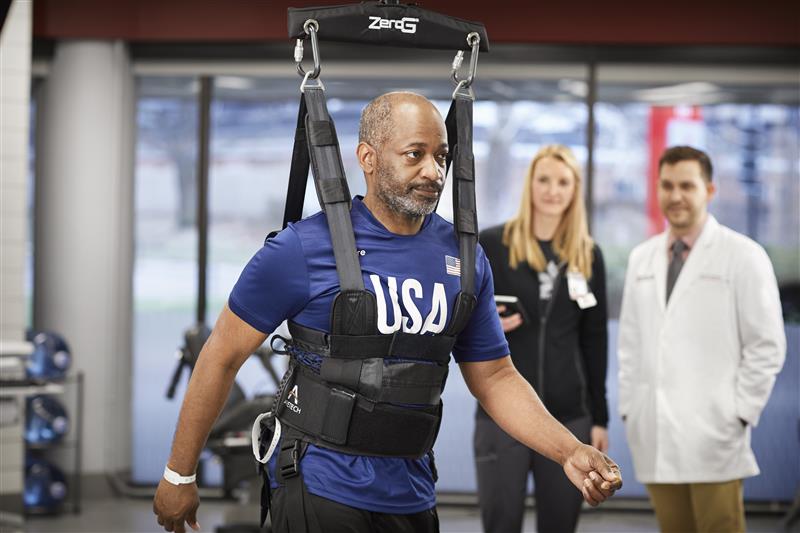
- Body-weight support systems to help improve balance, gait and walking
- Simulated car transfers with a model car in our therapy gym
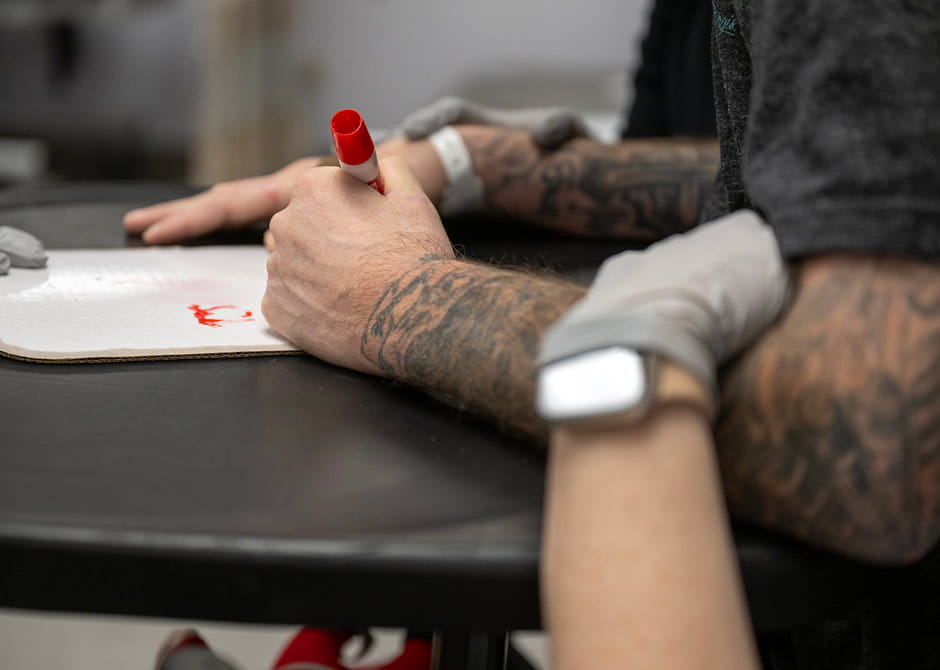
- Virtual reality and other gaming systems to work on cognitive functions, such as improving your reaction time, and visual motor skills, like writing
- Neurovision clinic to provide specialty vision services offered by a neuro-optometrist and designed specifically for people with neurological disorders
- Advanced swallowing evaluation and treatment to provide you with highly specialized care when your brain injury affects your ability to swallow
- Augmentative communication for devices that can help you talk, use a computer or search the internet just by using your eyes
- Wheelchair fitting and other assistive technology to help you adapt to new ways of living and performing daily tasks
Why choose Ohio State for brain injury rehabilitation?
For decades, the Ohio State Wexner Medical Center has been a leader and innovator of rehabilitation and therapy care, and Dodd is ranked as one of the "Best Hospitals" for rehabilitation by U.S. News & World Report.
Other reasons you should consider Ohio State for your brain injury recovery include:
Continuity of care – Our physiatrists, therapists and other rehabilitation team members will be with you every step of your recovery journey, no matter what level of care your brain injury requires. Dedicated social workers and case managers will coordinate this care for you, as well.
Best outcomes – Because of the quality of care we provide, you can expect positive outcomes, including:
- Functional gains that exceed national standards
- Discharge-to-home rates that are higher than the national average
- Recovery of self-care, mobility and cognitive skills exceeding the national averages
Certified excellence – Our brain injury specialists are nationally certified by the Academy of Certified Brain Injury Specialists (ACBIS), which establishes best practices for brain injury rehabilitation. Many of our physical and occupational therapists have neurologic fellowships, and our staff has experience derived from years of specialization and collaboration with colleagues at leading brain injury centers in North America.
Continual research advancement – As a nationally recognized model system for treatment and research of brain injuries, you’ll receive the most advanced treatments and therapies backed by research knowledge and have access to the most recent data from long-term studies of TBI patients. Millions of dollars come to Ohio State annually to further the study of preventing, diagnosing and treating brain injuries.