
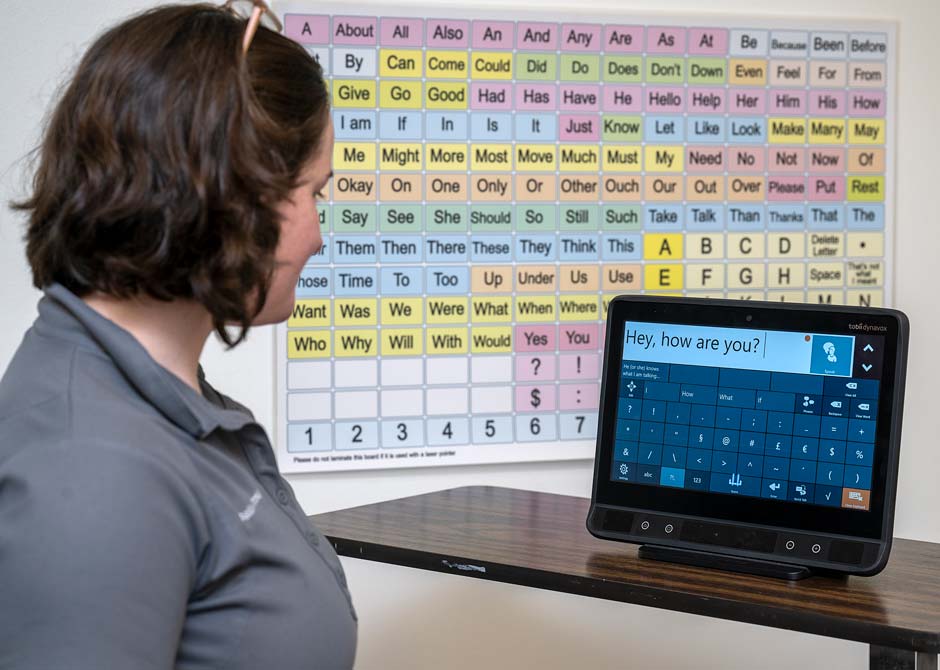
 The ability to communicate and speak is at the heart of our lives. That’s why the speech-language pathologists at The Ohio State University Wexner Medical Center in Columbus, Ohio, are dedicated to customizing therapies that will restore not only your skills but also your quality of life and confidence, no matter what health challenges you face. Speech therapy is for anyone who has a hard time creating sounds or words or using their voices, and those who are learning to use communication or hearing devices. Communication skills are one component of an overall physical medicine and rehabilitation strategy that speech-language pathologists provide for those for recovering from complex injuries and illnesses.
What is speech therapy?
Speech therapy is a broad term that captures many therapies that help people speak, communicate and overcome health problems that affect their voices. Speech therapy is given by speech-language pathologists, who are board-certified experts with advanced degrees in their field.
Your doctor may recommend speech therapy for a wide range of reasons. Speech therapy can help you recover from a sudden (acute) illness and hospitalization, or it can be one component of a comprehensive rehabilitation program that helps you recover from a complex health issue, such as cancer, traumatic brain injury (TBI) or stroke. Frequently, doctors recommend speech therapy in addition to physical therapy, occupational therapy, music therapy or recreational therapy. Each type of therapy is designed to help you restore specific skills and functions. Together, they can help you in a holistic, or overall, way.
At the Ohio State Wexner Medical Center, you may have speech therapy in these settings:
- Acute: While hospitalized at Ohio State Ross Heart Hospital, University Hospital, University Hospital – Pavilion or at the OSUCCC – James
- Inpatient: At Dodd Rehabilitation Hospital, where therapy is more intense and takes place over the course of a few days or weeks while staying there
- Outpatient: At any of several locations throughout the Columbus, Ohio, area
- At home: Speech therapists can visit you in your home.
What conditions are treated by speech therapy?
Speech therapy helps people with language, speech, voice and swallowing difficulties and hearing impairments.
Language disorders
The term “language disorders” covers issues that prevent the brain from understanding or creating the sounds we make when speaking, naming objects or forming sentences. One disorder is aphasia, a loss of ability to use or understand language. Aphasia can happen because of a stroke, a TBI, brain tumors, infections in the brain, or neurological diseases, such as dementia or Alzheimer’s disease.
If you or a loved one has aphasia and receives speech therapy at the Ohio State Wexner Medical Center, it will probably be one part of a broader rehabilitation program for your specific illness.
Speech disorders
Speech disorders make it hard to speak fluently or clearly or to make certain sounds. Lisping and stuttering are examples of speech disorders.
Voice disorders (dysphonia)
Voice disorders make your voice sound hoarse, strained, nearly silent or cause it to crack easily. Voice disorders can be caused by speaking too much or too loudly or can stem from psychological issues, such as depression or distress. Spasmodic dysphonia is a voice disorder caused when the muscles in the voice box (larynx) move involuntarily.
Swallowing problems (dysphagia)
Swallowing problems are frequently associated with:
- Neurological conditions such as Parkinson’s disease, amyotrophic lateral sclerosis (ALS or Lou Gehrig’s disease), multiple sclerosis (MS) and dementia
- Stroke
- Spine and brain injuries
- Infections such as tetanus and Lyme disease
- Tracheostomy (an incision in the neck that allows insertion of a breathing tube)
- Prolonged ventilator dependency
Speech-language pathologists with Ohio State’s Swallowing Evaluation and Treatment Services are experts in evaluating and treating swallowing problems. Therapists in this specialized service will create a rehabilitation program just for you that emphasizes recovery, safety, comfort and nutrition.
Hearing disorders
When otolaryngologists (ear, nose and throat doctors) and audiologists diagnose and treat hearing disorders, they may recommend speech therapy as part of treatment. Speech therapists create exercises specifically designed to help people learn to use and hear with cochlear implants or hearing aids. Speech therapists can also help you:
- Improve communication
- Become better at hearing the difference between sounds and syllables
- Learn alternative communications methods, such as sign language or computer-assisted speech
Vocal care for gender affirmation
Speech therapy is critical for gender-affirming care, especially for trans women. Hormone therapy can help trans men align their voices with their gender identity. At Ohio State, speech therapists create exercises that help trans women modify their pitch, resonance and intonation over the course of several weeks. Helping individuals align their voices with their gender improves quality of life, mental health and a sense of safety and security.
Who is a candidate for speech therapy?
Anyone who has an issue communicating, forming sounds, speaking, expressing language, hearing or swallowing can receive speech therapy. Speech therapy is a highly adaptable, customizable treatment that can be offered in many settings, including at home, so it’s accessible to many people with a wide range of health conditions. You might be a candidate for speech therapy if you:
- Have had a stroke
- Experienced a TBI or an injury to the vocal cords
- Are diagnosed with a neurological disorder, such as ALS, MS or Parkinson’s disease
- Have a head and neck cancer that affects your swallowing
- Undergo certain treatments, such as radiation for cancer, that can impact voice and swallowing
- Have a mental health condition, such as anxiety, impacting your speech or swallowing
- Have dysphasia, aphasia, apraxia or other voice and swallowing issues for any other reason
At Ohio State, only adults are treated by speech therapists. About one in 12 children in the United States has a disorder that calls for speech therapy; they are treated in children’s hospitals, school systems and private speech-language pathology practices.
What happens during speech therapy?
Your speech-language pathologist will begin by listening to you and understanding what you need. Together, you’ll decide on a program of exercises and training designed to help you improve communication, speech and language or overcome your specific challenge. The program will be created with other therapies, such as physical therapy and occupational therapy, in mind. Some skills you could work on with your therapist include:
- Perception: Differentiating between sounds and syllables
- Speech production and fluency: Making various sounds and improving fluency of speech by, for example, reducing pauses, repeated sounds or long syllables
- Language: Expanding vocabulary, creating grammatically correct sentences, improving word recall
- Breathing and voice: Improving breathing technique and voice usage to reduce hoarseness or increase volume
- Swallowing: Strengthening and improving muscles used to move food to your stomach
- Hearing aid and cochlear implant training
- Augmentative and alternative communication: Instruction on using sign language, communication boards or computer-assisted speech
- Spasticity management: Learning to communicate with spasticity, stiff or tight muscles with exaggerated reflexes
What are the benefits of speech therapy?
Clear communication is critical to our lives. Speech-language pathologists at the Ohio State Wexner Medical Center will help you restore the skills you need for quality of life and confidence. Speech therapy will have personalized benefits, depending on your condition and the program and goals your therapist creates. In general, you can expect improvements in:
- Speech and pronunciation
- Language skills
- Voice quality
- Swallowing function, which means greater safety in eating and breathing
- Overall living with hearing impairment, with greater communication skills and greater mastery of hearing aids and cochlear implants
- Support for caregivers
- Communication while hospitalized in acute and critical care
- Use of assistive devices and technology