
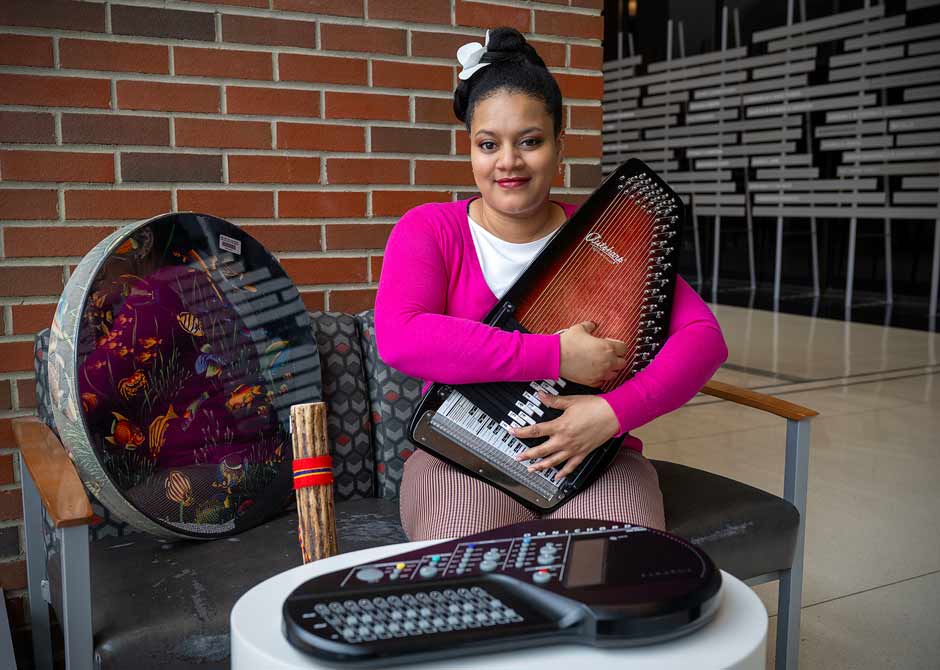
 History tells us music has the power to uplift our hearts, but research tells us it also alleviates anxiety and counteracts depression. It can revive memories smudged by dementia and reset the rhythm of a walking stride following a traumatic brain injury (TBI). Licensed music therapists at The Ohio State University Wexner Medical Center in Columbus, Ohio, are highly trained in the clinical application of music for rehabilitation and are committed to partnering with you in creating an individual program that will help you achieve your goals for recovery.
What is music therapy?
Music therapy is a type of treatment in which highly trained therapists use music techniques to help people recover from injuries and illness, develop relationships and achieve personal growth goals.
At Ohio State, music therapy is offered:
- For people being treated at Dodd Rehabilitation Hospital and the OSUCCC – James
- On an outpatient basis at the Bob Crane Community Center Upper Arlington and Outpatient Care New Albany
People can also learn about music therapy through JamesCare for Life education workshops.
Your music therapy program begins with a one-on-one conversation between you and your music therapist about your health, your illness or injury and the goals you are trying to achieve. You will talk about your expectations about music therapy and your music history and preferences. Your therapist may ask you to complete a basic survey. You’ll be a partner in shaping the program and making decisions throughout the process, including when to “graduate” from music therapy.
The music therapists at the Ohio State Wexner Medical Center have many tools and instruments to use in therapy, including voice, guitar and piano. They may use a xylophone for help with problem solving and an Omnichord, an electronic musical instrument, for people who want to play music to help them use their hands better. People who have had their tongue partially or completely removed can learn to speak again through singing. Drums, album artwork and recorded music are some other tools in the music therapist’s kit.
If your doctor orders music therapy, it is usually to support other types of rehabilitative therapy you’ll receive as you recover from injury or illness. You may also participate in physical therapy, occupational therapy or speech therapy, depending on your needs.
Benefits of music therapy
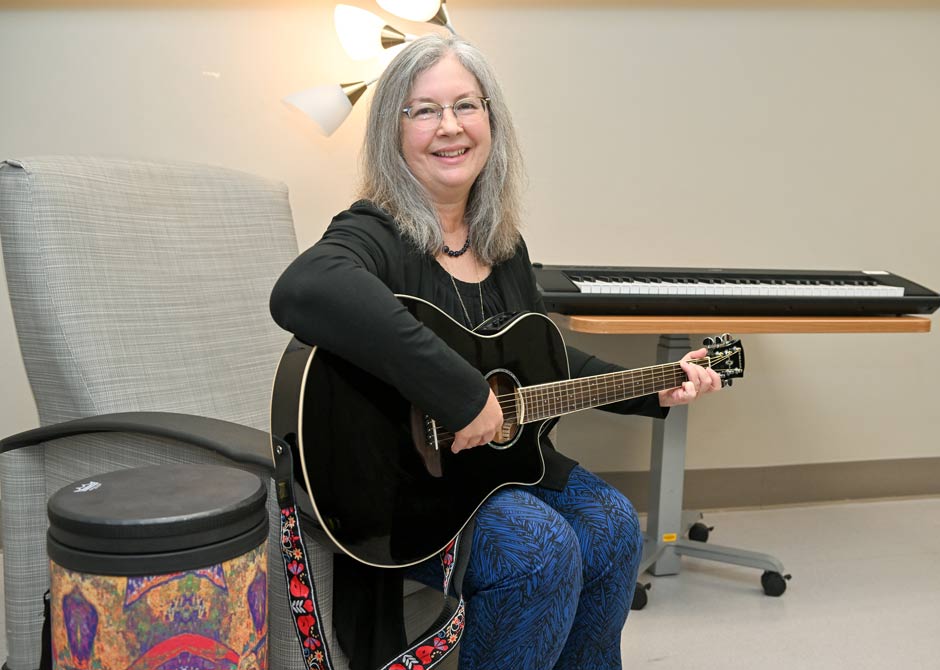 Music therapists have many techniques at their disposal, so they can custom-fit programs and locate tools and instruments for anyone. Because it’s so adaptable and because music therapy can impact so many areas of the body and mind, it’s a helpful tool for rehabilitating a variety of issues, such as:
- Aphasia, a disorder that affects the ability to speak and understand language
- Memory loss or impairment
- Loss of or change in motor (muscle) function, especially large muscles in the legs
- Mental agility and flexibility
- Loss of independence, autonomy and self-confidence
- Grief
- Coping with limitations and losses
- Building a “new normal”
- Pain management
- Anxiety, depression and other mood disorders
- Lung capacity and function
- Swallowing disorders
What conditions can music therapy help manage?
Music therapy, adaptable and helpful to many parts of the body and mind, can be used to treat and rehabilitate people with conditions such as:
- Cancer
- TBI
- Parkinson’s disease
- Dementia and Alzheimer’s disease
- Stroke
- Chronic pain
- Disorders of consciousness (such as coma)
Music therapy activities can be created to fit in acute (hospital), office (outpatient) and group settings, and can be designed for caregivers as well as people who are recovering from illness.
Why choose Ohio State for music therapy?
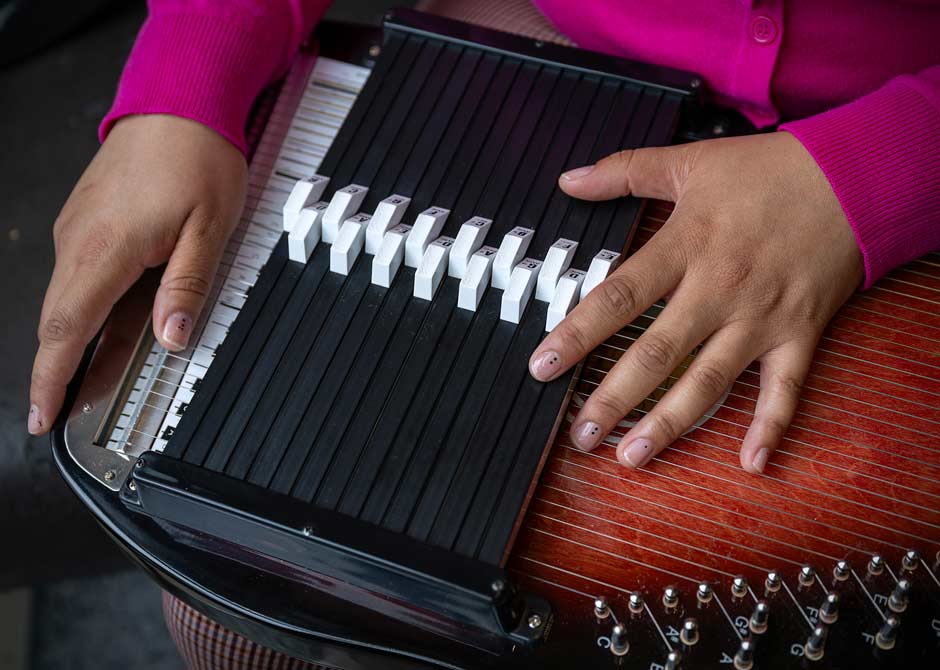 People receiving music therapy at Ohio State engage with therapists who have advanced and specialized training in music therapy or applied music neuroscience. If you are prescribed music therapy through Ohio State, you will receive it at no out-of-pocket cost.
At the Ohio State Wexner Medical Center, one music therapist is dedicated to working only with people with cancer and their caregivers. Another music therapist works with people who are hospitalized in Dodd Rehabilitation Hospital and with people at Outpatient Care New Albany. Both music therapists who work at Ohio State are licensed by the state of Ohio and are certified by the Certification Board for Music Therapists. Music therapy has been available within rehabilitation and recovery at the Ohio State Wexner Medical Center for more than a decade.
A music room specifically for oncology rehabilitation recently opened in the state-of-the-art Bob Crane Community Center Upper Arlington. People with Parkinson’s disease can register for community-based virtual music classes led by a music therapist. And Ohio State reaches caregivers and families of people with cancer through JamesCare for Life music programming.