
If you’re hospitalized for an illness, surgery, accident or other condition that results in a loss of abilities, you may need some form of rehabilitation to restore your function and help alleviate pain.
At The Ohio State University Wexner Medical Center in Columbus, Ohio, your rehabilitation and therapy services will begin almost immediately following your surgery or once your condition has stabilized. Our expert acute rehabilitation team, which consists of physiatrists (physical medicine and rehabilitation doctors), physical therapists, occupational therapists and speech-language pathologists, offers early therapy interventions to jumpstart your rehabilitation and get you on the road to recovery.
What is acute rehabilitation?
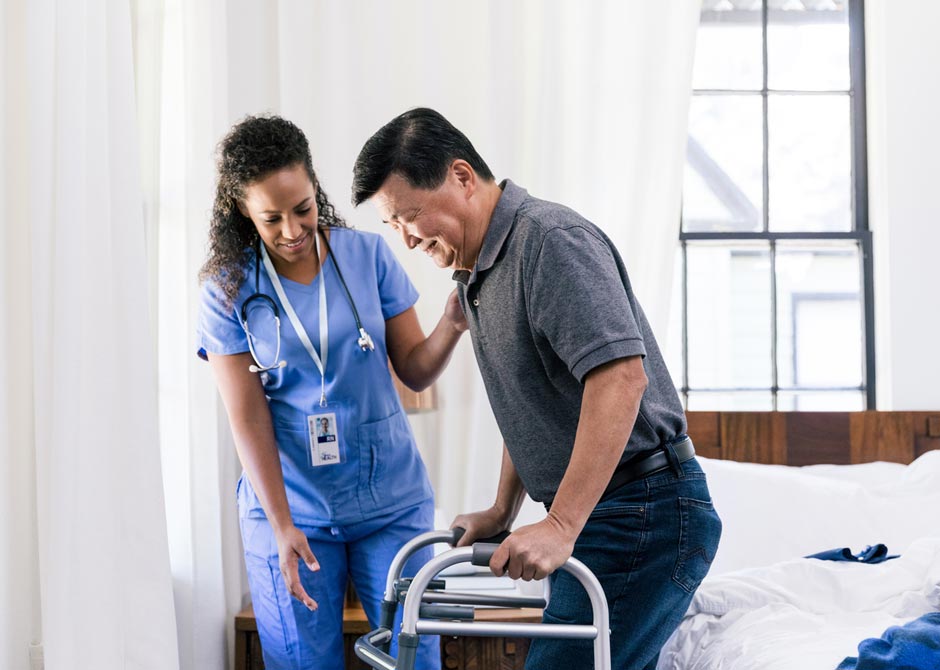 Acute rehabilitation at the Ohio State Wexner Medical Center provides physical therapy, occupational therapy and speech-language pathology services for people who are admitted to University Hospital, Ross Heart Hospital, Brain and Spine Hospital or the OSUCCC – James.
The term “acute” refers to sudden onset, meaning this is the rehabilitation intervention you’ll receive shortly after stabilizing from surgery or a condition that has you hospitalized. Our acute rehabilitation team is the first point of contact you’ll have with our therapy staff, and they’ll begin developing a more long-term, comprehensive rehabilitation plan to get you better. Not only will they start early therapy to get you out of bed, up and moving, but they’ll also help determine where the best place to continue your rehabilitation is, whether that’s in a skilled nursing facility, inpatient at Dodd Rehabilitation Hospital or at home through outpatient programming.
The acute rehab team has two main goals for every person they see:
- To help them begin to regain lost function.
- To help make decisions on their next level of care.
Who may be a candidate for acute rehabilitation?
Anyone who is admitted to Ohio State can receive acute rehabilitation if their care team determines therapy may be necessary now or in the future. The acute rehab therapists often see people recovering from:
- Surgery of any kind
- Traumatic brain injuries (TBI)
- Spinal cord injuries
- Orthopedic or joint injuries
- Neurological conditions, such as Parkinson’s disease or multiple sclerosis
- Cancer
- Burns
- Car crashes and other accidents that cause multiple injuries
- Mental and behavioral health conditions
The acute therapists provide care on a consultation basis, meaning not every patient with the above medical issues will see our team. Likewise, even if your condition isn’t on the list, acute rehabilitation may be appropriate for your care plan.
And one unique aspect of acute therapy care at Ohio State is that our therapists specialize in working with certain conditions, such as people with neurological disorders or those who have just received organ transplants. You’ll truly be receiving top-notch, personalized care for your specific condition.
What to expect from acute rehabilitation
Our team of acute therapy experts is multidisciplinary, and it involves several different disciplines and care areas. These physical medicine and rehabilitation specialties include:
Comprehensive acute rehabilitation services at Ohio State
Typically, your first meeting with an acute therapist will include an assessment and evaluation to determine if you need rehabilitation services and the intensity of treatment your condition requires. This may be your only visit with the acute rehabilitation staff, or you may see therapists several times throughout your inpatient services. With both your hospital stay and beyond in mind, our team assists with:
- Performing basic mobility tasks, such as walking and rising from a chair, as well as caring for yourself and getting dressed
- Speaking and swallowing difficulties
- Providing education on environmental modifications and changes in the home, office or other spaces that can support your return to daily life
- Answering questions about functional activities (standing, bending, carrying, reaching, walking)
- Partnering with case management to assist in:
- Obtaining any equipment, such as bedside toilets, walkers or wheelchairs needed during the stay or possibly in the future
- Collaborating on post-discharge recovery care based on each individual’s diagnosis and situation and coordinating any care following discharge
Ultimately, the goal of the acute rehabilitation team is to ensure everyone has a safe discharge plan and to leverage resources, so patients and families know what to expect during the next phase of recovery, whether that’s at Dodd, another facility or at home.