
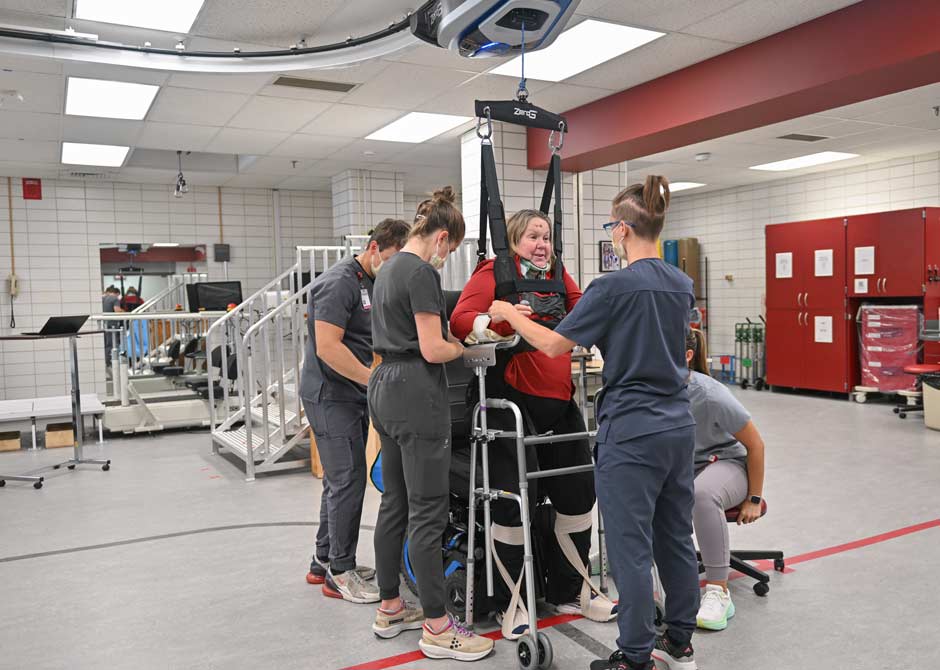
 For many people who experience a traumatic injury or illness, a short stay at an inpatient rehabilitation hospital will be the next step in their recovery journey after leaving the intensive care unit or other hospital medical floor.
While entering this next phase may feel overwhelming or challenging for you or your family, the physical medicine and rehabilitation (physiatry) experts at The Ohio State University Wexner Medical Center in Columbus, Ohio, want to make the transition to inpatient therapy as smooth as possible. Knowing what to expect can help make the early days of your stay at Ohio State’s Dodd Rehabilitation Hospital easier, and your overall experience there more successful.
No matter what brings you to inpatient rehabilitation, our physiatrists, therapists, rehabilitation nursing team and social workers will be with you as you progress toward key rehabilitation goals, such as
- Returning you home or to another, home-like setting
- Restoring your ability to complete normal, everyday tasks
- Teaching you how to adapt to continued challenges
- Putting you and your family on the path to hope and a full life
What to bring
Making sure you’re comfortable and have what you need during your hospital stay can be key to successful outcomes. Our rehabilitation experts recommend bringing:
- Several changes of comfortable clothing, including shirts that are easily pulled over the head and comfortable pants or sweats
- Exercise clothing
- Pajamas and slippers
- Athletic shoes with good support
- Robe
- Toiletries (toothbrush, toothpaste, brush, deodorant and other common, everyday items)
- Glasses or contacts
- Other corrective devices, such as dentures or hearing aids
- Any assistive devices, such as canes, walkers, braces or splints
- Cell phone or iPad, with chargers
- Photographs of loved ones
- Books, journals or any other items to make your room feel more like home
While we encourage people to bring items that will make their stay and the work they’ll do here a little more comfortable, we recommend leaving valuables, such as jewelry or expensive electronics, at home.
Your personalized care journey
After you’re admitted to the hospital, your care team will start developing a plan for your treatment — and ultimately, your discharge.
Rebuilding your life after a significant illness or injury is a major task, but rest assured, our rehabilitation experts will be accessible 24/7. While everyone’s recovery journey will be unique and personalized to them, the process generally follows several distinct stages to help you accomplish your inpatient rehab goals.
Consultation and assessment
Upon arrival, your care team will perform a few tests to determine your condition and will begin creating a plan for how we’ll help improve your quality of life. We’ll also talk with you and your family about goals for your rehab, as well as any concerns or fears. You’ll be an integral part of mapping out your treatment plan.
Treatment plan
Your treatment plan will include various types of therapy — physical, occupational, speech, recreational or music — happening in different parts of the hospital. We’ll work with you daily on these therapies, as well as provide other services, such as rehabilitation-related mental health care, assistive technology and nutrition. The plan will allow for growth in your recovery and change when necessary.
Education
Throughout your stay, we’ll ensure you understand what to expect from your recovery and how your condition might impact your daily life once you go home. Education about your injury or illness is a key part of progressing forward in your rehabilitation.
Follow-up and continual care
Rehabilitation care at Ohio State doesn’t stop when you leave inpatient treatment. Your physiatrist will still see you regularly for follow-up appointments and, along with a case manager, will oversee your outpatient rehabilitation therapy visits and care. We’re in it for the long haul when it comes to seeing you achieve your goals following a traumatic injury or illness.
A typical day in inpatient rehabilitation
We acknowledge that each person will experience inpatient rehabilitation a bit differently, but there are a few aspects of care that will be present every day for most people. For example, you’ll most likely:
- Meet with your physical medicine and rehabilitation doctor daily
- Participate in some form of therapy for three hours a day, usually Monday through Friday
- Eat three meals a day
- Have time for rest and relaxation to recover from intense therapy
- Discuss progress in and changes to your treatment plan with your care team
- Be pushed and challenged to meet the potential of your recovery
Every day, we’ll balance your energy level with working toward building the intensity, cadence and expectation of your activity level. To do this, you’ll participate in treatment throughout our award-winning hospital and even off campus. Some of the areas where your therapy will take place include:
- Home living space, which includes a kitchen area, washer, dryer and other amenities you’ll find in most houses
- Leisure and recreation space
- Outdoor garden area with basketball and pickleball courts, and different terrain to learn to walk on uneven surfaces
- Exercise gyms, both large spaces for functional mobility and smaller spaces for more privacy
- Private therapy rooms when a quieter space is needed
- Vision clinic
- Community outings to practice grocery shopping or going to a museum
Therapy and treatment may also take place in your own room as you work on building strength for daily tasks, such as getting dressed, going to the bathroom and grooming yourself.
Who will I see during my stay?
You’ll have a large care team guiding you and cheering for your success. Each day, you’ll most likely see a combination of these health care providers:
- Board-certified physical medicine and rehabilitation physicians
- Certified rehabilitation nurses, who specialize in the care of the chronically ill and injured
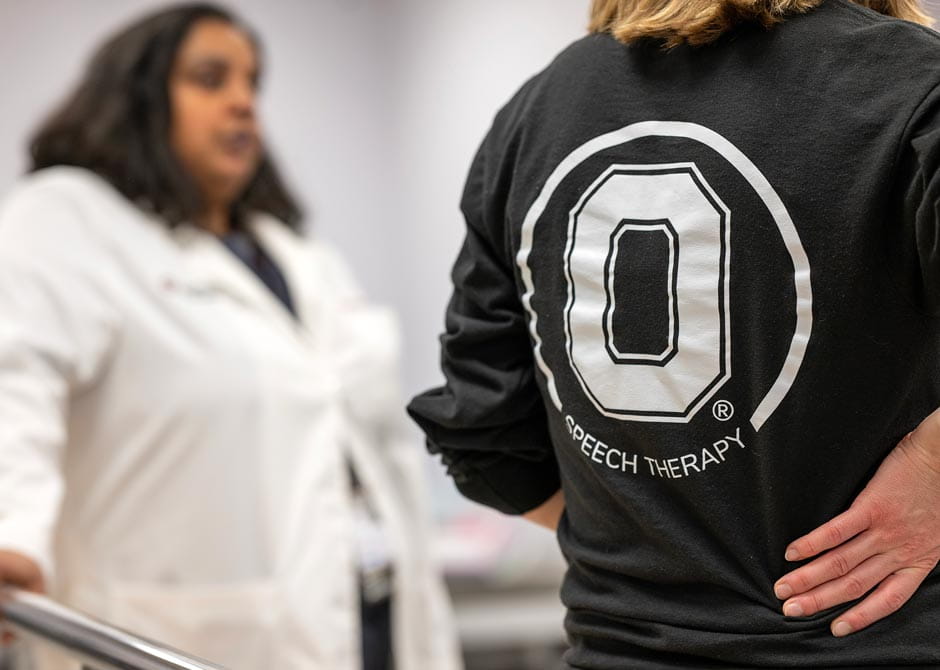
- Licensed physical therapists, occupational therapists and speech-language pathologists
- Other therapists, such as recreational, music or respiratory therapists
- Dietitians
- Mental health professionals who specialize in rehabilitation psychology
- Social workers and case managers who support patients and families
- Rehabilitation engineers who specialize in determining the proper assistive technology devices
Can I have visitors?
Yes, your family and friends can visit you at Dodd. In fact, we’ll invite caregivers to participate in your therapy and education sessions, at times, so they can enhance your outcome and continue to help in your recovery once you go home.