
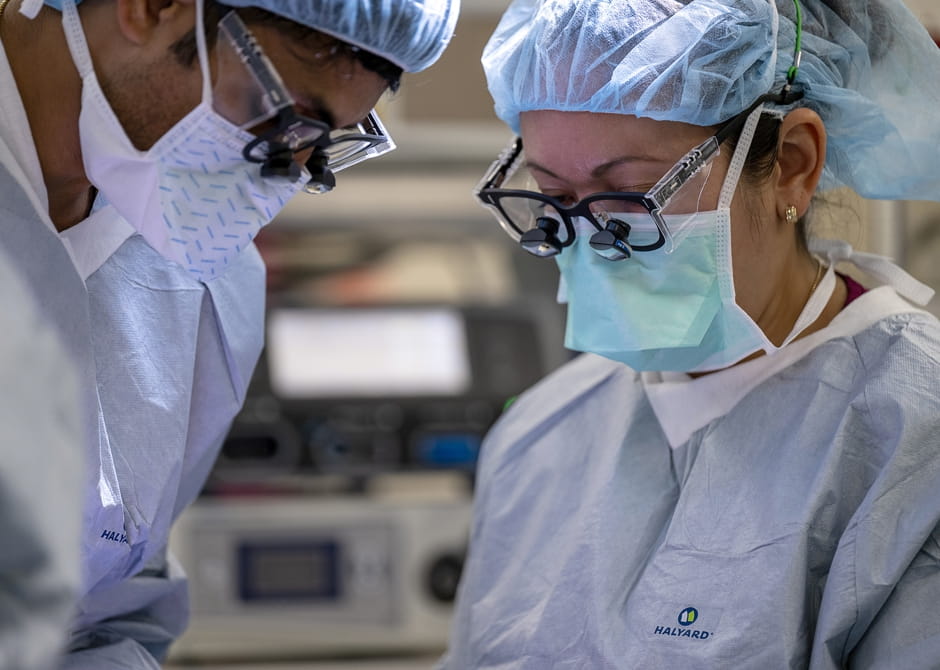
 The Ohio State Aortic Center combines the expertise of highly skilled physicians including vascular surgeons, cardiac surgeons, cardiologists and cardiac anesthesiologists to provide a tailored approach to each patient’s care. This includes conventional surgery and new, minimally invasive procedures. In addition to scheduled aortic procedures, the Aortic Center also provides treatment for emergent and life-threatening aortic conditions with ability to accept transfers 24-hours a day.
About the aorta
The aorta is your body’s largest artery. Beginning at the heart, it extends down through the chest and abdomen. Numerous branches stem from the aorta, supplying essential blood flow to vital organs such as the brain, liver, kidneys, intestines, and to your arms and legs.
Aortic conditions
- Aortic Aneurysm – An aortic aneurysm occurs when the walls of the aorta weaken or bulge causing an enlarged artery with risk for rupture. Aneurysms most commonly occur in the abdomen but can also develop in the chest or near the heart.
- Aortic Dissection – A dissection is a tear between the first and second layers of the aortic wall. This can cause life threatening bleeding as well as blockage of blood flow to important organs. It presents with tearing back or chest pain and is considered an “aortic attack.”
- Aortic Occlusion – When the aorta becomes blocked because of a clot or slow development of atherosclerosis, which can cause pain in the abdomen or legs.
- Aortic Endoleak – If an aortic aneurysm has been previously repaired with a minimally invasive aortic stent, this can sometimes result in leakage around the stent. If the aneurysm continues to
- grow, additional surgery may be needed.
- Aortic Infection – Infection can occur in previous surgical repair of the aorta or in the native aorta. This can be a life-threatening condition which requires multidisciplinary evaluation and treatment.
Aortic treatment at the Ohio State Aortic Center
At your initial appointment, you will receive a thorough evaluation by a vascular surgeon, cardiac surgeon and medical management specialist. Same-day imaging is available to streamline the process and reduce the need for multiple appointments. If surgery is considered appropriate, you will be presented with several options, and we will carefully review the risks and benefits with both you and your family. Complex aortic surgeries are further discussed at our Multidisciplinary Aortic Center Conference, involving additional surgeons from both specialties and cardiac anesthesiologists. If immediate surgery isn't required, we'll provide recommendations for optimal medical management and establish lifelong surveillance through our Aortic Center, which includes annual or semi-annual testing and exams.
New clinic options
Aortic Center Clinic
If you have known or suspected aortic disease, our Aortic Center Clinic brings together a team of specialists to provide comprehensive care in one coordinated visit. We make the process easier for you and your referring provider with clear evaluations and a personalized care plan.
During your visit, you’ll meet with specialists in cardiac surgery, vascular surgery and medical management. We also keep your referring provider involved throughout your care.
What you can expect:
- You can typically be seen within two weeks.
- You don’t need a referral. We review each case before scheduling.
- You’ll receive specialty evaluation and ongoing management.
- Your visit includes a surgical assessment, medical guidance and clinical trial screening.
- You’ll receive lifelong surveillance and continuous monitoring in our Aortic Surveillance Clinic, even if you don’t need surgery.
We work closely with your referring provider to help you receive the care that’s right for you. To ask questions or schedule an appointment, contact our clinic at 614-814-1227.
Aortic Surveillance Clinic
If you’ve been diagnosed with aortic disease, a dilated aortic root, thoracic aortic aneurysm or ascending aortic dilation, our Aortic Surveillance Clinic provides specialized, long-term care to monitor your condition.
After you meet with an aortic specialist, you may transition to the Aortic Surveillance Clinic for follow-up visits and imaging if you need ongoing monitoring. Your care will be managed by our experienced advanced practice providers, also called APPs, who provide expert evaluation and long-term surveillance.Our APPs stay in close contact with our aortic surgeons and your referring provider. If surgery becomes necessary, you’ll be referred back to your original surgeon.Ongoing surveillance helps keep you safe and keeps your care team informed. Our commitment to lifelong monitoring helps ensure you receive consistent support over time.
Why choose Ohio State for aortic treatment?
Aortic conditions are complex and best served by a multidisciplinary approach to treatment. Our dedicated team—including surgeons, cardiologists, nephrologists, anesthesiologists, radiologists, vascular radiology technicians, advanced practitioners and nurses—offers world-class, patient-centered care. This broad expertise allows us to effectively manage any aortic condition. At The Ohio State Aortic Center, we utilize cutting-edge technology, the latest minimally invasive devices, and participate in numerous clinical trials. We are committed to ongoing management and support for your aortic disease indefinitely.
